Qiandongnan Guizhou: Miao & Dong Villages, Rice Terraces & China's Last Gunner Tribe (2026)

The Miao woman at the gate pours rice wine into a tiny bamboo cup and holds it to my lips. She is wearing a silver headdress that weighs more than a newborn baby, a hand-embroidered jacket that took three years to make, and a smile that says she has done this ten thousand times and still means it. This is the 12-blocking-roads welcome ceremony in Langde Upper Village. Twelve cups of rice wine between you and the village gate. You do not have to drink all twelve. But you will remember the ones you do.
Qiandongnan is Guizhou province’s southeastern prefecture, home to China’s largest Miao and Dong communities. It is among the poorest regions in China by GDP and among the richest in living cultural heritage. The women wear silver and indigo not for tourists but because they always have. The drum towers hold village councils, not photo ops. The songs are polyphonic and ancient and real.
Getting here takes effort. There is no international airport. No bullet train direct from Beijing. The roads wind through karst hills for hours. That effort acts as a filter. The people who make it to Qiandongnan are the ones who actually want to be here.
This guide covers the villages worth your time, the ones to skip, how to get between them, and how to find the real thing instead of the theme-park version.
Qiandongnan at a glance
| What | Answer |
|---|---|
| Where | Southeast Guizhou, bordering Hunan and Guangxi |
| Who | Miao (苗族), Dong (侗族), and Han Chinese |
| Population | ~4.5 million, ~75% ethnic minorities |
| Main entry | Guiyang Longdongbao Airport (KWE), then train to Kaili or Congjiang |
| Best season | April-May (Sisters’ Meal Festival, mirror-water terraces) or September-November (golden terraces, Miao New Year) |
| Minimum time | 3 full days, 4 is better |
| Budget (4D3N) | ¥1,500-2,500/person mid-range |
| Language barrier | High. Almost no English outside hotels. Download a translation app. |
The villages: which ones are worth it
There are dozens of Miao and Dong villages in Qiandongnan. Most travelers hit exactly three or four. Here is the honest breakdown.
| Village | People | The Draw | The Catch | Verdict |
|---|---|---|---|---|
| Xijiang (西江) | Miao | 1,400+ wooden houses on a hillside. The dusk view with lights coming on is the single most photographed scene in Guizhou. | Heavily commercialized. Tour buses, souvenir shops, photo studios. Peak season feels like a theme park. | Worth one night for the hillside-at-dusk view. Then leave. |
| Langde Upper (朗德上寨) | Miao | 200 households. Smaller, quieter, actual village life. The 12-blocking-roads welcome feels less staged. | Fewer amenities. Limited guesthouses. Not much to do beyond walking and watching. | The better Miao village experience. Go here instead of Xijiang if you have to pick one. |
| Zhaoxing (肇兴) | Dong | Drum towers, wind-and-rain bridges, Dong Grand Song. Less commercialized than Xijiang. Gateway to the Tang’an rice terrace hike. | Growing tourism. The main street is already lined with guesthouses and restaurants. Still quieter than Xijiang. | Yes. The best base for Dong culture and the best rice terrace hike in the region. |
| Tang’an (堂安) | Dong | Small village above Zhaoxing with a drum tower and terraces. The real draw is the 7-8 km stone path connecting it to Zhaoxing. | Almost nothing in the village itself. No restaurants beyond basic noodle stalls. | The hike from Zhaoxing is the point. The village is the reward at the top. |
| Basha (岜沙) | Miao | China’s “Last Gunner Tribe.” Muskets, sickle haircuts, tree burials. The only village where Miao men are legally allowed to carry firearms. | The performances are staged for tourists. You come for the demonstration, not for everyday village life. | Worth a half-day. The musket ceremony and sickle haircut are genuinely unlike anything else. |
| Zhenyuan (镇远) | Han/Dong/Miao | Ming/Qing town along a river gorge. Temples on cliffs. Different from the ethnic villages — this is Han Chinese architecture in a dramatic setting. | Not a minority village. Different type of experience. | A good overnight stop between Kaili and the villages. Free entry. |
Xijiang: the thousand-household village
Xijiang is the biggest and most famous Miao village in China. More than 1,400 wooden stilt-houses climb the hillside in layers, connected by stone alleys and staircases. At dusk, when the lights come on across the mountain, the view from the opposite observation deck is genuinely spectacular. The kind of thing that makes you stop talking mid-sentence.
That view is why you come to Xijiang. It is also why thousands of other people come to Xijiang every day.
The main street through the valley is a tourist corridor. Photo studios renting Miao costumes. Restaurants with picture menus. Shops selling silver jewelry you could find on Taobao. The show — a nightly song-and-dance performance in the central square — is professional but bloodless. This is Miao culture packaged for domestic tourism, and domestic tourism in China operates at industrial scale.
But Xijiang also has the best infrastructure of any village in the region. Decent guesthouses with hot water. Restaurants that understand what foreigners can and cannot eat. A bus station with regular connections to Kaili. If this is your first Miao village, the scale of the place will impress you. Just understand that what you are seeing is the polished version.
How to make Xijiang work: Arrive mid-afternoon. Drop your bag at a hillside guesthouse. Walk the upper alleys where the tour groups do not go — that is where you find grandmas embroidering on doorsteps and kids chasing chickens. Get to the observation deck by 6 PM for a good spot. Eat dinner at a restaurant on the upper slopes, not the main street. Leave the next morning.
Ticket: ¥100. Opening hours 8 AM to 10 PM. The ticket includes one entry to the observation deck shuttle bus.
Langde Upper Village: the better alternative
Langde Upper Village is what Xijiang was 20 years ago. About 200 households, maybe 800 people. No main street lined with souvenir shops. No light show. Just a Miao village doing its thing.
The entry experience is the 12-blocking-roads ceremony. At each of 12 stations between the parking lot and the village gate, a village woman pours you a small cup of rice wine. The cups are tiny. The cumulative effect of 12 tiny cups is not tiny. After the wine, there is a Lusheng (reed pipe) performance and dancing in the central square, and the villagers genuinely seem to enjoy it. The dancing is less polished than Xijiang’s theater show but more alive.
The village itself is compact. You can walk every alley in 45 minutes. Wooden houses with black tile roofs, stone pathways, rice paddies right up to the last house. In the late afternoon, old women sit in doorways with embroidery hoops. The silver headdresses and festival jackets you see are the real ones, worn by the people who made them.
Langde has maybe three guesthouses. One or two small restaurants. No ATM. No English menus. The infrastructure is bare. That is both the point and the limitation.
Ticket: ¥60. The welcome ceremony runs twice daily at set times. Confirm times at your guesthouse — they vary by season.
Zhaoxing: drum towers and Dong Grand Song
Zhaoxing is the largest Dong village in the region, stretched along a small river valley. What distinguishes Dong villages from Miao villages is the architecture: drum towers (鼓楼) and covered wind-and-rain bridges (风雨桥). Zhaoxing has five drum towers, one for each traditional clan neighborhood. A drum tower is not a religious structure. It is a community hall, a meeting place, a landmark. At night, the towers glow under floodlights and reflect in the river. It is a measured, quiet kind of beauty.
The Dong Grand Song (侗族大歌) is a form of polyphonic choral singing recognized by UNESCO as Intangible Cultural Heritage. No conductor. No instruments. Multiple voices weaving independent melodic lines into something that sounds both ancient and startlingly modern. Free performances happen in Zhaoxing’s central drum tower square most evenings. The performers are villagers. Some are teenagers checking their phones between songs. The dissonance between the thousand-year-old music and the Xiaomi phones is part of the experience.
Zhaoxing is more developed than Langde but less swamped than Xijiang. The main street has guesthouses, cafes, and restaurants, but step one alley back and you are in a working village. Farmers carry baskets of vegetables through the streets at dawn. Women sit under the drum towers sorting rice. The tourism here feels like an addition to the village, not a replacement of it.
Ticket: ¥80-100. Free evening performances in the central square. Ask your guesthouse for the schedule.
The Zhaoxing to Tang’an rice terrace hike
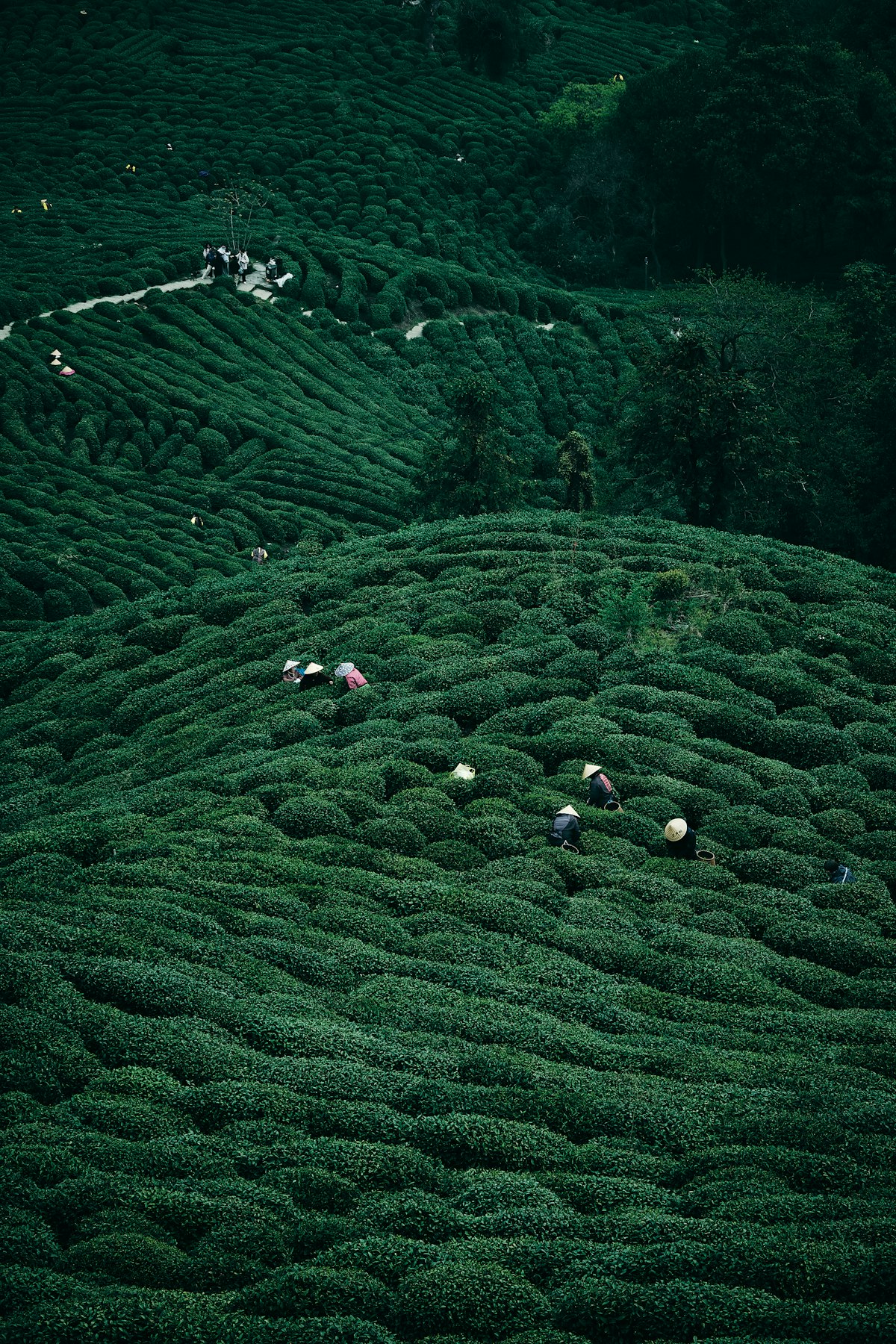
This is the best walk in Qiandongnan. A 7-8 km stone path winds from Zhaoxing up through rice terraces to the small Dong village of Tang’an. It takes 2-3 hours one way, longer if you stop to look at things, which you should.
The path climbs steadily. At first you see Zhaoxing below, the five drum towers shrinking into the valley. Then the terraces take over. In spring, the paddies are flooded and the water mirrors the sky. In summer, the rice is electric green and waist-high. In autumn, the terraces turn gold before harvest. The stone path is mostly paved, mostly well-marked, and shared with farmers carrying tools and harvest baskets. You will pass small shrines, irrigation channels, bamboo groves, and the occasional water buffalo.
Tang’an itself is small — a drum tower, a square, a view platform looking back down the valley. There is a small guesthouse and a noodle stall. The village feels suspended in time, but not in a curated way. Pigs root through compost heaps. Old men play cards in the drum tower. The terraces stretch upward behind the village into mist.
You can walk back down the same path, or arrange a car pickup in Tang’an (your Zhaoxing guesthouse can help). The downhill return is faster — about 1.5 hours.
Practical notes: Wear shoes with grip. The stone path gets slick after rain. Bring water and snacks. There are few shops along the way. Morning is best for clear views, before the valley haze settles in.
Basha Miao Village: the last gunner tribe
Basha markets itself as “China’s Last Gunner Tribe,” and for once the tourism slogan is mostly true. The men of Basha carry muskets. They have carried muskets for centuries — hunting, protection, ceremony. After the government banned civilian firearms nationwide, Basha received a special exemption. The guns are handmade muzzle-loaders that use gunpowder but no bullets. The exemption exists because Basha’s gun culture is considered living heritage, not a security threat.
The musket welcome ceremony is pure theater. A line of men in traditional clothing fire their guns into the air as visitors approach. The noise is loud and the smoke is real and the performance is designed to impress. It succeeds. The sickle haircut demonstration follows — a man’s head is shaved with a curved harvesting sickle. A boy’s coming-of-age ceremony in Basha historically involved receiving a gun and a sickle haircut. The demonstration is performed for tourists but the tradition is genuine.
Basha’s tree burial custom is harder to see and more interesting. At birth, a tree is planted for each child. At death, that tree is used for the coffin. A new tree is planted on the grave. The forest around Basha is thick with trees that mark lives. There is no cemetery in the conventional sense — just forest.
The village has about 2,500 residents. The architecture is rougher than Zhaoxing or Xijiang — more wooden shacks, more mud, more livestock in the streets. This is the least developed of the major tourist villages, and it shows. Some visitors find it the most authentic for exactly that reason. Others find the performances too staged and the village too poor to feel comfortable touring. Both reactions are valid.
Ticket: ~¥100 (combo ticket including entry and performances). Located near Congjiang, about 30 minutes by car from the county seat. Half a day is enough.
Zhenyuan Ancient Town
Zhenyuan is the odd one out. It is not a Miao or Dong village. It is a Han Chinese river town from the Ming and Qing dynasties, wedged into a narrow gorge along the Wuyang River. Black Dragon Cave (青龙洞) clings to the cliff face — a complex of temples, pavilions, and shrines built directly into the rock. Old stone bridges. Willow-lined riverbanks. Lanterns at dusk.
Zhenyuan works as a transit stop between Guiyang and the villages. It is also free to enter, which is rare in a region where every village charges admission. The old town stretches along the river for about 3 km. The cliff temples are the highlight — the walk up through Black Dragon Cave gives you a view over the tile roofs and the river gorge that makes the detour worth it.
The downside is that Zhenyuan feels generic in places. The same river-town tourism formula you find across China: bars with acoustic guitar covers, identical souvenir shops, restaurants with laminated menus. But the setting — a Ming dynasty town in a deep river gorge — is genuinely unusual.
Ticket: Free to enter the town. Black Dragon Cave temple complex ¥60.
Festivals worth planning around
| Festival | People | When (2026) | What Happens |
|---|---|---|---|
| Sisters’ Meal Festival (姊妹节) | Miao | April 30 – May 3 (lunar March 15-18) | Five-colored sticky rice, silver ornament parades, antiphonal love songs, long table banquets. Sometimes called “the oldest Valentine’s Day in the East.” Located in Taijiang County, reachable from Kaili. |
| Miao New Year (苗年) | Miao | October-November (dates vary by village) | The biggest Miao festival. Bullfighting, Lusheng music, feasting, dancing. Each village celebrates on different days. Check dates locally. |
| Lusheng Festival (芦笙节) | Miao/Dong | November-December (lunar dates vary) | Reed-pipe music competitions. Thousands of people from surrounding villages gather to play, dance, and compete. |
Festival timing changes yearly based on the lunar calendar. If you can time your trip for the Sisters’ Meal Festival, do it. It is the most visually spectacular and the most accessible for foreign travelers. Taijiang is a 40-minute bus ride from Kaili.
What to eat
Guizhou food is sour and spicy, defined by fermented flavors and chili. The province’s culinary identity revolves around acid: sour soup (酸汤), pickled vegetables, fermented rice. Chili came to Guizhou before Sichuan and is used differently — less numbing, more direct heat.
| Dish | What It Is | Price (¥) | Notes |
|---|---|---|---|
| Sour Soup Fish (酸汤鱼) | River fish in a fermented rice-and-tomato broth with vegetables. Served with a chili dipping sauce. | ¥60-120/pot | The regional signature. Every restaurant claims theirs is the original. Kaili is the spiritual home — eat it there if possible. |
| Miao Long Table Banquet (长桌宴) | Communal feast on joined tables stretching through the village. Sour soup, glutinous rice, cured meats, rice wine. | ¥50-80/person | Book through your guesthouse. More social experience than pure meal. |
| Glutinous Rice (糯米饭) | Sticky rice, often dyed with natural plant colors (yellow from gardenia, black from leaves). A Dong staple. | ¥5-15 | Simple and good. The colored versions are festival food. |
| Congjiang Fragrant Pig (从江香猪) | Small-breed pork, tender and rich. | ¥40-60/plate | Best in Congjiang and Zhaoxing. |
| Niu Bie / Yang Bie (牛羊瘪) | A soup made from the semi-digested contents of a cow or goat stomach. Herbal, bitter, acquired taste. | ¥40-80 | Local delicacy. Challenging for most foreigners. Skip unless you are a determined eater. |
| Rice Wine (米酒) | Homemade, slightly sweet, served in bamboo cups. Strength varies dramatically. | Often free with meals | Grandmas make it. Take small sips. |
Vegetarians will struggle. The cuisine is meat-and-ferment heavy. Tofu and vegetable dishes exist but are limited. In the villages, the concept of vegetarianism is poorly understood. Learn to say “wo chi su” (我吃素 — I eat vegetarian food). Manage expectations.
Getting there and getting around
| From | To | Method | Time | Cost (¥) |
|---|---|---|---|---|
| Guiyang (KWE airport) | Kaili South Station | High-speed rail | 35 min | ¥55-60 |
| Guiyang | Congjiang Station | High-speed rail | 1.5 hrs | ¥95-110 |
| Guilin | Congjiang Station | High-speed rail | 45 min | ¥45-55 |
| Kunming | Kaili South Station | High-speed rail | 2.5 hrs | ¥190-210 |
| Kaili | Xijiang | Bus | 1 hr | ¥35 |
| Kaili | Langde | Bus/taxi | 45 min | ¥20-40 |
| Kaili South | Congjiang Station | High-speed rail | 1 hr | ¥55-60 |
| Congjiang | Zhaoxing | Taxi/bus | 20 min | ¥10-30 |
| Congjiang | Basha | Taxi | 30 min | ¥40-60 |
Kaili South Station and Congjiang Station are the two rail hubs that matter. Kaili serves Xijiang, Langde, and Taijiang (for the Sisters’ Meal Festival). Congjiang serves Zhaoxing and Basha.
There is also Kaili Huangping Airport with limited flights from Guiyang, Hangzhou, and Kunming. For most travelers, flying into Guiyang and taking the train is more practical.
Local transport reality: Buses between county towns are cheap but slow, infrequent, and signed only in Chinese. A chartered car with driver costs ¥400-600 per day. For a 3-4 day trip, this is the single best investment you can make. Your guesthouse can arrange a driver. It transforms village-hopping from a logistical puzzle into a straightforward day.
Where to stay
| Type | What You Get | Price/Night (¥) | Best For |
|---|---|---|---|
| Village guesthouse (农家乐) | Wooden stilt-house room, basic bathroom, mountain views. Paper-thin walls. Atmospheric. | ¥100-300 | Xijiang hillside, Zhaoxing riverside. |
| County hotel | Proper hotel with consistent hot water, thicker walls, English sometimes spoken. | ¥200-500 | Kaili, Congjiang, Liping. |
| Zhenyuan riverside | Ming/Qing building with river views. Character over comfort. | ¥200-600 | One night in Zhenyuan. |
Book village guesthouses through Trip.com or directly via WeChat. The best hillside rooms in Xijiang fill up on weekends and holidays. If you want the view, book ahead. If you want flexibility, show up and walk the alleys — there are always rooms available midweek outside of holidays.
Prepare for thin walls, hard beds (standard in China), and occasional power cuts. That is part of the deal. Bring earplugs.
A 4-day itinerary that works
| Day | Route | Sleep |
|---|---|---|
| 1 | Guiyang → train to Kaili South (35 min) → bus to Xijiang (1 hr). Afternoon: explore upper alleys. Evening: observation deck at dusk. | Xijiang hillside guesthouse |
| 2 | Morning: Xijiang in early light, before the tour buses. Mid-morning: drive to Langde Upper (1 hr). Afternoon: Langde welcome ceremony, walk the village. Evening: return to Kaili. | Kaili |
| 3 | Kaili South → train to Congjiang (1 hr) → Zhaoxing (20 min). Afternoon: hike Zhaoxing to Tang’an (2-3 hrs up, 1.5 hrs down). Evening: Dong Grand Song performance in the square. | Zhaoxing |
| 4 | Morning: drive to Basha (30 min), musket ceremony, sickle haircut demonstration. Afternoon: depart via Congjiang Station or connect to Guilin (45 min). | Onward |
If you have three days instead of four: skip Basha or Langde. Do not skip the Zhaoxing-Tang’an hike. That is the non-negotiable.
Budget: 4 days in Qiandongnan
| Category | Budget (¥) | Mid-Range (¥) |
|---|---|---|
| Accommodation (3 nights) | ¥300-500 | ¥600-900 |
| Food (4 days) | ¥300-400 | ¥400-600 |
| Transport (trains + buses + local cars) | ¥200-300 | ¥300-500 |
| Tickets (Xijiang + Zhaoxing + Basha + Langde) | ¥200-300 | ¥300-400 |
| Workshop (indigo dyeing or silverwork, optional) | — | ¥80-150 |
| Total | ¥1,000-1,500 | ¥1,680-2,550 |
Budget travelers can push lower by staying in county hotels instead of village guesthouses and using buses instead of chartered cars. Mid-range gets you the hillside room in Xijiang and a driver for a day, which makes the trip a lot smoother.
Practical notes
Language: Almost no English outside Kaili hotels. Download Pleco or Google Translate with the Chinese offline pack. Learn “xie xie” (thank you), “ni hao” (hello), and “duo shao qian” (how much). Pointing at menu photos works fine.
Connectivity: Mobile signal is decent in villages but patchy on the hiking trails. Download offline maps in Amap (高德地图) before heading out. If you need a VPN, install and test it before you arrive in China — read our digital survival guide for the full picture.
Payment: Cashless. Alipay and WeChat Pay dominate. Some village guesthouses and small restaurants may still accept cash, but do not count on it. Set up Alipay’s Tour Pass before traveling. Details in our mobile payment guide.
Toilets: Village toilets are squat-style and basic. Carry your own toilet paper and hand sanitizer. The train stations and county hotels have Western options.
Weather: Spring and autumn are mild (15-25°C) with occasional rain. Summer is hot (25-35°C) and wet. Winter is cold (0-10°C) and many guesthouses lack heating. Pack layers regardless of season. The humidity makes cold feel colder and heat feel hotter than the numbers suggest.
Ethics of village tourism: These are real communities, not living museums. Ask before photographing people, especially elders. A smile and a gesture go further than words. If someone does not want their photo taken, move on. Buy crafts directly from the person who made them, not from the souvenir shop. Paying for a workshop — indigo dyeing, silverwork, embroidery — puts money into the community in a way that buying a ticket does not.
Is Qiandongnan right for you?
This is not the easy trip. The infrastructure is inconsistent. The language barrier is real. You will eat things you cannot identify. Buses will be late. Guesthouse showers will go cold. You will get lost, or at least temporarily misplaced, on a trail between two villages where nobody speaks your language.
If that sounds like an adventure, go. The Miao and Dong people have built cultures worth crossing the world to see. The rice terraces, the silver, the singing, the rice wine pressed into your hand by a woman who has been making it for 50 years — none of it is fake. Some of it is packaged for tourists, yes. But the packaging peels off fast if you walk one street back from the main road.
Qiandongnan is poor, inconvenient, and stays with you long after you leave. Not because of any slogan or marketing campaign. Because of what the people there have chosen to keep alive.
Read next: If you are building a longer Guizhou itinerary, pair Qiandongnan with Guilin (45 minutes by train from Congjiang). Our Guilin and Yangshuo first-timer guide covers the karst landscapes that start where Qiandongnan ends.