Shanghai Beyond Skyscrapers: Hidden Lanes, Jewish History & Water Towns (2026)
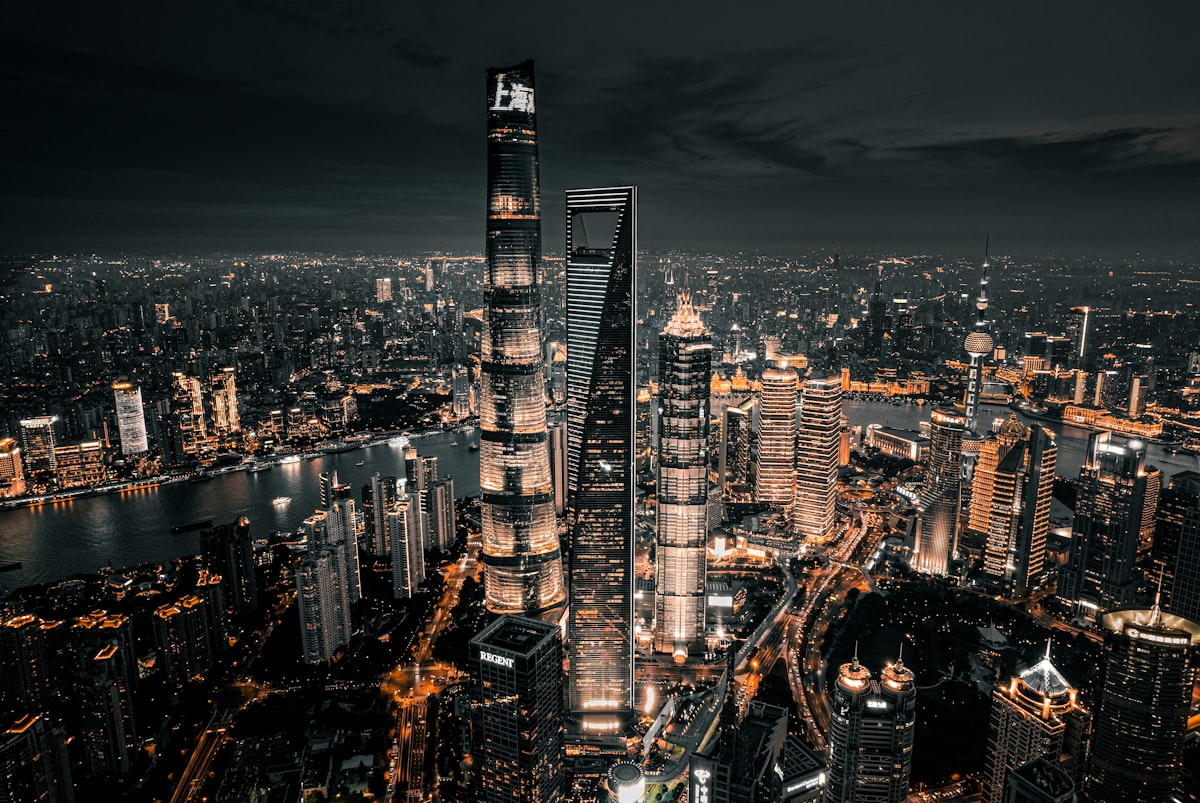
“Shanghai has no soul.” “It’s just another big Asian city.” “Go to Beijing if you want real China.”
You’ve heard it. Maybe you’ve even thought it.
And yes — if your Shanghai experience begins and ends at the Bund and a shopping mall, those people are right. But Shanghai’s depth is real. It’s just not obvious. It hides in lane houses behind unmarked doors. In a 1920s slaughterhouse turned creative space. In the former Jewish ghetto that saved 20,000 lives. In water towns older than the city itself.
This guide is for the second visit — or the first visit, if you’re smart enough to look deeper from the start.
The French Concession — Not Just Pretty Streets
The French Concession isn’t one thing. It’s layers. The tree-lined avenues — the plane trees were planted by the French in the 1880s — are just the surface.
The Architecture You’re Actually Looking At
| Style | What It Is | Where to See It |
|---|---|---|
| Lilong / Longtang (里弄/弄堂) | Shanghai’s unique lane-house architecture. Narrow alleys between rows of 3-story brick houses, with shared courtyards. Families have lived here for generations. The community IS the architecture. | Xintiandi area (commercialized), Tianzifang (touristy but real alleys), Bugaoli (步高里 — still residential) |
| Art Deco | Shanghai has one of the world’s largest collections of Art Deco buildings. 1920s-30s glamour, from grand hotels to corner cinemas. | The Bund (north end), Broadway Mansions, old Cathay Cinema, Peace Hotel lobby |
| Shikumen (石库门) | “Stone gate” houses. Brick + stone frame doorway, small courtyard inside, 2-3 stories. The defining Shanghai residential form — over 60% of Shanghailanders lived in these by the 1940s. | Xintiandi has the polished version. Bugaoli has the real, lived-in version. |
How to Explore
Morning: Start at Wukang Road (武康路) and work south. The Wukang Mansion (Normandie Apartments, 1924) is the photo-op, but the street itself — 1.2km of uninterrupted heritage architecture — is the point. Stop at Ferguson Lane for coffee. This converted 1930s lane compound now holds cafes, bakeries, and a small courtyard that feels like a secret Parisian corner.
Midday: Cross to Fuxing Road (复兴路). Wider, greener, quieter than Wukang. Pop into the Shanghai Arts and Crafts Museum housed in the “White House” (a 1905 French mansion). ¥8 entry. Gallery rooms showing embroidery, jade carving, paper cutting, lacquer work. You can watch artists at work — old hands doing things machines can’t. Closed Mondays.
Afternoon: Bugaoli (步高里) on Shaanxi Road South. This is a genuine residential lilong from 1930. People live here. Laundry hangs in the alley. Old men play chess on stools. The arched stone entrance gate has the year “1930” carved into it in both Chinese and French. You’re a guest — quiet voice, don’t photograph residents without permission, don’t peer into homes. But walking through here — this is the Shanghai that survives.
Late afternoon: Xintiandi (新天地). Yes, it’s commercialized. The shikumen houses now hold a Paul Smith and a Shake Shack. But the architecture — the stone gates, the courtyards — is real. And the contrast of 1920s lane houses with glass-walled modern retail is very Shanghai. Come for a drink at dusk when the lanterns come on. The transformation from residential alley to high-end lifestyle district is itself a Shanghai story about reinvention.
Shanghai’s Jewish History — A Story Most Travelers Miss
Shanghai saved more Jewish lives than any other city during World War II. About 20,000 European Jews found refuge here between 1937 and 1941, when most of the world had closed its borders. They settled in the Hongkou district and built a community with synagogues, cafes, newspapers, and schools — in the middle of a Chinese city under Japanese occupation.
Shanghai was one of the only places on earth that didn’t require a visa for entry. The refugees arrived by ship from Europe — Berlin, Vienna, Warsaw — and stepped onto the Bund into a city that, for all its chaos, let them in.
What to See
| Site | What It Is | Price |
|---|---|---|
| Shanghai Jewish Refugees Museum (上海犹太难民纪念馆) | The former Ohel Moshe Synagogue. Completely renovated and expanded in 2020, now a National Level II Museum. Deeply moving exhibition: photos, personal artifacts, survivor testimonies, original furnishings. The wall in the courtyard lists 13,732 names of refugees who found shelter here. | ¥20 (adult), ¥10 (student), ¥15 (senior) |
| Huoshan Park (霍山公园) | A tiny park in the heart of the former ghetto. The stone monument reads simply: “In the 1940s, Shanghai accepted European Jewish refugees.” Simple. Powerful. | Free |
| Former Ghetto streets | The area around Zhoushan Road (舟山路) and Huoshan Road. Some original buildings remain among modern apartment blocks. The architectural details — arched windows, European-style balconies — show the influence the refugees brought. | Free |
The museum is genuinely exceptional — plan 1.5-2 hours. It’s at 62 Changyang Road in Hongkou, north of the Bund. Metro Line 12 to Tilanqiao Station. Open Tuesday through Sunday, 9:00 AM to 5:00 PM (last entry 4:00 PM). Closed Mondays. Bring your passport for entry.
Combine a visit with a walk along Suzhou Creek afterward. The contrast of this quiet, moving museum with the Bund’s spectacle a kilometer south is the Shanghai that most visitors never see.
This is the kind of history travelers say they “had no idea about” and end up telling everyone about when they get home.
1933 Old Millfun (1933老场坊)
This is the most architecturally bizarre building in Shanghai — and almost no first-time visitors know it exists.
Built in 1933 as a slaughterhouse by British architects Balfours, it’s a concrete labyrinth of spiraling ramps, bridged walkways, and a central atrium crisscrossed by aerial staircases. Cattle were walked up the exterior ramps to be processed across four floors. The interior bridge system connected different slaughter stages without the animals ever crossing paths. The geometry is hypnotic — all concrete, curves, and Escher-like perspectives.
In 2019, it was designated a National Key Cultural Relic Protection Unit.
Today it’s a creative space: design studios, boutique shops, cafes, photography exhibitions, and event venues. The building itself is the attraction — the light, the concrete, the intersecting walkways. Free entry. Photographers love it. Go on a weekday morning when it’s nearly empty. One hour is enough, two if you’re shooting.
Metro Line 4 or 10 to Hailun Road, then a 12-minute walk. Open daily roughly 9:00 AM to 8:00 PM (hours can vary slightly — mornings are safest).
Propaganda Poster Art Centre
A private museum unlike anything in China’s state-run system. The collection: thousands of original Chinese propaganda posters from 1949 through the 1980s — Mao, the Cultural Revolution, “Smash the Four Olds,” the Space Age optimism of the 1960s, the one-child policy, agricultural and industrial campaigns. Each poster is a window into the political imagination of its moment.
The museum was founded by Yang Peiming, a passionate collector who can tell you the story behind virtually every poster in the room. It’s tiny, crowded, and absolutely fascinating.
Important location update: The museum moved in December 2019. Many guidebooks and websites still list the old address. The current location is:
Room K, 7th Floor, East Building, Huamin Hanzun, 726 Yan’an Xi Lu, Changning District (上海市长宁区延安西路726号华敏翰尊7楼K座)
Metro Line 2 to Jiangsu Road Station, Exit 4. Open Tuesday through Sunday, 10:00 AM to 5:00 PM. Closed Mondays. ¥25 entry. Reproductions and postcards are available for purchase.
It’s in an office building — look for the East Building elevator and go to the 7th floor. Easy to miss. Worth finding. Plan 45 minutes to an hour.
Longhua Temple & Martyrs’ Cemetery
Shanghai’s oldest and largest temple, with origins tracing to 242 CE. The 7-story Longhua Pagoda is one of Shanghai’s few genuinely ancient structures — it’s been rebuilt many times, but the site itself has been sacred for over 1,700 years. The temple is active: monks, incense, chanting. ¥10 entry. The vegetarian noodle soup in the temple restaurant is famous among locals and costs about ¥15.
Right next door is the Longhua Martyrs’ Cemetery — where Communist revolutionaries were executed by the Kuomintang in the 1920s and 30s. The memorial sculpture garden is extraordinary: abstract, modernist, deeply emotional. Life-sized bronze figures emerging from walls, hands reaching skyward, a massive sculpture of a fallen figure held by comrades. It’s unlike any war memorial you’ve seen — more art installation than military monument. Free entry.
The juxtaposition of ancient Buddhist temple and revolutionary memorial is… very Shanghai. Ancient and modern, sacred and secular, side by side, neither acknowledging the other.
Metro Line 11 or 12 to Longhua. 1.5-2 hours total. The temple closes earlier than the memorial grounds — go to the temple first.
Zhujiajiao Water Town (朱家角古镇) — Ancient Canals, 1 Hour from Shanghai
Before Shanghai was Shanghai, this region was a network of canal towns. Zhujiajiao is the best-preserved and most accessible — 1,700 years old, built on a web of canals crossed by 36 stone bridges.
Think: a smaller, more authentic version of Venice, with red lanterns instead of gondola stripes. The stone arch bridges, the narrow flagstone lanes, the old women selling zongzi from steaming baskets on canal-side stoops — this is the Jiangnan water town landscape that existed for centuries before Shanghai became Shanghai.
| Detail | Info |
|---|---|
| Getting there | Metro Line 17 to Zhujiajiao Station (about 50 minutes from downtown, ¥8-9). Exit 1, then a 15-20 minute walk following signs to the old town. |
| Entry | Free to enter the town. Combo ticket ¥60-80 for specific attractions (Kezhi Garden, temples, historic houses). |
| Best time | Weekday morning, arriving by 9:00 AM. Weekends get crowded with domestic tourists. |
| What to do | Walk Fangsheng Bridge (放生桥) — built in 1571, it’s the largest stone arch bridge in Shanghai. Take a gondola ride (¥80-120 per boat, seats up to 6). Visit Kezhi Garden (课植园) — a Qing dynasty scholar’s garden, ¥20. Eat zongzi (粽子) — sticky rice wrapped in bamboo leaves with pork, ¥5-10 from street vendors. Try the braised pork trotters if you’re adventurous. |
| How long | Half day (leave Shanghai 8:00 AM, back by 1:00 PM) or a relaxed full day with a canal-side lunch. |
Pro tip: Combine a morning visit to Zhujiajiao with the French Concession in the afternoon. The contrast is the point — ancient canal town at 9:00 AM, tree-lined European streets at 3:00 PM. Only in Shanghai.
Other Water Towns Worth Knowing
Zhujiajiao is the easy choice for a first water town, but Shanghai is surrounded by them. Each has a different personality.
| Town | Distance | Vibe | Best For |
|---|---|---|---|
| Zhujiajiao (朱家角) | 1 hr by Metro 17 | Authentic, accessible, well-preserved | Easy half-day trip |
| Qibao (七宝) | 30 min by Metro 9 | Smallest, quickest, closest | Shortest trip possible. Temple, street food, canals. Combine with the “Echoes of the Silk Road” exhibition at nearby Minhang Museum (free, through May 2026). |
| Nanxun (南浔) | 2 hrs by bus | Quieter, more authentic, less developed | Full day. Fewer tourists, deeper atmosphere. |
| Xitang (西塘) | 1.5 hrs | Atmospheric, photogenic | Covered walkways along canals. The water town featured in “Mission: Impossible 3.” |
| Wuzhen (乌镇) | 1.5-2 hrs | Famous, highly developed for tourism | The polished version. Boutique hotels in restored houses, museums, night illuminations. Best for an overnight stay. |
For a first water town experience: Zhujiajiao or Qibao. Nanxun for the repeat visitor seeking authenticity. Wuzhen if you want the deluxe experience with a boutique hotel.
Art Deco Shanghai — A Self-Guided Walk
Shanghai embraced Art Deco in the 1920s and 30s like few cities outside New York and Miami. The Bund’s north end has the concentration, but Art Deco hides everywhere — cinemas, apartment buildings, hotels, department stores. Here is a walking route that connects the highlights. None of these require a ticket or tour. Just walk and look.
1. Peace Hotel (和平饭店) The 1929 Sassoon House — Sir Victor Sassoon’s masterpiece. Walk into the lobby (free — just walk like you’re a guest). Octagonal stained-glass ceiling, Lalique glass panels, the original marble. The Jazz Bar on the ground floor has what’s claimed to be the oldest continuously playing jazz band in the world — a group of elderly Chinese musicians who’ve played here since the 1980s, performing 1930s standards.
2. Broadway Mansions (上海大厦) 1934. The exterior is the star — stepped ziggurat profile, geometric brickwork, the vertical lines that define Art Deco skyscraper style. Best viewed from Waibaidu Bridge (the steel truss bridge just north of the Bund). Cross the bridge and look back.
3. Cathay Theatre (国泰电影院) 1932 on Huaihai Road (formerly Avenue Joffre). Still a working cinema. The facade is pure Art Deco verticality — the central tower rising above the marquee, the clean lines, the streamlined corners.
4. Normandie Apartments (武康大楼) 1924, at the junction of five roads on Wukang Road. The ship-shaped building that’s become Shanghai’s most photographed structure. Best photo angle: the intersection across Huaihai Road — you’ll see the crowd of photographers and know you’re in the right spot.
5. Former Shanghai Race Club 1934, now the Shanghai Art Museum. The grandstand clock tower still stands. The building faces People’s Square — which was the actual racecourse until 1949. Shanghai is the only city where a colonial racetrack became the central public square.
This isn’t a formal tour. It is things you will walk past anyway if you are wandering the Bund, the French Concession, and People’s Square. But knowing what you are looking at changes the walk entirely.
If You’re Here in 2026 — What’s New
A few recent openings worth knowing about:
- Bund City Hall (Old Municipal Building) has finally opened to the public after years of restoration. This neoclassical landmark now hosts rotating exhibitions and cultural events — the building alone is worth seeing. On the Bund.
- Putuo District Intangible Cultural Heritage Museum opened February 2026 — Shanghai’s largest ICH museum, with immersive digital experiences for traditional crafts like lacquer art and martial arts. At 138 Lanxi Road, Putuo District. Free.
- “Empire of Gold: Machu Picchu Treasures of Peru” opens at Shanghai Museum in June 2026 — 300+ artifacts from Peru, many leaving the country for the first time. If you are here mid-2026, this is a major international exhibition.
None of these are essential stops. They are bonuses if your timing overlaps.
Practical Tips for Deep Exploration
| Tip | Why |
|---|---|
| Walk between sites. | The best Shanghai discoveries are things you pass between known spots — a courtyard you glance into, a lane that beckons. Leave buffer time. |
| Respect residential areas. | Bugaoli, lilong alleys — people live there. Quiet voice, no photos of residents, no entering private courtyards. You are a guest walking through someone’s neighborhood, not a zoo visitor. |
| Mondays = closures. | Shanghai Arts and Crafts Museum, Propaganda Poster Art Centre, Jewish Refugees Museum, and many other museums close Mondays. Plan your deep-exploration days Tuesday through Sunday. |
| Bring your passport. | Several museums require ID for entry. Carry it. |
| Amap (高德地图) > Google Maps in China. | Google Maps is blocked. Amap has an English mode and significantly better walking routes within Shanghai’s old streets. Download before you go. |
| Learn one character: 弄 (lòng) = lane/alley. | This character on street signs marks a lilong entrance. When you see it, follow it in. It leads to a hidden world — courtyards, shared kitchens, chess games, laundry lines, the real Shanghai. |
Cost Summary
| Experience | Price (¥) | Price ($) |
|---|---|---|
| Jewish Refugees Museum | ¥20-50 | $3-7 |
| 1933 Old Millfun | Free | Free |
| Propaganda Poster Art Centre | ¥25 | $3.50 |
| Longhua Temple | ¥10 | $1.50 |
| Zhujiajiao Water Town entry | Free | Free |
| Zhujiajiao combo ticket (gardens, temples) | ¥60-80 | $8-11 |
| Bugaoli Lilong walk | Free | Free |
| Shanghai Arts & Crafts Museum | ¥8 | $1 |
| Peace Hotel lobby | Free | Free |
| Zhujiajiao gondola (per boat, up to 6 people) | ¥80-120 | $11-17 |
You can do everything on this list for under ¥300 ($42) total. Shanghai’s depth is remarkably cheap. The difficult part isn’t the money — it is knowing where to look.
The Bottom Line
Shanghai’s soul exists.
It’s in a 1930s lane house with laundry hanging in the courtyard and the smell of cooking oil drifting from a shared kitchen. It’s in the former synagogue where 20,000 refugees found safety when the rest of the world turned them away. It’s in a concrete slaughterhouse where cows once walked spiral ramps and now photographers frame the impossible geometry. It’s in a canal town where an old woman wraps zongzi by hand, exactly as her grandmother did, exactly as her granddaughter probably won’t. It’s in the Art Deco lobby of the Peace Hotel, where a jazz band of octogenarians still plays “Night and Day.”
The skyline gives itself to you for free. The depth you have to walk to.
And that walk — down a lilong with the character 弄 on the gate, past a chess game, under laundry lines, toward the sound of someone practicing erhu in a courtyard you cannot see — that walk is the real Shanghai.
Start walking.
Have you discovered a hidden corner of Shanghai that belongs on this list? Planning a deeper trip and have questions? Leave a comment below.
Related guides: Shanghai 3-Day Itinerary | Shanghai Food Guide | Shanghai Arrival Guide | China High-Speed Rail Guide