Beijing Food Guide: What to Eat & Where to Find It (2026)
Beijing food is not just Peking duck. It is a thousand-year-old imperial food culture layered on top of hearty northern Chinese comfort food — wheat noodles, charcoal-fired hot pot, and breakfast crepes that locals have eaten every morning for generations. But here is the problem: most visitors eat at overpriced tourist-trap restaurants near the Forbidden City and leave thinking Beijing food is mediocre.
It is not. You just ate in the wrong places.
This guide is built from local knowledge and current (2026) on-the-ground experience. Every price, every recommendation, and every tip is aimed at one thing: getting you to the food that Beijingers actually eat.
If you are still planning your trip, start with our Beijing first-timer guide. And if you have not set up mobile payment yet, read our China mobile payment guide — you will need Alipay for almost every restaurant in this guide.
The Big Four: Dishes You Cannot Leave Beijing Without Eating
These four dishes are the non-negotiable Beijing food experience. Skip them and you skipped the city.
1. Peking Duck (北京烤鸭)
This is the dish. The one that Chinese emperors ate. The one that has its own set of rituals. The one where a chef in whites wheels a cart to your table and carves a lacquered mahogany duck into exactly 108 slices while you watch.
What makes it special: the skin. A proper Peking duck is air-dried, maltose-glazed, and roasted until the skin puffs away from the meat into a glass-like sheet of crackling. When it hits your mouth, it shatters — not chews. The meat underneath stays tender and barely sweet.
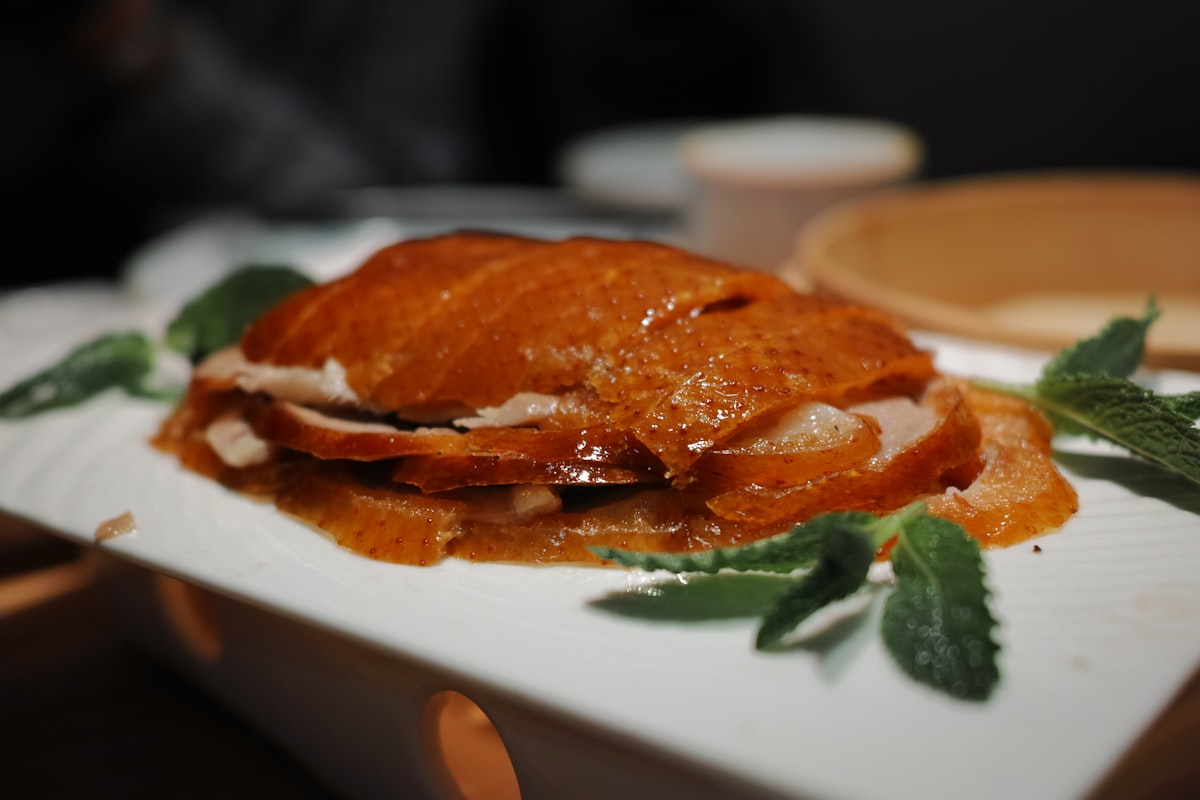
How it is served (the three-course ritual):
- Skin-first: The crispiest skin pieces, served with a dish of white sugar for dipping. This is the purest expression of the roast — just fat, sugar, and texture.
- The wraps: Slices of skin-on meat laid on tissue-thin lotus-leaf pancakes (荷叶饼). You add hoisin sauce, julienned cucumber, and white scallion. Fold, eat in one bite.
- The soup: The carcass goes back to the kitchen and returns as a milky bone broth — sometimes plain, sometimes with cabbage and tofu.
Where to actually eat it:
| Restaurant | Vibe | Price (per person) | Notes |
|---|---|---|---|
| Siji Minfu (四季民福) | Modern, polished, what locals recommend | ¥150–250 ($21–35) | The current consensus pick. Dengshikou branch has Forbidden City views. Expect a 1–2 hour queue at peak times — go before 5:30 PM or after 8 PM. |
| Dadong (大董) | Upscale, creative, “superlean” duck | ¥300–500 ($42–70) | The 5.0 version of their duck just won Black Pearl’s Dish of the Year. Innovative presentations, less fatty. Best for a special occasion. |
| Quanjude (全聚德) | Historic, touristy, 1864 original | ¥250–350 ($35–50) | Worth visiting once for the history — this is where Peking duck became famous — but locals will tell you the quality no longer justifies the price. |
| Bianyifang (便宜坊) | Traditional, 1416 original, closed-oven | ¥150–250 ($21–35) | The oldest duck restaurant in Beijing. Uses a closed-oven technique (焖炉) that roasts without an open flame. A completely different style — the skin is less crackly but the meat is juicier. |
How to order: A whole duck feeds 2–3 people comfortably. Say “一只烤鸭” (yī zhī kǎo yā — one roast duck). Most restaurants expect you to order duck — it is not a side dish, it is the reason you walk through the door.
Pro tip: The queue at Siji Minfu’s Palace Museum branch can hit 400 people by 11:30 AM. Use their WeChat mini-program to grab a virtual queue ticket, or go to the Wangfujing or Qianmen branches instead — same duck, shorter wait.
2. Zha Jiang Mian (炸酱面)
If Peking duck is the emperor, zha jiang mian is the people. This is Beijing’s soul food — a bowl of thick wheat noodles topped with dark, salty-sweet fermented soybean paste (黄酱) stir-fried with minced pork, surrounded by a fan of julienned vegetables: cucumber, radish, soybean sprouts, and sometimes celery or green beans.
You mix it all together at the table. The paste clings to every strand of noodle. The vegetables give crunch against the chew. It is savory, slightly sweet, and deeply comforting — the kind of dish that makes you understand why Beijingers eat it multiple times a week.
Price: ¥15–35 ($2–5) at family-run shops.
Where to find it: The best zha jiang mian comes from small, family-run noodle shops in residential neighborhoods — Haidian district (海淀) has many. Avoid the ¥60 versions on Nanluoguxiang and other tourist streets; they are watered-down imitations. A good rule: if the menu is only in Chinese and the cook looks like someone’s grandmother, you are in the right place.
How to order: “一碗炸酱面” (yī wǎn zhá jiàng miàn — one bowl zha jiang mian). Mix quickly — the noodles clump if you wait.
3. Beijing Hot Pot / Shuan Yang Rou (涮羊肉)
This is not the spicy, numbing Sichuan hot pot you may have seen on YouTube. Beijing hot pot — also called Mongolian hot pot — is a completely different beast. The broth is a clear, barely-seasoned water with scallion, ginger, goji berries, and dried jujubes. The pot is a brass cauldron with a charcoal chimney in the center. The point is not the soup. The point is the meat.
Thin, hand-sliced mutton — specifically from Inner Mongolian sheep — is swished through the simmering water for about 10 seconds until it curls and turns pale. You then dip it in a sesame paste sauce (芝麻酱) mixed with fermented tofu, chive flower paste, chili oil, and a drizzle of the broth itself. The sesame sauce is thick, nutty, and completely coats the meat.
Add some napa cabbage, glass noodles, and frozen tofu to the pot as you go. At the end, the broth — now rich with lamb fat — is ladled into bowls and drunk as soup.
Where to go:
- Donglaishun (东来顺): The 1903 classic. Multiple locations. ¥120–200/person ($17–28). Reliable, historic, tourist-friendly with picture menus.
- Ju Bao Yuan (聚宝源): The most famous halal hot pot on Niujie Muslim Street. Operating since the 1940s. Hand-cut lamb is the star. Arrive before 11:30 AM on weekdays or prepare to queue for an hour.
- Man Heng Ji (满恒记): Michelin Bib Gourmand 2024. Lamb sourced from Inner Mongolia’s Sunite Prairie. ¥120–180/person ($17–25).
How to order: Start with “两份羊肉” (liǎng fèn yáng ròu — two portions of lamb) for two people and add more as needed. The sesame dipping sauce is usually self-mixed at a sauce bar — watch what the locals do and copy them.
4. Jianbing (煎饼)
This is the breakfast that moves Beijing. Every morning, millions of people grab a jianbing from a street cart on the way to the subway. It is a crepe, but not the French kind — the batter is mung bean and millet, spread paper-thin on a circular cast-iron griddle. An egg is cracked on top and spread across the surface. Black sesame seeds and chopped scallions are scattered over it. Then the whole thing is flipped.
Now comes the architecture: a swipe of sweet bean paste, a smear of fermented tofu sauce, an optional hit of chili paste. Then the non-negotiable element — a baocui (薄脆), a rectangular sheet of fried dough that looks like a crispy cracker. It gets folded inside, and the crepe is wrapped around it into a portable rectangle, cut in half with the spatula, and handed to you in a paper sleeve.
Your first bite goes: soft crepe, rich egg, then an explosive crunch from the baocui, followed by the sweet-salty-spicy sauce. It is warm, messy, and perfect. It costs ¥6–12 ($0.85–1.70) and it is designed to be eaten while walking.
Where to find it:
- Morning street stalls in hutong neighborhoods — any residential alley between 6 and 9 AM. Follow the short queue of locals in office clothes.
- Dahua Jianbing (大华煎饼) in Dongcheng District — a legendary window counter inside a neighborhood supermarket. Their baocui is fried fresh every morning. Sells out by 10–11 AM.
- Bai Mao Jianbing Wang (白毛煎饼王) — the “White Hair Jianbing King” has been at it since 1987. The most famous stall in the city. Find it on Huguosi Street or at the B2 level of Wangfujing Department Store.
How to order: “一个煎饼” (yī gè jiān bǐng — one jianbing). Add “加两个鸡蛋” (jiā liǎng gè jī dàn — add two eggs) for the local upgrade. “不要辣” (bù yào là) if you skip chili.
Beyond the Big Four: Deep Cuts for the Curious
Once you have checked off the essential four, Beijing’s food scene opens up into strange, wonderful territory. These dishes are not for everyone — but they are what the city actually tastes like.
Lu Zhu (卤煮) — Pork Organ Stew
A dark, aromatic cauldron of pork lungs, intestines, and tofu simmered in a spiced broth with wheat buns. Chopped with scissors into a bowl, topped with cilantro, garlic, and fermented tofu paste. It is rich, funky, and deeply savory. Most Beijingers over 40 grew up on this.
Price: ¥20–35 ($3–5). Find it at small shops with a giant pot visible from the street.
Chao Gan (炒肝) — Stir-Fried Liver
Despite the name, it is not stir-fried — it is pork liver and intestines simmered in a glossy garlic-starch sauce. Eaten for breakfast, often alongside steamed buns. The texture is thick and slick, the garlic is aggressive, and it is one of those dishes you either love on first bite or never try again.
Price: ¥15–25 ($2–3.50). Look for breakfast shops with crowds spilling onto the sidewalk.
Bao Du (爆肚) — Quick-Boiled Tripe
Slices of beef or lamb tripe are blanched for exactly the right number of seconds — different parts of the stomach require different timing — and served immediately with a bowl of sesame dipping sauce. The texture is the point: a clean, snappy crunch. Served cold or hot.
Price: ¥40–80 ($6–11). Found at traditional Muslim (Hui) restaurants.
Dou Zhi (豆汁) — Fermented Mung Bean Drink
This is the taste that separates Beijingers from everyone else. Dou zhi is a grayish-green liquid made from fermented mung beans. It smells sour, almost funky — some foreigners compare it to blue cheese water. Locals drink it hot with pickled vegetables and fried dough rings (焦圈). It is the ultimate bravery test for visitors.
Price: ¥3–5 ($0.40–0.70). Try it at Huguosi Snacks (护国寺小吃) or a neighborhood breakfast spot. Do not smell it before drinking — just take the sip.
Tanghulu (糖葫芦) — Candied Hawthorn
Skewers of hawthorn berries dipped in hardened sugar, sold from street carts in autumn and winter. The sugar shell cracks between your teeth, then the fruit underneath is sharply sour — the contrast is addictive. Modern versions use strawberries, grapes, or cherry tomatoes, but the classic hawthorn is the real thing.
Price: ¥5–10 ($0.70–1.40) per skewer.
More Worth Knowing
- Donkey Burger (驴肉火烧) — Shredded braised donkey meat in a flaky, pan-fried wheat flatbread from Hebei province. Salty, rich, and much better than it sounds. ¥15–25 ($2–3.50).
- Lamb Skewers (羊肉串) — Xinjiang-style grilled skewers seasoned with cumin and chili flakes, sold by street vendors, especially in Niujie and Ghost Street. ¥3–8 ($0.40–1.10) per skewer.
- Mongolian Hot Pot — Distinct from the Beijing style: lamb is cooked in a helmet-shaped brass pot over charcoal, popular in winter at halal restaurants.
Where to Eat by Area
Not all food streets are created equal. Some are legendary. Some are tourist traps. Here is a field guide.
| Area | Vibe | What to Eat | Verdict |
|---|---|---|---|
| Ghost Street (簋街) | Red lanterns, 24-hour dining, nocturnal energy | Spicy crawfish (麻辣小龙虾), Sichuan hot pot, lamb skewers. Hu Da (胡大) is the flagship — 2-hour queues even at 10 PM. | Go. Go after 9 PM for the full red-lantern atmosphere. The western end has traditional courtyard restaurants. |
| Niujie (牛街) | Beijing’s Muslim quarter, 1,000 years old | Halal lamb hot pot, beef shaobing (¥5), crispy beef cakes (¥6), sticky rice pastries, sesame lamb. Every establishment is halal-certified. | Go. This is the real deal — no tourists, just locals queuing for the best lamb in Beijing. Take Subway Line 7 or 19 to Niujie Station. |
| Qianmen / Dashilan (前门/大栅栏) | Historic commercial street, better curated than Wangfujing | Traditional tea houses, old Beijing snacks, Siji Minfu Qianmen branch (rooftop igloos in winter). | Worth a walk-through. Combine with a visit to Tiananmen Square. |
| Nanluoguxiang (南锣鼓巷) | Tourist hutong, crowded on weekends | Snack-hopping: jianbing, tanghulu, yogurt in clay jars (北京酸奶). | Fine for a snack crawl, but do not sit down for a full meal here — prices are inflated and quality is average. |
| Wangfujing Snack Street (王府井小吃街) | Tourist trap, scorpions on sticks for Instagram | Nothing you should actually eat. | Skip. Zero Beijingers eat here. The scorpion skewers exist for photos, not flavor. |
| Sanlitun (三里屯) | Modern, international, expat-heavy | Mid-to-high-end dining from multiple cuisines. Good for a break night when you need a break from Chinese food. | Go if you need variety or a cocktail. Not for traditional Beijing food. |
| Huguosi Street (护国寺街) | Residential, old Beijing | Huguosi Snacks (护国寺小吃) for a one-stop breakfast of dozens of traditional pastries, dou zhi, jianbing. | Go for breakfast. A cultural experience in a single meal. |
Night Markets & Street Food: The Real Story
The tourist narrative says to go to Donghuamen Night Market for Beijing street food. The reality: Donghuamen has been heavily rebranded and sanitized. It exists, but it is not where the action is.
The real night food destination is Ghost Street (簋街). It earned its name because it was the only street lit at night during the Qing Dynasty — merchants and traders would gather there after dark. Today, the red lanterns still glow, and some restaurants serve until 4 AM. The street has become more chain-dominated post-pandemic, but the atmosphere is unmatched: the sizzle of woks, the chatter of tables spilling onto the sidewalk, the haze of chili and Sichuan peppercorn in the air.
For actual street food, mornings beat nights. The best jianbing, baozi, and fried dough sticks appear on street carts between 5 and 9 AM in hutong neighborhoods — especially in Dongcheng and Xicheng districts. Look for the carts with the longest lines of locals. If no one is queuing, keep walking.
How to Order Without Speaking Chinese
You can eat very well in Beijing without a word of Mandarin. Here is your toolkit.
The QR code is your friend. Nearly every restaurant in Beijing now uses scan-to-order. Your table will have a QR code — scan it with Alipay, and you will see a picture menu (usually with some English). Tap what you want, confirm, and food appears. It is the single biggest improvement for foreign diners in the last five years.
For paper menus: Pull up Dianping (大众点评) on your phone. The photo gallery for each restaurant is a visual menu. Point at what looks good. Show the photo to your server.
Essential phrases (pronounce them however you can — pointing + smiling works):
| Phrase | Chinese | Meaning |
|---|---|---|
| Wǒ yào zhè ge | 我要这个 | I want this (while pointing at a photo or QR menu) |
| Bù yào là | 不要辣 | No spicy |
| Wēi là | 微辣 | Mild spicy (Beijingers will still make it spicy — “mild” is relative) |
| Mǎi dān | 买单 | Check, please |
| Yī wǎn | 一碗 | One bowl |
| Yī fèn | 一份 | One portion |
| Hǎo chī! | 好吃! | Delicious! (servers light up when you say this) |
Cashless payment: Almost no restaurant accepts foreign credit cards directly. You pay by scanning a QR code with Alipay or WeChat. If you have not set this up yet, read our payment guide before you arrive. Alipay now supports foreign Visa and Mastercard — the ¥200 transaction threshold for foreign cards is worth knowing about: split your bill if it exceeds ¥200 to avoid processing delays.
Dietary Restrictions
Vegetarian
Hard but doable. Beijing cuisine uses meat and animal fat extensively. However, Buddhist vegetarian restaurants (素菜馆, sù cài guǎn) are scattered across the city and offer elaborate, satisfying meals. The best ones recreate meat textures using tofu skin, gluten, and mushrooms — you will eat “fish” made from layered tofu skin and “pork” made from braised wheat gluten, and both will be excellent.
Safe vegetable dishes to seek out:
- Di San Xian (地三鲜) — Stir-fried potato, eggplant, and green pepper. Found at almost every casual restaurant. ¥25–40.
- Tomato Egg (西红柿炒鸡蛋 / 番茄炒蛋) — Scrambled eggs in a sweet-tangy tomato sauce. The most beloved home-cooked dish in China. ¥15–25.
- Gan Bian Si Ji Dou (干煸四季豆) — Dry-fried green beans with Sichuan pepper. Specify vegetarian (素) version.
Note: “Vegetarian” (素食, sù shí) in China sometimes still includes oyster sauce or small amounts of minced pork for flavor. Buddhist vegetarian restaurants (marked 素菜馆 or 斋) are strict and will not use any animal product.
Gluten-Free
Very difficult. Soy sauce (which contains wheat) is the foundation of almost every savory dish. Rice-based cuisines (southern Chinese, Southeast Asian) are easier, but Beijing is wheat country. Prepare a card with your restriction written in Chinese: “我对面筋过敏,不能吃小麦、大麦、黑麦、酱油、醋。” (I am allergic to gluten — cannot eat wheat, barley, rye, soy sauce, vinegar.)
Halal
The best food city in China for halal diners. Beijing has hundreds of halal-certified restaurants. Look for the green-and-white 清真 (qīng zhēn) sign on storefronts — this is the official certification mark.
Niujie Muslim Quarter is the epicenter. Every food vendor on this 1.5-kilometer street is halal-certified. Ju Bao Yuan’s halal hot pot, Manji shaobing’s sesame pancakes, and Jingtai Maji’s lamb skewers are all non-negotiable stops. See the Where to Eat table above for more detail.
Breakfast Culture: What Beijingers Actually Eat
Breakfast in Beijing is not hotel toast and eggs. It is a lively, savory affair that happens primarily on the street. Between 5 and 9 AM, the hutongs fill with the smell of hot oil, sesame, and sizzling griddles.
The classic Beijing breakfast lineup:
| Dish | Chinese | What It Is | Price |
|---|---|---|---|
| Jianbing | 煎饼 | Mung bean crepe with egg, crispy cracker, sauces | ¥6–12 |
| Youtiao | 油条 | Long, golden fried dough stick — crisp outside, airy inside | ¥2–4 |
| Dou Jiang | 豆浆 | Fresh soy milk. Order tián (甜, sweet) or xián (咸, savory with pickled vegetables and dried shrimp). | ¥3–5 |
| Baozi | 包子 | Fluffy steamed buns filled with pork, vegetables, or red bean paste | ¥2–5 each |
| Zhou | 粥 | Rice congee, served plain or with pickled vegetables, century egg, or shredded pork | ¥5–15 |
| Shaobing | 烧饼 | Layered sesame flatbread, sometimes filled with beef or red bean | ¥2–5 |
| Dou Zhi + Jiao Quan | 豆汁+焦圈 | Fermented mung bean drink with crispy fried dough rings — the taste of old Beijing | ¥3–5 |
Where to go for breakfast:
- Huguosi Snacks (护国寺小吃) is the one-stop solution. This is a cafeteria-style chain with dozens of traditional breakfast items, all laid out so you can point and choose. The Xicheng District flagship on Huguosi Street is the most atmospheric.
- Neighborhood street carts in any hutong area — Dongcheng, Xicheng, and western Chaoyang districts. Look for morning markets near residential compounds.
- Zhaojunsheng Market — a proper fresh market with food stalls including some of the best jianbing in the city.
Cost Expectations: What You Will Actually Spend
Beijing food spans a wider price range than most visitors expect. Here is what each tier looks like in 2026:
| Level | Per Person | Includes | Example |
|---|---|---|---|
| Street food meal | ¥15–35 ($2–5) | One main item + drink | Jianbing + soy milk |
| Breakfast spread | ¥20–40 ($3–6) | 3–4 items at Huguosi Snacks | Youtiao, dou jiang, baozi, tea egg |
| Casual restaurant | ¥40–100 ($6–14) | Main dish + sides | Zha jiang mian + cucumber salad + beer |
| Mid-range dinner | ¥100–200 ($14–28) | Full meal for one | Hot pot, casual Peking duck, sit-down noodle dinner |
| High-end dinner | ¥200–500+ ($28–70+) | Multi-course experience | Dadong duck, Black Pearl restaurants, fine dining |
| Michelin tasting menu | ¥600–2,000+ ($85–280+) | 8–15 course tasting | King’s Joy (京兆尹) vegetarian, TRB Hutong French |
Budget tips:
- A full Beijing food day can be done for as little as ¥60–80 ($8–11) if you eat breakfast from a cart, lunch at a noodle shop, and a casual dinner.
- Beer (Yanjing, the local brand) is ¥5–15 at casual restaurants and significantly cheaper than wine or cocktails.
- Most restaurants do not add service charge. Tipping is not expected.
- The Alipay ¥200 foreign-card threshold is annoying: split payments with a friend or ask the server to split the bill into two transactions.
Common Mistakes (And How to Avoid Them)
1. Eating at Wangfujing Snack Street. It is entirely a tourist trap. The food is overpriced, the quality is low, and no Beijing local has eaten there since approximately 2005. The scorpions and seahorses on sticks exist for social media — walk through for the spectacle if you must, but do not spend money there.
2. Going to Quanjude expecting the best duck. Quanjude is historically important — it is where Peking duck was popularized — but its food quality has been coasting on reputation for decades. You go to Quanjude for the history. You go to Siji Minfu or Dadong for the duck.
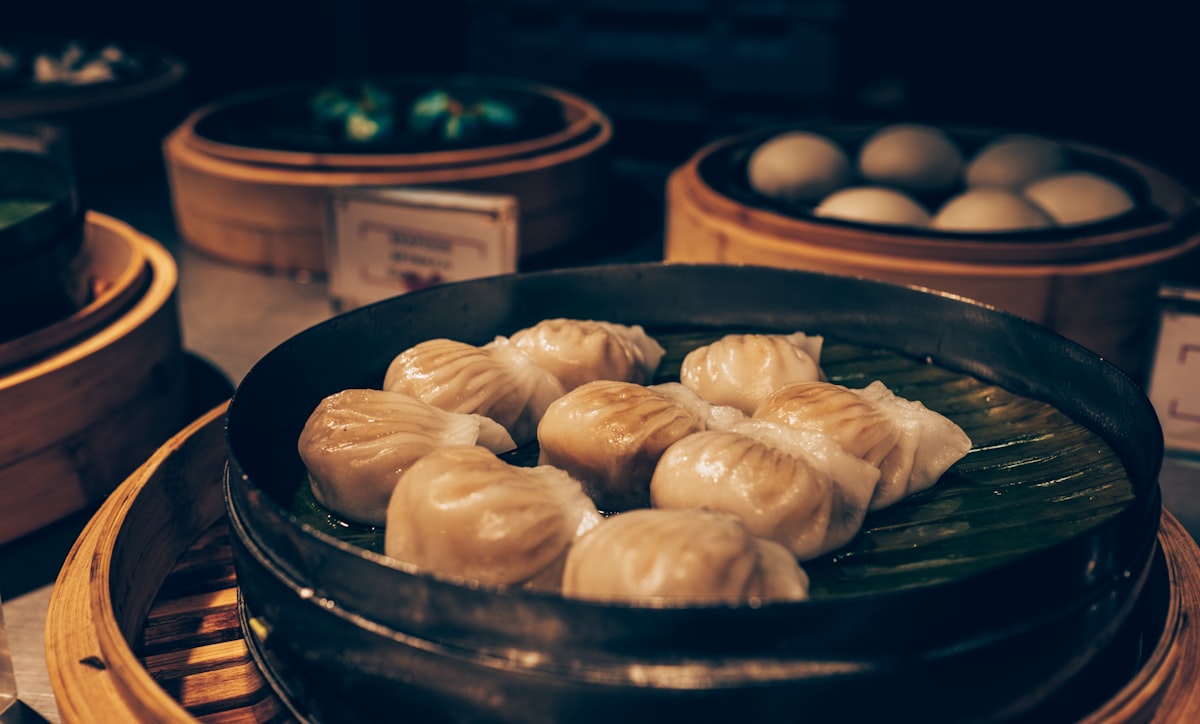
3. Assuming every Chinese dish is available everywhere. Beijing is northern Chinese food: wheat, lamb, soy, garlic. You will not find good dim sum (that is Guangzhou), spicy hot pot (that is Chongqing), or soup dumplings (that is Shanghai). Eat what the region does best.
4. Ordering “Kung Pao Chicken” expecting the Western takeout version. Beijing-style Kung Pao chicken (宫保鸡丁) is less sweet, more savory, and heavy on Sichuan peppercorns. It is delicious — just different from what you may be expecting.
5. Eating at restaurants attached to tourist attractions. This is a universal rule, but it applies doubly in Beijing. The restaurant at the Great Wall? Skip it. The café inside the Forbidden City? Emergency-only. Walk 10 minutes away from any attraction and the food quality doubles while the price halves.
6. Not checking if a restaurant is open. Post-2025, many independent Beijing restaurants have irregular hours or have closed. Check Dianping or a recent Google Maps review before trekking across the city.
7. Ignoring the QR code on your table. Scan it. It is the menu. In many mid-range restaurants, there is no physical menu at all — the QR code is the only way to order.
The Bottom Line
Beijing rewards curious eaters. The city does not hand its best food to you — you have to walk past the tourist street, down the unmarked hutong alley, to the shop with the handwritten menu and the grandmother stir-frying noodles in the back. That is where Beijing food lives.
Learn three phrases: “我要这个” (I want this), “不要辣” (no spicy), and “买单” (check please). Set up Alipay before you land. Step away from Wangfujing. Eat jianbing on the sidewalk at 7 AM, queue for Siji Minfu at 5 PM, and drink hot dou zhi exactly once.
Beijing has been feeding emperors and noodle-slurping locals for a thousand years. You are in good hands.