Beyond Beijing and Shanghai: Nanjing, Suzhou, Xiamen, and Guizhou for Travelers Who Want More (2026)
The classic first-trip-to-China route runs Beijing, Xi’an, Shanghai, maybe Guilin. That route exists for a reason, those cities contain the greatest hits. But China has other cities that are just as good and half as known.
Nanjing was China’s capital for six dynasties. Suzhou’s gardens are UNESCO-listed masterpieces of landscape design. Xiamen is a subtropical island city with colonial architecture and a car-free piano island offshore. Guizhou province has mountain villages, rice terraces, and minority cultures that feel like a different century.
These four places have one thing in common: Chinese travelers love them, and Western travelers don’t know they exist. Here’s what you’re missing, and how to fit them into a trip.
Nanjing: The Capital of Six Dynasties
Nanjing (南京) sits on the Yangtze River, 300 kilometers west of Shanghai. It was China’s capital during six different dynasties, most recently as the Republic of China’s capital from 1927 to 1949. That history is visible everywhere, in the 600-year-old city walls, the Ming Dynasty tombs, and the tree-lined boulevards planted by the republican government.
The city feels different from Beijing or Shanghai. Beijing’s history is imperial and museum-like. Nanjing’s history is lived-in. The city walls form part of daily life, people walk their dogs on them. The former presidential palace sits on a normal commercial street. The French plane trees that line Zhongshan Road were planted in the 1920s and now form a continuous green tunnel through the city center.
What to see
Sun Yat-sen Mausoleum (中山陵). Dr. Sun Yat-sen, the founder of modern China, is buried on the slopes of Purple Mountain in a mausoleum that rivals any emperor’s tomb in scale. The approach is a 392-step staircase through white marble gates. At the top, the view over the forested mountain and the city below is spectacular. The mausoleum is free but requires advance booking. Go early.
Ming Xiaoling Mausoleum (明孝陵). The tomb of the Hongwu Emperor, founder of the Ming Dynasty, sits at the foot of Purple Mountain near Sun Yat-sen’s mausoleum. The Sacred Way, a stone path lined with 12 pairs of stone animals, is the highlight. In autumn, the gingko trees along the path turn gold. This is the best photo spot in Nanjing.
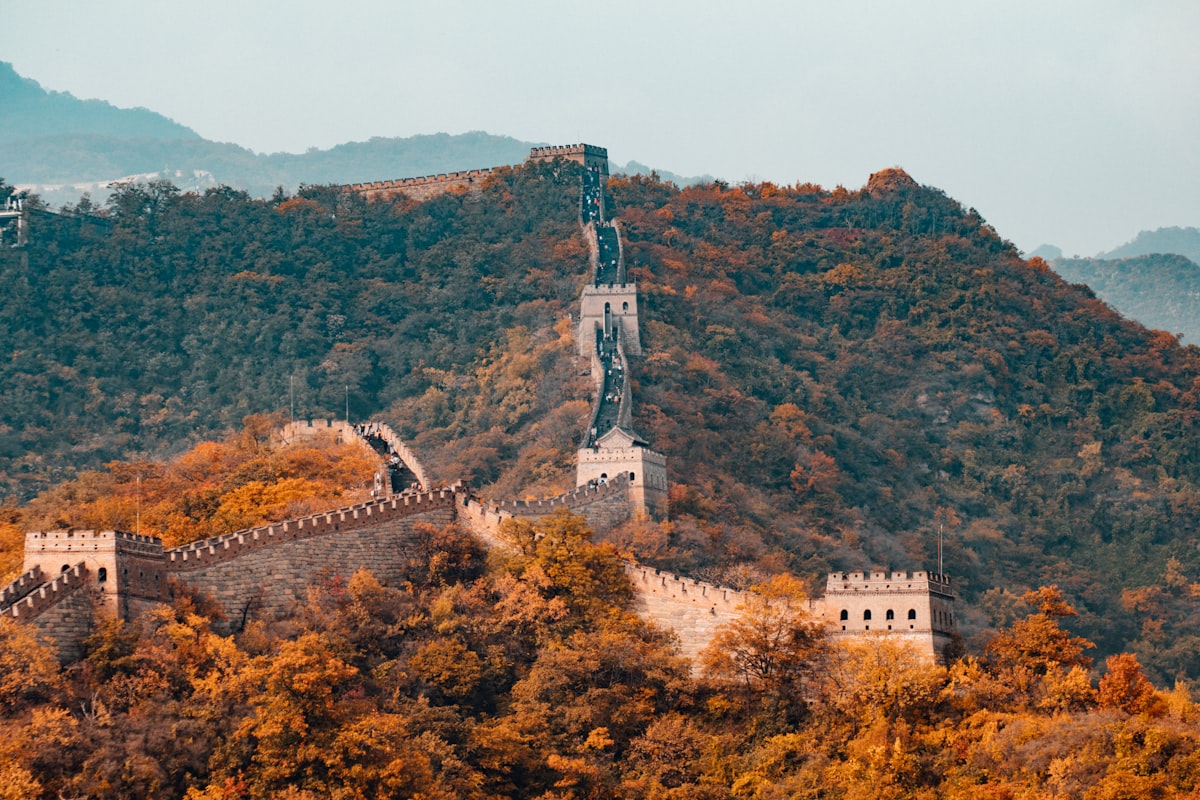
Nanjing City Wall (南京城墙). At 35 kilometers, the longest city wall ever built. Large sections are intact and walkable. The Zhonghua Gate section is the most impressive: a massive fortress-gate complex with four concentric courtyards designed to trap invading armies. Walk the wall from Zhonghua Gate to Xuanwu Gate for the best city views. ¥50.
Nanjing Massacre Memorial Hall (侵华日军南京大屠杀遇难同胞纪念馆). In 1937, Japanese troops captured Nanjing and killed an estimated 300,000 civilians and prisoners of war over six weeks. The memorial hall is one of the most powerful museums in China, somber, thorough, and emotionally difficult. Allow 3 hours. Free entry. Not for everyone, but essential for understanding the city and the national psyche.
Qinhuai River and Confucius Temple area (夫子庙-秦淮河). The historic entertainment district along the Qinhuai River. At night, boats glide under lantern-lit bridges. The area is touristy in the way Venice is touristy, crowded, commercial, and still worth seeing. Skip the souvenir shops. Walk the riverbank after dark.
What to eat
Nanjing’s food is part of the Jiangsu school, known for precise knife work and subtle flavors. The signature dish is Nanjing salted duck (盐水鸭), duck poached in salt brine, served cold, with tender flesh and a clean, savory taste. Han Fuxing (韩复兴) makes the best version.
Duck blood and vermicelli soup (鸭血粉丝汤) is the local comfort food: slippery vermicelli noodles in a rich duck broth with cubes of coagulated duck blood, tofu puffs, and duck offal. It tastes better than it sounds.
Soup dumplings (汤包) in Nanjing are sweeter than Shanghai’s version, with a thinner skin and more soup inside. Jiming Soup Dumpling (鸡鸣汤包) near Confucius Temple is the reference.
Logistics
High-speed trains from Shanghai take 1-1.5 hours. From Beijing, 3.5-4.5 hours. The metro system covers all major sites. Two full days is the minimum; three is better.
Suzhou: Gardens, Canals, and Silk
Suzhou (苏州) is 30 minutes by high-speed train from Shanghai. It has been famous for its classical gardens for nearly a thousand years. Marco Polo visited in 1276 and was impressed. The gardens are still here, and they are among the finest examples of Chinese landscape design anywhere.
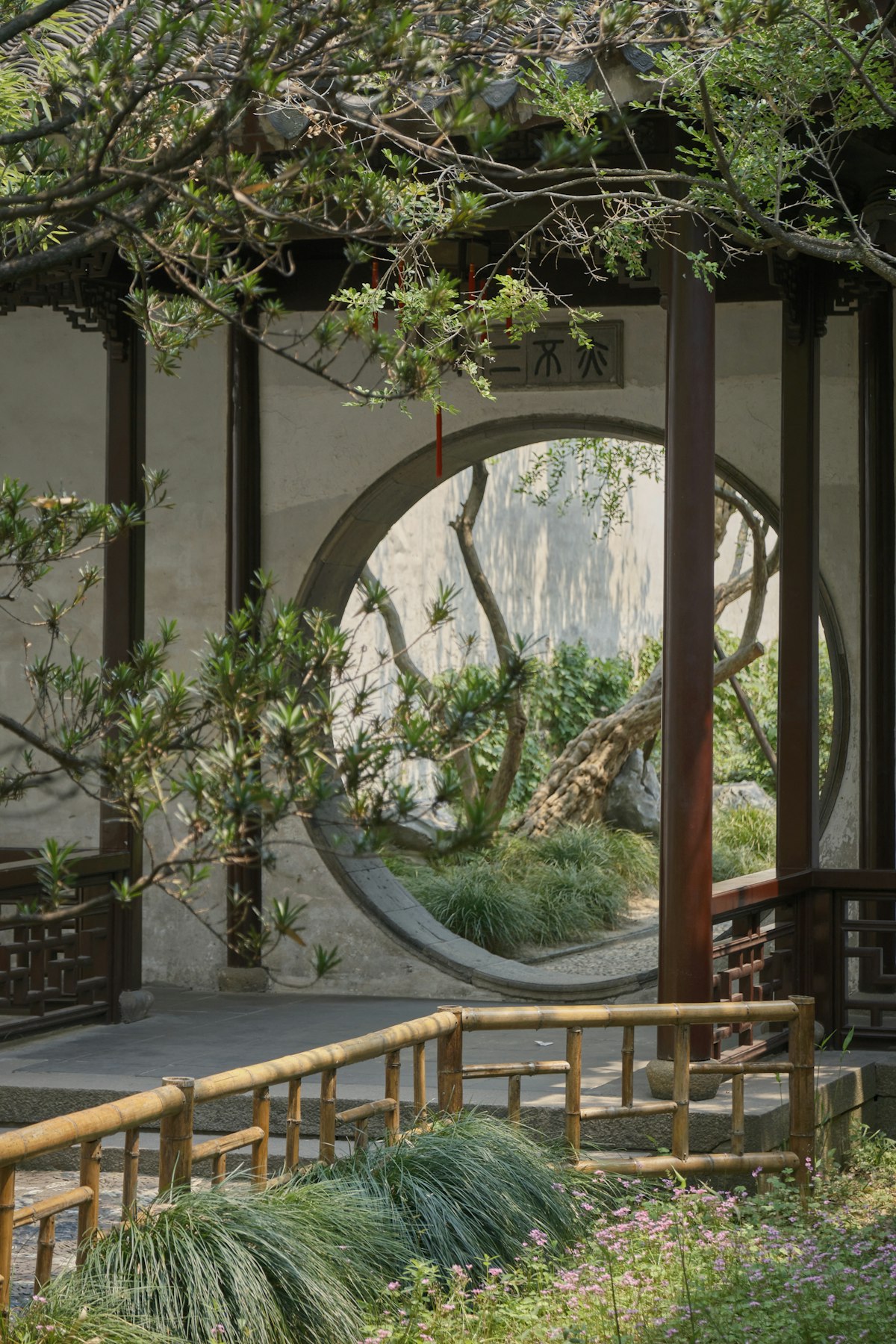
The Suzhou garden is not a flower garden. It’s a constructed landscape: rocks arranged to suggest mountains, ponds shaped like lakes, pavilions positioned for specific views, and walls with moon gates that frame scenes like paintings. Every element is intentional. A good Suzhou garden feels much larger than it is, the design uses perspective tricks, borrowed scenery, and winding paths to create the illusion of unlimited space within a walled compound the size of a suburban backyard.
What to see
Humble Administrator’s Garden (拙政园). The largest and most famous Suzhou garden. Five hectares of ponds, pavilions, bridges, and carefully composed views. It was built in 1509 by a retired official who named it with typical scholar self-deprecation. ¥80. Arrive at opening (7:30 AM) or accept that you’ll share it with a thousand other people.
Lingering Garden (留园). Smaller, more intimate, and architecturally more interesting than the Humble Administrator’s Garden. The spatial choreography is the point, corridors that alternately compress and open, windows that frame specific rock formations, a sequence of spaces that unfolds like a scroll painting. ¥55.
Tiger Hill (虎丘). A hill on the northwest edge of the old city with a leaning pagoda from the 10th century. The “Tiger Hill Pagoda” leans about 3 degrees, more than Pisa’s current lean was before its correction. The hill itself is a pleasant walk through bamboo groves and tea pavilions. ¥80.
Shantang Street (山塘街). A canal-side street of whitewashed buildings, stone bridges, and red lanterns. It’s touristy at the eastern end near the entrance. Walk 15 minutes west and it becomes a normal neighborhood where people live, hang laundry, and sell vegetables from canal boats. The canal at night with lanterns reflected in water is the classic Suzhou photo.
Suzhou Museum (苏州博物馆). Designed by I.M. Pei, who was born in Suzhou. The building is the attraction, a modern interpretation of Suzhou garden architecture with white walls, geometric volumes, and water features. The collection is mostly local artifacts. The building is a masterpiece. Free, advance booking required.
What to eat
Suzhou food is sweeter than other Chinese cuisines. Squirrel-shaped mandarin fish (松鼠桂鱼) is the visual showstopper: a whole fish scored in a crosshatch pattern, deep-fried so the flesh separates into “fur,” then coated in sweet-sour sauce. Songhelou (松鹤楼), open since 1757, makes the classic version.
Suzhou-style noodles (苏式面) are thin, springy, and served in a dark soy-based broth with various toppings. The classic is Fengzhen noodles (枫镇大面) with braised pork. Tongdexing (同得兴) is the noodle house to visit.
Logistics
Suzhou is 25-30 minutes from Shanghai by high-speed train. It works as either a day trip or an overnight. If you’re doing two gardens plus Tiger Hill, stay overnight, the gardens reward slow time, and Suzhou at night is quieter and lovelier than Shanghai.
The city has two train stations. Suzhou Station is closer to the old city and gardens. Suzhou North is further out but connected by metro Line 2.
Xiamen: Islands, Colonial Architecture, and Laid-Back Coastal Life
Xiamen (厦门) is a subtropical island city on China’s southeast coast, across the strait from Taiwan. It was one of the first treaty ports opened to foreign trade in 1842, and the colonial legacy, European consulates, churches, and merchant houses, survives on Gulangyu Island.
Xiamen’s appeal is different from the historical weight of Nanjing or the artistic refinement of Suzhou. It’s a lifestyle city. The temperature rarely drops below 10°C. The streets are lined with banyan trees. The beaches are not good, but they exist, and the seafood is excellent. Chinese travelers rank Xiamen among the country’s most livable cities year after year.
What to see
Gulangyu Island (鼓浪屿). A 5-minute ferry from downtown Xiamen. Cars are banned. The only vehicles are electric golf carts and your feet. The island is a time capsule of treaty-port architecture: Victorian mansions, Art Deco villas, and consulate buildings from a dozen different countries, all connected by narrow lanes overgrown with bougainvillea.
Gulangyu is also “Piano Island”, it has China’s only piano museum, and you’ll hear people practicing as you walk past open windows. The highest point, Sunlight Rock, has a 360-degree view over the island’s red-tiled roofs to the sea. ¥50.
The ferry costs ¥35 round trip. Buy tickets online in advance, daily visitor numbers are capped. Spend a full day wandering. There is no “must-see” beyond the island itself.
Zhongshan Road (中山路). The main pedestrian street in downtown Xiamen, lined with arcaded colonial buildings. It’s shopping-oriented, but the architecture is worth an evening walk. The side alleys have better food than the main drag.
Nanputuo Temple (南普陀寺). A working Buddhist temple at the foot of Wulao Mountain, free to enter. The temple dates to the Tang Dynasty. Climb the path behind the temple up Wulao Mountain for views over Xiamen University and the sea.
Xiamen University (厦门大学). One of China’s most beautiful campuses, with traditional-style buildings, lakes, and ocean views. Entry is free but requires advance registration via the university’s WeChat account.
Huandao Road (环岛路). A coastal highway with a dedicated bike lane running 31 kilometers along the shoreline. Rent a bike and ride a section. The beach at Baicheng is the most accessible.
What to eat
Xiamen’s food is Fujian coastal: seafood-forward, light, and umami-rich. Shacha noodles (沙茶面) are the local obsession, wheat noodles in a peanut-and-seafood-based broth with toppings you select from a counter (shrimp, squid, tofu, pork). Wu Zaitian (乌糖沙茶面) is the famous shop, but any place with a line is good.
Oyster omelette (海蛎煎), fresh oysters bound with sweet potato starch and egg, pan-fried until crispy at the edges and gooey in the center. The night market stalls near Zhongshan Road make the best versions.
Seafood. Xiamen’s seafood restaurants display tanks of live fish, shrimp, crab, and shellfish. Point at what you want. They’ll cook it. This is the freshest seafood you’ll eat in urban China.
Logistics
Xiamen Gaoqi International Airport (XMN) has direct flights from major Chinese cities and some international connections (Singapore, Kuala Lumpur, Seoul). High-speed trains from Shanghai take 7-8 hours; from Shenzhen, about 3.5 hours.
The city is compact. Most sites are within a 20-minute Didi ride of each other. Two full days is the minimum; three lets you add a beach afternoon or a second Gulangyu visit.
Guizhou: Mountains, Minorities, and the China Most Travelers Never See
Guizhou (贵州) is China’s poorest province and one of its most beautiful. It sits in the southwest, a landscape of karst mountains, terraced rice fields, and villages inhabited by Miao and Dong minorities whose traditions predate Han Chinese settlement.
This is not a comfortable trip. The infrastructure is rougher than in eastern China. English is almost nonexistent. The roads twist through mountains. But for travelers who want to see a China that has not been smoothed into a tourist product, Guizhou delivers.
What to see
Xijiang Miao Village (西江千户苗寨). The largest Miao minority village in China: over 1,400 wooden houses stacked on a hillside like a cascade of dark timber and tiled roofs. The view from the observation deck at dusk, when thousands of lights come on across the hillside, is one of the most photogenic scenes in China.
Xijiang has become touristy, there are photo studios renting Miao costumes on every corner, but the scale and the setting are still extraordinary. Stay overnight. The village after the day-trippers leave is a different place. ¥90.
Zhenyuan Ancient Town (镇远古镇). A 2,000-year-old town stretched along the Wuyang River, with Ming and Qing dynasty buildings climbing the hills on both banks. Less crowded than Fenghuang or Lijiang. The river at night, with red lanterns reflecting in the water, is worth the trip alone. Free to enter the town; individual attractions charge small entry fees.
Huangguoshu Waterfall (黄果树瀑布). China’s largest waterfall: 77.8 meters high and 101 meters wide. You can walk behind the curtain of water through a natural cave. The park includes several smaller waterfalls and pools. ¥180. Go on a weekday, it’s one of China’s most popular natural attractions.
Fanjing Mountain (梵净山). A UNESCO World Heritage site in eastern Guizhou. Two ancient Buddhist temples sit on a split rock pinnacle above the clouds, connected by a narrow stone bridge. The hike is strenuous, thousands of steps, but there’s a cable car for the first section. The temples and the cloud sea are surreal. ¥100 plus ¥160 for the cable car round trip. Book tickets days ahead; daily entry is capped.
Kaili and the Miao villages (凯里). Kaili is the gateway to Guizhou’s Miao minority region. The Thursday market in Kaili draws villagers from the surrounding mountains in traditional dress, selling embroidery, silver jewelry, and batik fabrics. The villages themselves, Langde, Matang, Basha, offer homestays and are far less commercialized than Xijiang.
What to eat
Guizhou food is sour and spicy. The defining flavor is sour soup (酸汤), a fermented tomato-and-rice broth used for hot pot and fish stews. Sour soup fish (酸汤鱼) is the provincial dish: whole river fish simmered in bubbling red sour broth with mountain herbs and chilies. It’s addictive.
Siwawa (丝娃娃, “silk babies”), a DIY dish of paper-thin rice crepes that you fill with shredded vegetables, pickles, peanuts, and chili sauce. Named because the wrapped bundles look like swaddled infants.
Changwang noodles (肠旺面), wheat noodles with pig intestine, blood curd, and pickled vegetables in chili oil. Sounds intimidating. Tastes like the best hangover cure you’ve ever had.
Logistics
Guiyang, the provincial capital, has an international airport with flights from major Chinese cities. High-speed trains connect Guiyang to Guangzhou (4.5 hours), Chengdu (3.5 hours), and Kunming (2 hours).
Getting between sites within Guizhou is the challenge. Trains connect the major towns. Buses reach the villages. A private driver is worth the cost (¥500-800/day) for flexibility and time savings.
Best visiting months: March-May and September-November. Summer is rainy. Winter is cold and damp.
How to Combine These Destinations
These four places don’t form a natural loop. They work better as additions to existing routes:
- Shanghai + Suzhou + Nanjing: One week. Shanghai 2 days, Suzhou 1-2 days, Nanjing 2-3 days. All connected by 30-90 minute high-speed trains.
- Southeast coastal route: Shanghai to Xiamen by train (7 hours) or flight (1.5 hours). Add Fujian tulou (Hakka roundhouses) for 2 days.
- Southwest deep dive: Fly into Guiyang, spend 5-7 days exploring Guizhou’s villages and mountains. Combine with Yunnan for a two-week southwest trip.
- Grand tour add-on: After Beijing-Xi’an-Shanghai, add Suzhou (easiest, closest) or Nanjing (best history).
These four places cover what China offers beyond the headline cities: imperial history in Nanjing, artistic refinement in Suzhou, coastal charm in Xiamen, and raw mountain culture in Guizhou. They’re not an alternative to Beijing and Shanghai. They’re where you go next, once you’ve seen those and want to know what else is out there.