China Holiday Calendar 2026: When to Go, When to Run, and How to Survive Peak Season

A British traveler I know booked a two-week China trip for the first week of October. She’d done her research . She had planned the weather, hotels, the perfect route from Beijing to Shanghai. What she hadn’t checked was the Chinese holiday calendar. She landed on October 1. Golden Week.
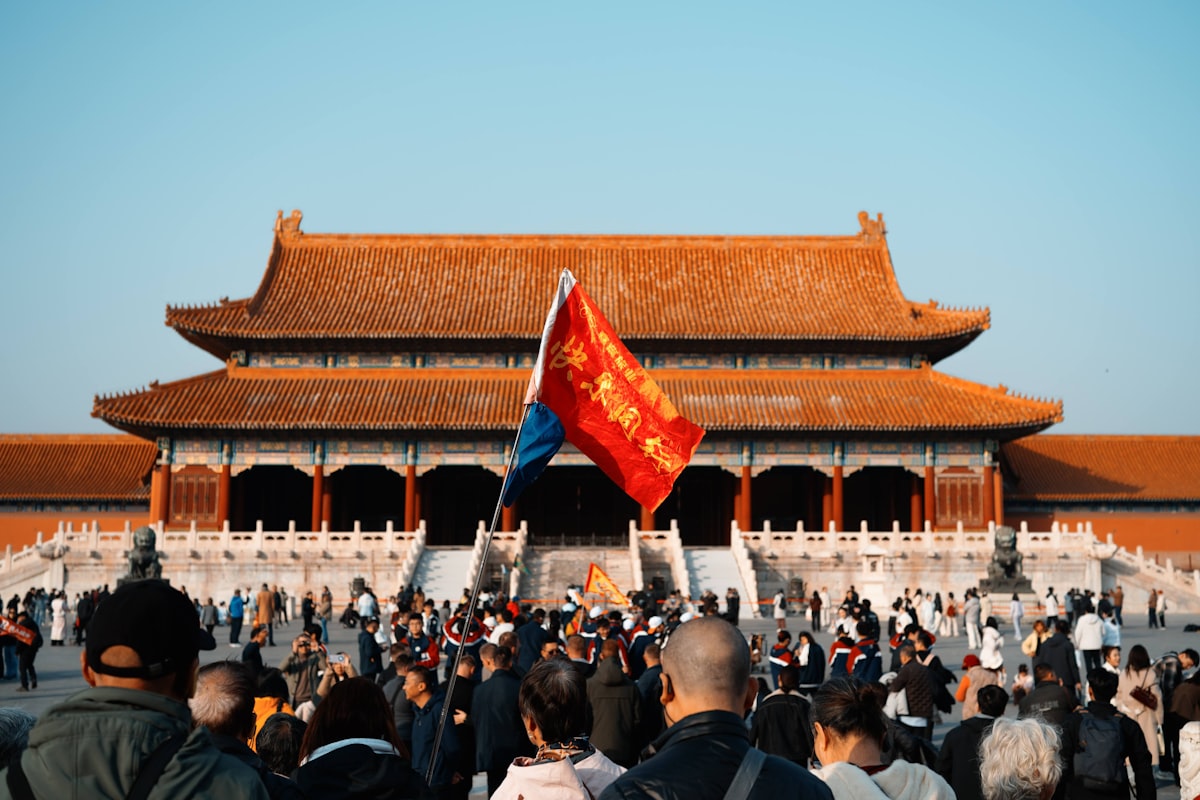
The Forbidden City was sold out. Every train she wanted was gone. Her ¥400 hotel was now ¥1,200. The Great Wall at Badaling was a solid wall of human bodies. She described the experience as “trying to see China through a scrum of selfie sticks while someone elbows you in the ribs.”
She still had a good trip. But she spent half of it problem-solving instead of experiencing. This guide exists so that doesn’t happen to you.
The One Rule That Covers Everything
There are two types of Chinese holidays: the ones you plan your trip around, and the ones you plan your trip for.
The ones you avoid: Spring Festival and Golden Week. The crowds are unimaginable. The prices double or triple. Tickets sell out weeks in advance. For a foreign traveler without a Chinese phone number, the logistics range from “extremely difficult” to “functionally impossible.”
The ones you consider: Dragon Boat Festival, Mid-Autumn Festival, Qingming. These are three-day weekends with manageable crowds, cultural atmosphere, and seasonal food. You’ll share the tourist sites with domestic travelers, but you won’t feel like you’re in a rugby scrum.
The Holiday Calendar at a Glance
| Holiday | 2026 Dates | Duration | Severity | Verdict |
|---|---|---|---|---|
| Chinese New Year (春节) | Feb 15–23 | 9 days + 40-day travel rush | 🔴🔴🔴 Extreme | Avoid unless you want to experience it specifically |
| Qingming (清明) | Apr 4–6 | 3 days | 🟡 Moderate | Manageable. Spring bloom season. |
| Labor Day (劳动节) | May 1–5 | 5 days | 🔴🔴 Serious | Second-worst after Spring Festival |
| Dragon Boat (端午) | Jun 19–21 | 3 days | 🟢 Light | Local festivals. Zongzi everywhere. |
| Mid-Autumn (中秋) | Sep 25–27 | 3 days | 🟢 Light | Mooncakes, lanterns, family dinners. Charming. |
| Golden Week (国庆) | Oct 1–7 | 7 days | 🔴🔴🔴 Extreme | The busiest travel week in human history |
🔴 Chinese New Year (Spring Festival): The Big One
2026 dates: February 15–23 (9-day official holiday). The “Chunyun” (春运) travel rush runs roughly January 10 through February 28 over 40 days, during which the country makes roughly 3 billion passenger trips.
What actually happens
The largest annual human migration on Earth. Every factory worker goes home. Every student goes home. Every office worker goes home. The country empties out of cities and refills its villages.
For foreign tourists, this means:
Everything closes. From New Year’s Eve through Day 3 or 4 of the new year, most small businesses, restaurants, and shops shut down entirely. Your favorite noodle joint? Closed. The corner convenience store? Closed for a week. In major cities like Shanghai and Beijing, malls and chain restaurants stay open ; but independent places vanish.
Trains are impossible. Tickets go on sale 15 days before departure and disappear within minutes. If you haven’t booked months ahead through a tour operator, you’re not getting a seat. Standing tickets exist. Do not buy one. Spending six hours in a packed train aisle with luggage pressing against your legs is a travel story you don’t want.
Hotels spike 2-5x. A ¥300 room becomes ¥800. A ¥800 room becomes ¥2,500. This is worst in tourist hotspots (Sanya, Dali, Lijiang, Harbin) but affects every city.
Tourist sites hit capacity. The Forbidden City caps at 80,000 visitors daily and sells out a week ahead. Popular temples are shoulder-to-shoulder with incense-wielding worshippers. The Great Wall at Badaling looks like a Beijing subway platform at rush hour.
Why you might go anyway
Some travelers deliberately visit during Spring Festival because they want to see it. The red lanterns, the temple fairs, the fireworks (where permitted), the dumpling-making — it’s genuinely unlike anything else.
If you do this, the strategy flips:
- Stay in one city. Do not try to move between cities during Spring Festival. Pick Beijing or Shanghai or Chengdu and stay put.
- New Year’s Eve through Day 2 is the quietest window. Cities empty out. Streets are peaceful. It’s actually pleasant ; just with fewer open restaurants.
- Book a hotel that does a New Year’s Eve dinner. Many mid-range and up hotels host them. It’s the easiest way to experience the food without cooking it yourself.
- Temple fairs (庙会) run from Day 2 through Day 6. These are the cultural core . They are the cultural core: folk performances, snack stalls, crafts, crowds that feel festive rather than oppressive.
Bottom line on Spring Festival: Unless you are specifically seeking the cultural experience, stay away. If you want it, commit fully : one city, one hotel, zero intercity travel.
🔴 Golden Week (National Day): The Other Big One
2026 dates: October 1–7.
If Spring Festival is a family-at-home holiday, Golden Week is a family-on-the-road holiday. The entire country goes sightseeing simultaneously. Every domestic tourist attraction, from the Forbidden City to a random waterfall in Guizhou, is operating at or above capacity.
What actually happens
Crowds beyond Western comprehension. Imagine the busiest day you’ve ever seen at Disney World. Now spread that across an entire country for a week. The queue for the Bailong Elevator in Zhangjiajie can hit 4 hours. The Bund in Shanghai is a solid mass of humanity from the river to the road. The West Lake in Hangzhou — a lake so large you can’t see across it — has sections where you literally can’t move.
Prices surge everywhere. Hotels, flights, attraction tickets, even Didi rides . Surge pricing is aggressive and constant. Budget travelers get priced out of entire cities.
The booking gauntlet is harder for foreigners. Golden Week tickets rely heavily on WeChat mini-programs and apps that often require a Chinese phone number, a Chinese ID, or both. Forbidden City tickets? Released 7 days before, gone in minutes. High-speed train tickets? Same. National Museum? Forget it.
The survival strategy
If your trip overlaps with Golden Week — and sometimes it’s unavoidable with flight dates — here’s what to do:
Front-load your bookings. Book hotels and intercity trains the moment they become available. For trains, that’s 15 days before departure at approximately 2 PM China time. Set an alarm. Use Trip.com. Be on the site when the clock hits.
Pick the right Great Wall section. Badaling during Golden Week is a meme. Mutianyu is better. Jinshanling or Huanghuacheng , the wild unrestored sections, are empty even during Golden Week because tour buses can’t reach them. You need a private driver. It costs more. It’s worth every yuan.
Visit attractions at opening or closing time. Arrive at 8 AM when gates open, or go after 3 PM when tour groups leave. Between 10 AM and 2 PM, you’re in the worst of it.
Switch to secondary cities. Instead of Beijing, go to Chengdu. Instead of Shanghai, go to Hangzhou or Suzhou. Instead of Xi’an, try Luoyang. The difference in crowd density between a primary tourist city and a secondary one during Golden Week is the difference between “this is unpleasant” and “this is actually fine.”
Golden Week can work. It requires aggressive pre-booking, strategic timing, and a willingness to pay surge prices. It will not be the relaxed, spontaneous China trip of your imagination. But with preparation, it won’t be a disaster either.
🔴 Labor Day: Golden Week’s Little Brother
2026 dates: May 1–5.
A five-day window with Golden Week energy but slightly less intensity. Domestic tourists travel. Prices rise. Trains fill. Attractions get crowded. It’s bad, but not Spring Festival bad.
Treat it the same as Golden Week: book early, go to secondary sites, avoid the country’s top-10 tourist attractions between 10 AM and 2 PM.
🟡 Qingming (Tomb Sweeping Day): Manageable
2026 dates: April 4–6.
A three-day weekend in early spring. Families visit ancestral graves, burn offerings, and picnic outdoors. The weather is usually beautiful . Spring bloom is in full effect.
Crowds are present but manageable. This is the window where domestic tourism meets international shoulder season. Flower-viewing sites (cherry blossoms, rapeseed) will be busy. Everything else is fine.
Travel tip: Qingming coincides with peak spring bloom in much of China. It’s actually one of the better three-day windows for foreign travelers ; you get the cultural atmosphere without the crushing crowds.
🟢 Dragon Boat Festival: Charming and Local
2026 dates: June 19–21.
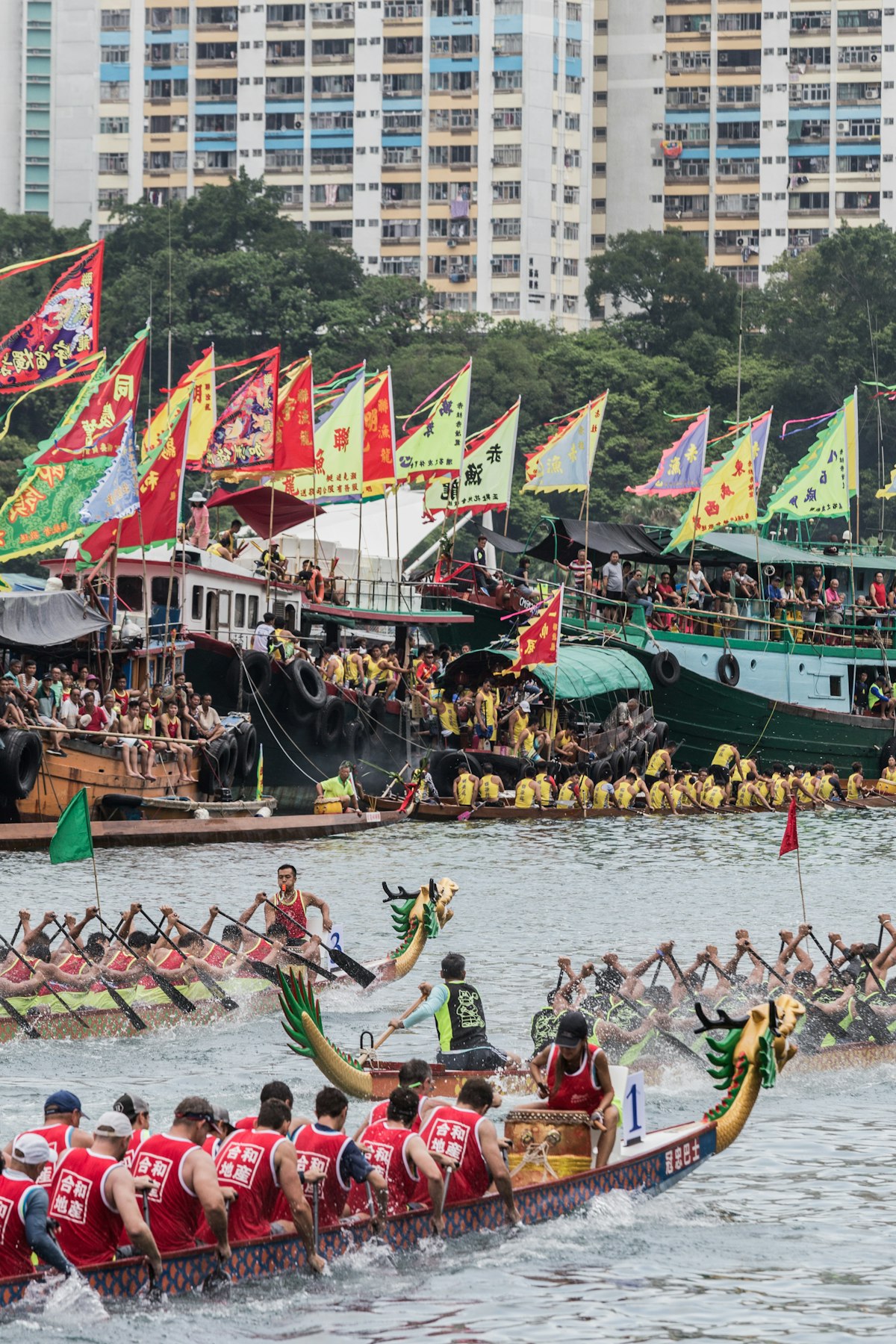
Three days. Dragon boat races on rivers and lakes. Zongzi (粽子) . Sticky rice dumplings wrapped in bamboo leaves are everywhere. The atmosphere is festive, the crowds are regional rather than national, and the weather is warm but not yet the punishing heat of July.
This is the kind of holiday that enhances your trip rather than disrupting it. If you’re near a city with dragon boat races (Guangzhou, Hangzhou, Yueyang), go watch. It’s free, it’s exciting, and it’s a cultural event that hasn’t been sanitized for tourists.
🟢 Mid-Autumn Festival: Mooncakes and Lanterns
2026 dates: September 25–27.
The most romantic of Chinese holidays. Families gather to eat mooncakes, drink tea, and watch the full moon. Lanterns appear in parks and along rivers. The weather in late September is generally excellent — the start of autumn’s golden window.
This is a fantastic time to be in China. The holiday is three days, the crowds are manageable, and the cultural atmosphere is gentle and lovely. Mooncakes range from delicious (lotus seed paste with salted egg yolk) to baffling (savory meat mooncakes are a thing, and they divide opinion). Try both.
The best places for Mid-Autumn: West Lake in Hangzhou (moon reflected in water, a classical Chinese painting come to life), the Bund in Shanghai (moon over the Pudong skyline), any rooftop bar in any major city.
The Booking Timeline That Saves Your Trip
| Action | When |
|---|---|
| Check Chinese holiday calendar | Before booking flights |
| Book international flights | 3–6 months ahead if traveling during any 🔴 period |
| Book hotels for 🔴 periods | 3–6 months ahead |
| Book intercity trains | 15 days before departure, at 2 PM China time, via Trip.com |
| Book Forbidden City / major attractions | 7 days before visit date (as soon as tickets release) |
| Set up Alipay + WeChat Pay | Before leaving home |
| Install and test VPN | Before leaving home |
| Buy travel insurance | At booking |
Holidays That Don’t Affect Your Trip
Some Chinese holidays are celebrated but don’t involve mass travel:
- Lantern Festival (元宵节): Marks the end of Spring Festival. Lanterns, sweet rice balls (tangyuan). No travel impact.
- Qixi (七夕): Chinese Valentine’s Day. Restaurants book out for couples. That’s it.
- Double Ninth (重阳节): Seniors hike mountains. Minimal tourism impact.
- Winter Solstice (冬至): Family dinners. No travel disruption.
If You Can Only Remember Three Things
- Avoid Spring Festival and Golden Week unless you specifically want to experience them ; and if you do, stay in one city and book everything months ahead.
- Dragon Boat and Mid-Autumn are actually great times to visit. Three days, manageable crowds, real cultural atmosphere.
- Check the Chinese holiday calendar before booking flights. The single most common China travel mistake is landing on October 1 without knowing what October 1 means.
The right week transforms the same trip from a logistical grind into the journey you imagined. Plan around the red dates. Your future self will thank you.