Muslim Travel in China: Halal Food, Mosques, and Muslim-Friendly Cities (2026 Guide)
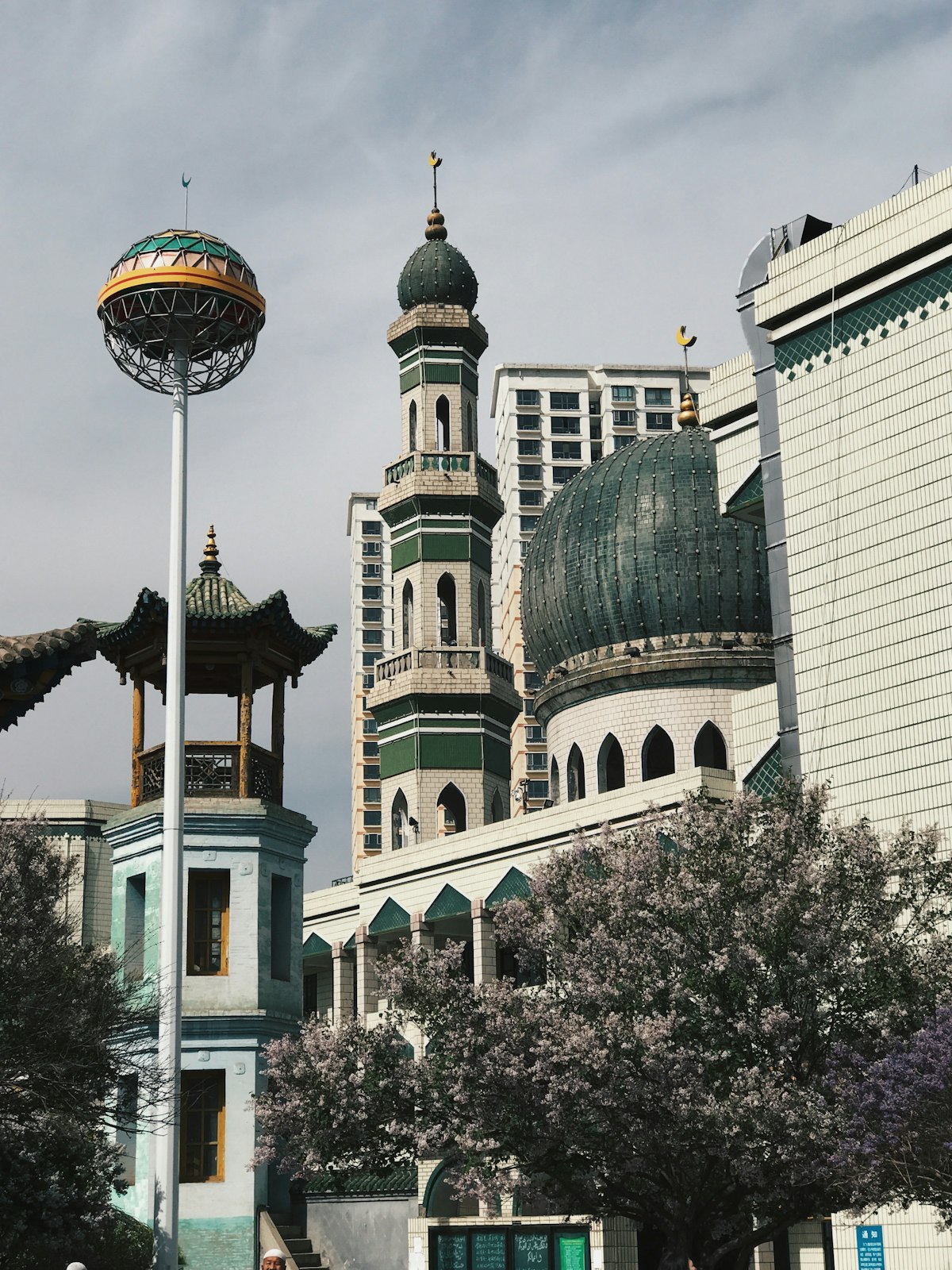
China is not typically marketed as a Muslim travel destination. Most Muslim travelers gravitate toward Malaysia, Indonesia, Turkey, or the UAE. But China has an Islamic history stretching back to the 7th century, an estimated 20-25 million Muslim citizens, over 39,000 mosques, and halal food available in every city with a mosque.
The challenge is not finding halal food. It’s knowing where to look. This guide covers the cities with the best Muslim infrastructure, how to find halal restaurants, where the major mosques are, and what to expect as a visibly Muslim traveler in China.
The Muslim Landscape in China
China’s Muslims are not a monolith. Two main groups account for most of the Muslim population:
The Hui (回族). Ethnically Chinese, culturally integrated, present in every province. The Hui have lived in China for over 1,300 years, since Arab and Persian traders settled in cities like Xi’an, Guangzhou, and Quanzhou during the Tang Dynasty. Hui Muslims speak Chinese, wear modern clothing, and are visually indistinguishable from other Chinese people except when wearing prayer caps or hijabs.
The Uyghurs and other Turkic groups. Concentrated in Xinjiang province in the far northwest. Turkic Muslims with their own language, culture, and cuisine distinct from Hui traditions. Xinjiang is 56% Muslim and has over 24,000 mosques.
The practical difference for a traveler: any city with a Hui community will have at least one mosque and several halal restaurants. Any Xinjiang city will feel Muslim-majority, with mosques visible from the street, halal food everywhere, and Arabic script on signs.
Where to Go: The Best Cities for Muslim Travelers
Xi’an, The Muslim Quarter
Xi’an is the single best Muslim travel destination in China proper (outside Xinjiang). The Muslim Quarter (回民街, Huimin Jie) behind the Drum Tower is a labyrinth of narrow streets, food stalls, and historic mosques that has been a Muslim neighborhood for over 1,300 years.
The Great Mosque of Xi’an (西安大清真寺) on Huajue Lane is the centerpiece. Built in 742 AD during the Tang Dynasty, it’s one of the oldest mosques in China, and architecturally, it looks nothing like a mosque. The buildings are in traditional Chinese temple style: curved eaves, stone lions, pagoda-like minarets, and courtyards with classical gardens. Only the Arabic calligraphy inside the prayer hall reveals its function. The fusion of Chinese and Islamic architecture is striking. ¥25 entry for non-Muslims; the prayer hall is reserved for worshippers.
The Muslim Quarter’s food is legendary. Yangrou paomo (羊肉泡馍), crumbled flatbread soaked in rich lamb broth with tender meat and glass noodles. Roujiamo (肉夹馍), halal beef stuffed in crispy flatbread, sometimes called “Chinese burger” but closer to a Middle Eastern shawarma sandwich in spirit. Persimmon cakes, lamb kebabs, cold noodles with sesame paste. Every stall in the Muslim Quarter is halal.
The street food culture here runs deep. The Muslim Quarter is busy from late afternoon until midnight. The best approach: walk slowly, eat often, and follow the stalls with the longest local lines.
Xi’an also has ten other historic mosques in the Muslim Quarter alone. Daxuexi Lane Mosque (大学习巷清真寺), built in 705 AD, is the oldest.
Beijing, Niujie, the Ox Street
Beijing’s Niujie (牛街, “Ox Street”) is the city’s Muslim core. The neighborhood has been Hui since the 10th century. Niujie Mosque (牛街礼拜寺), founded in 996 AD, is Beijing’s oldest and largest mosque, a Chinese-style compound with courtyards, ancient cypress trees, and a prayer hall that blends Islamic and Chinese design.
The street itself is a halal food destination. Jubaoyuan (聚宝源) serves Beijing’s best halal hot pot, copper pots of charcoal-heated broth with hand-sliced lamb. The line starts before opening. Hongji Snacks (洪记小吃) sells beef buns, sesame cakes, and fried dough for a few yuan each. Yueshengzhai (月盛斋), founded in 1775, makes spiced braised beef that was served to Qing Dynasty emperors.
Other Beijing mosques: Dongsi Mosque (东四清真寺) in Dongcheng District, a Ming Dynasty mosque with tranquil courtyards, and Deshengmen Mosque near the old city wall.
Beijing is not Xi’an, the Muslim presence is less visible and concentrated in specific neighborhoods, but the infrastructure for Muslim travelers is solid. Friday prayers are held at all major mosques. The halal restaurant scene on Niujie is excellent.
Guangzhou, Where Islam Entered China
Islam arrived in China through Guangzhou. The Huaisheng Mosque (怀圣寺), built in 627 AD during the Tang Dynasty, is one of the oldest mosques in the world outside the Middle East. Tradition holds it was founded by Sa’d ibn Abi Waqqas, an uncle of the Prophet Muhammad. The 36-meter minaret, known as the Guangta (Light Tower), has stood for nearly 1,400 years.
Guangzhou’s Muslim community is concentrated around the mosque in Yuexiu District. The surrounding streets are full of halal restaurants: Lanzhou pulled noodles, Xinjiang lamb kebabs, and Malaysian-style halal fusion. Guangzhou’s role as a trade hub means there’s also a sizable African Muslim community with their own restaurants and mosques.
Yunnan, The Southwest Muslim Corridor
Yunnan province has over 820 mosques and a Hui population of roughly 700,000. The province borders Myanmar, Laos, and Vietnam, and its Muslim community has been here since the Yuan Dynasty (13th century).
Kunming: Shuncheng Mosque (顺城清真寺), built in 1425, is the oldest mosque in the provincial capital. The area around the mosque in Wuhua District has halal restaurants, butcher shops, and bakeries. Halal crossing-the-bridge noodles (清真过桥米线), Yunnan’s most famous dish, is available at several restaurants near the mosque.
Dali: The Old South Gate Mosque blends Bai ethnic architecture with Islamic domes, a fusion style unique to this region. Halal Bai cuisine, which adapts the local tradition of sour-and-spicy flavors to halal ingredients, is available in the old town.
Shadian (沙甸): A town near Gejiu, about 3 hours south of Kunming. The Shadian Grand Mosque, completed in 2010, holds 10,000 worshippers and is the largest mosque in southwest China. The town is majority Hui, with halal street food, Islamic clothing shops, and a palpable Muslim identity.
Xinjiang, The Muslim Heartland
If you want the most smooth Muslim travel experience in China, go to Xinjiang. The province borders Kazakhstan, Kyrgyzstan, Tajikistan, Pakistan, and Mongolia. It has over 24,000 mosques. The capital, Ürümqi, has multiple grand mosques including the Shaanxi Grand Mosque and Hantengri Mosque.
Kashgar, in the far west, is majority Uyghur and feels more Central Asian than Chinese. The Id Kah Mosque, built in 1442, is the largest mosque in China, it can hold 20,000 worshippers. The Sunday livestock market in Kashgar is a Central Asian bazaar that has operated for centuries. The old city is a maze of adobe houses, narrow lanes, and Uyghur bread bakeries.
Kashgar’s food is entirely halal. Lamb kebabs grilled over charcoal. Polo (pilaf with lamb and carrots). Samsa (crispy lamb-filled pastries baked in tandoor ovens). Laghman (hand-pulled noodles with lamb and vegetables). Naan bread stamped with patterns and baked on the walls of clay ovens.
Xinjiang travel requires advance planning. Security checkpoints are frequent. Some areas have entry restrictions. But for a Muslim traveler, nowhere in China offers a more comfortable, familiar daily experience.
How to Find Halal Food Anywhere in China
The system works. Here’s how to use it:
Look for the characters 清真 (qīngzhēn). These two characters, meaning “pure and true,” are the universal halal marker in China. They appear on green signs outside restaurants, on food packaging, and in shop windows. A crescent moon symbol often accompanies them. Any restaurant displaying 清真 is halal, run by Hui or Uyghur Muslims who follow halal dietary laws.
Lanzhou Lamian (兰州拉面) is everywhere. These noodle shops, recognizable by their green signs and open kitchens where men stretch dough by hand, are in every Chinese city. They are always halal, always cheap (¥10-20 for a bowl), and always run by Hui Muslims from Gansu province. A bowl of clear beef broth, hand-pulled noodles, sliced beef, and cilantro is the most reliable halal meal in China.
Near any mosque, halal food follows. Mosques anchor Muslim communities. The streets around any mosque in a Chinese city will have halal butcher shops, halal bakeries, and halal restaurants. If you’re in a new city, go to the mosque first. The food is nearby.
Xinjiang restaurants. Identified by Uyghur names, Arabic script, and pictures of lamb kebabs on the sign. Always halal. The menu is lamb-forward and Central Asian-influenced.
Apps: Dianping (大众点评), China’s Yelp, lets you search “清真” for halal restaurants. Baidu Maps and Amap both return results for “清真寺” (mosque) and “清真餐厅” (halal restaurant). Google Maps does not work in China.
What to watch for: KFC and McDonald’s in China (except in Xinjiang and Ningxia) are NOT halal. Chinese fast food chains are not halal unless labeled 清真. Pork is deeply embedded in Chinese cooking, lard may be used in vegetable dishes, and pork stock appears in soups. At non-halal restaurants, assume nothing is halal unless you can verify with the kitchen.
The phrase that helps: “Wǒ shì mùsīlín, wǒ bù chī zhūròu” (我是穆斯林, 我不吃猪肉), “I am Muslim, I don’t eat pork.” But it’s safer to eat at halal-certified restaurants than to negotiate at non-halal ones.
Prayer and Practical Worship
Friday prayers (Jumu’ah) are held at mosques in all major cities. Arrive early, major mosques fill up. Bring your own prayer mat if you plan to pray outside mosque hours; mosques may be locked between prayer times.
Major airports (Beijing Capital, Beijing Daxing, Shanghai Pudong, Guangzhou Baiyun) have Muslim prayer rooms with ablution facilities. Major train stations in larger cities also offer prayer spaces.
Muslim Pro and similar apps work in China if you have a VPN. Set your location to your Chinese city and the app will calculate prayer times correctly.
During Ramadan, Muslim neighborhoods come alive at night. In Niujie (Beijing), the Muslim Quarter (Xi’an), and Uyghur areas (Xinjiang), you’ll find food markets open late for iftar. University Muslim canteens also open early for suhoor, if you’re staying near a university, ask about the 清真食堂 (Muslim canteen).
What to Expect as a Visibly Muslim Traveler
Hijab is legal and unstriking in China. Hui women in cities may or may not wear hijab, it’s a personal choice. Uyghur women in Xinjiang commonly wear headscarves. A foreign Muslim woman in hijab will attract curiosity in most Chinese cities (staring is common for any visibly foreign person) but not hostility.
Niqab is rare in China and may attract additional attention. Security in Xinjiang may ask face-covering wearers to reveal their face for identification, as is standard at checkpoints for everyone.
Prayer in public spaces is generally tolerated in Muslim neighborhoods and near mosques. In non-Muslim areas, finding a private space is advisable. Hotel rooms, park corners, and quiet areas in large malls work for travelers.
Security checks at airports and train stations are routine for everyone. Your passport will be checked. Your bags will be scanned. This is not targeted, every traveler goes through it.
A 10-Day Muslim-Friendly Itinerary
Days 1-3, Xi’an. Muslim Quarter, Great Mosque, Terracotta Warriors, city wall. Eat your way through Huimin Jie. Friday prayers at the Great Mosque if the timing works.
Days 4-6, Beijing. Niujie Mosque and the surrounding halal food street. Forbidden City, Great Wall (Mutianyu section). Halal hot pot at Jubaoyuan.
Days 7-10, Your choice.
- For more Islamic history: Guangzhou (Huaisheng Mosque, one of the oldest mosques on Earth) plus a day trip to Quanzhou, another ancient port with Tang-era mosques.
- For nature and ethnic culture: Kunming and Dali in Yunnan, where halal food and mosques sit alongside mountain scenery and ancient towns.
- For the full Muslim-majority experience: fly to Ürümqi and Kashgar in Xinjiang. Lamb kebabs, Central Asian bazaars, Id Kah Mosque, and the Karakoram Highway toward Pakistan.
China is not a Muslim country. But it is a country where Islam has been practiced for 1,400 years, where halal food is available in every city with a mosque, and where the Muslim Quarter in Xi’an serves better halal street food than many cities in Muslim-majority countries. The infrastructure exists. You just need to know where it is.