China Travel Myths Debunked: What's Actually Hard vs. What's in Your Head (2026)

Most people who want to visit China never book the flight. Not because of money or vacation days. Because of a handful of fears that have hardened into assumptions: the language barrier is a wall, you need a Chinese bank account to buy a bottle of water, the internet is blocked so you’ll be stranded offline, the food will destroy your stomach, and you can’t travel without a tour group holding your hand.
Some of these were accurate in 2015. Most haven’t been since 2023, when China’s tourism infrastructure pivoted hard toward foreign visitors. The gap between what people expect and what they actually encounter has gotten wide.
This is not a “China is easy” article. Traveling in China takes preparation. But the preparation is specific, finite, and doable from your couch. The things keeping you from booking a flight have clear answers. Here is what’s actually hard, what’s mostly in your head, and what to do about each one.
”I won’t be able to communicate with anyone”
The fear is straightforward: you’ll be surrounded by a language you cannot read, speak, or guess at. Every interaction will become miming and frustration.
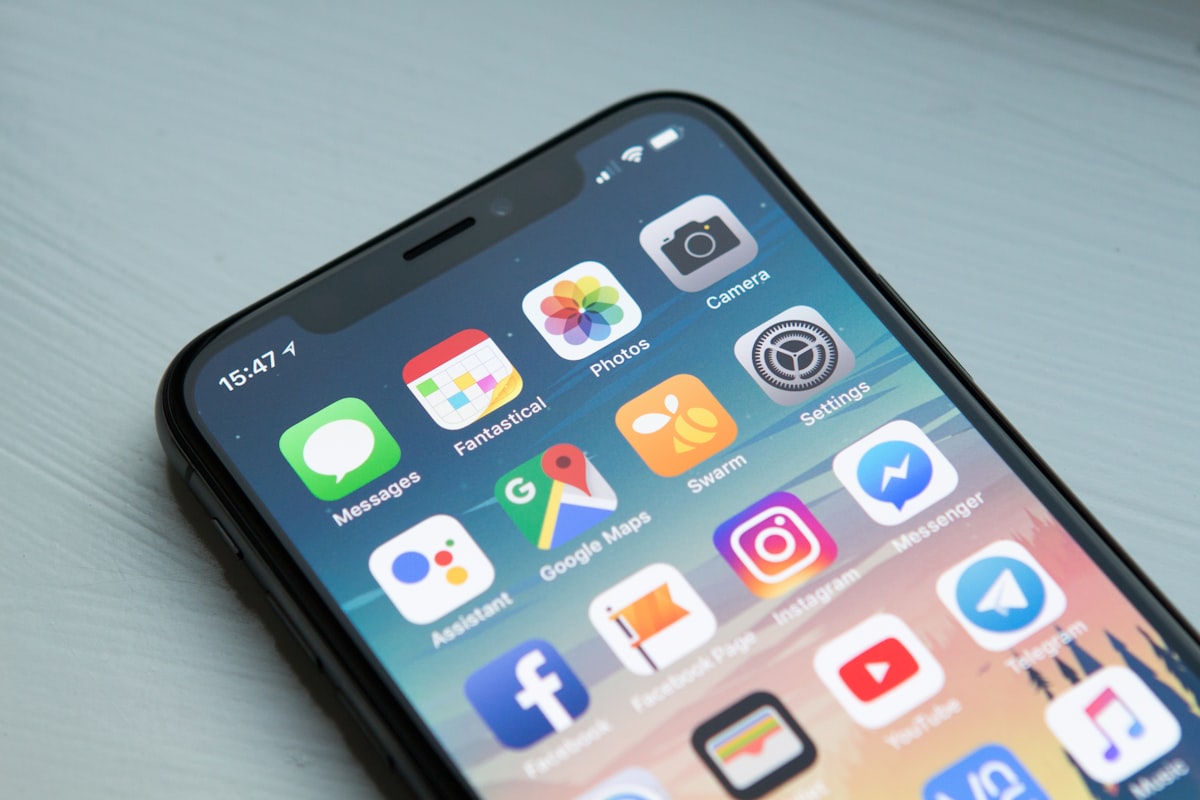
The reality in 2026 is that translation technology crossed a real threshold a few years ago. Google Translate’s camera mode overlays English text onto Chinese in real time through your phone screen. Point it at a menu, a sign, or a train ticket, and the English appears. Pleco, the Chinese-English dictionary app, handles photographed text offline with optical character recognition. These tools do not make you fluent. They make you functional, and functional is enough.
In cities, English is more present than most first-timers expect. Hotel front desks, airport counters, and major attraction ticket windows have English-speaking staff. Metro systems in every large city use English signage and announcements. Chinese people under 30 studied English for a decade in school. Many cannot hold a conversation comfortably, but their reading comprehension is solid. Show them a translated sentence on your phone and they can usually help.
The real gap is small, local restaurants. The ones with no picture menus, handwritten specials taped to the wall, and the best food you’ll eat all week. Taxi drivers who need to know which gate of the train station, not just which station.
What to actually do: Download Google Translate’s Chinese offline pack and Pleco before flying. Screenshot your hotel name and address in Chinese characters. At a menu with no English, open the camera translation. At a restaurant with no menu at all, point at what another table is eating and say “zhege” (this one). Photo menus are common in tourist areas. If there are pictures, you’re fine. If there aren’t, the apps earn their keep.
Takeaway: You will not speak Chinese. You do not need to. A phone with two apps, plus pointing and a willingness to look a little foolish, covers roughly 90% of travel situations. The other 10% become stories.
”I can’t pay for anything without a Chinese bank account”
This one has an expiration date. In 2019 it was true. Foreign travelers carried cash envelopes and crossed their fingers. The change came in 2023 and 2024, when Alipay and WeChat Pay opened to international credit cards under direct government pressure to rebuild tourism.
In 2026, linking a foreign Visa or Mastercard to Alipay takes about five minutes. Download the app, register with your phone number, photograph your passport for identity verification, and add your card. Purchases under ¥200 (about $28) carry zero fees. Above that threshold, a 3% fee kicks in. Annoying but not ruinous. Once linked, your phone pays for street food, subway rides, Didi taxis, attraction tickets, and grocery runs.
WeChat Pay works the same way. Set up both. Carry ¥300 to ¥500 in cash as a fallback: the 75-year-old street vendor with no QR code, the rural market stall, the bike rental deposit that wants paper.
The real gap: Some foreign cards trigger fraud blocks on the first attempt. American Express has patchier acceptance than Visa or Mastercard. Small rural vendors may take only WeChat Pay or only Alipay, not both.
What to actually do: Set up Alipay at home a week before departure. Verify your passport. If you know someone in China, send a test payment. If not, buy a bottle of water at a convenience store after landing as a test transaction. If your card gets declined, your bank probably blocked it as suspicious. Call them. Once the first payment clears, the rest go through.
Takeaway: Foreign credit cards work in China now. The setup is five minutes. Do it before you get on the plane, not after you land with 8% battery and no working internet.
”Everything online is blocked so I’ll be completely cut off”
The Great Firewall is real. Google, Gmail, WhatsApp, Instagram, Facebook, YouTube, and most Western news sites are blocked on standard Chinese connections. That part is not exaggerated.
What is exaggerated is how hard it is to route around it.
Option one: an eSIM from Airalo, Holafly, or Trip.com. These often route data through Hong Kong or Singapore, which means your internet never touches the firewall. Google, WhatsApp, and Instagram work as they do at home. No VPN required. Data only, no local phone number. For most travelers, data is the whole game.
Option two: a Chinese SIM plus a VPN. Buy a SIM at the airport or a carrier store (China Mobile, China Unicom, China Telecom) for about ¥100 per month. Install a paid VPN at home before departure. LetsVPN runs about $5 per month and works well. Astrill is closer to $15 and is more consistent. Free VPNs fail within hours. Install, test, and confirm your subscription is active before you board.
Option three: international roaming through your home carrier. Expensive, zero setup, no firewall issues.
The real gap: VPNs occasionally slow down or need a server toggle. Some hotel WiFi networks conflict with VPN protocols. The fix is switching to mobile data or trying a different server. It takes 30 seconds.
What to actually do: Download and pay for a VPN at home, where app stores are accessible. Test it. Consider an eSIM as primary or backup. Once you land, if the VPN acts up, switch servers or toggle to the eSIM. This is one app plus occasional minor troubleshooting. It is not a hacking project.
Takeaway: You will have internet in China. Your Instagram will load. The setup costs $5 to $15 per month and takes ten minutes at home. Do not leave this until after you land.
”China isn’t safe for tourists”
This one survives despite data that contradicts it head-on. China has some of the lowest violent crime rates in the world. Street theft and pickpocketing, the opportunistic crimes that every traveler learns to guard against in Paris, Barcelona, and Rome, are far less common in Chinese cities. Walking alone at night in Beijing, Shanghai, or Chengdu does not carry the same risk profile it does in most Western metropolitan areas.
Ask women who have traveled solo through China. The answer is consistent: they felt safe. Not “safe compared to expectations” safe. Actually safe. The kind where you walk back to your hotel at 11 PM and the main concern is whether the convenience store on the corner is still open for a bottled water.
The real gap: Tourist scams. The tea ceremony routine, where a friendly English-speaker invites you to a “traditional tea experience” and you receive a bill for ¥2,000. The taxi driver who “forgets” the meter and quotes a fare five times the real price. The “art student” who wants to practice English, then steers you toward a gallery selling overpriced paintings. These are annoying and can cost you real money. They are not physically dangerous. They are the same species of problem as the friendship bracelet grift in Paris or the taxi overcharge in Istanbul.
What to actually do: Use Didi, built into Alipay, instead of street taxis. The fare is fixed in the app before you get in. If a stranger approaches with an unsolicited English invitation to a tea house, gallery, or bar, say no and keep walking. The street smarts you use in any unfamiliar city apply. What’s different in China is that the baseline level of personal safety is higher than what most Western travelers are accustomed to.
Takeaway: The most dangerous thing that’s likely to happen to you in China is a ¥2,000 tea bill, not a violent encounter. Use Didi for taxis, decline unsolicited invitations, and enjoy the fact that you can walk around at night without scanning every shadow.
”The food will make me sick” or “I won’t find anything I can eat”
Chinese food spans about 20 distinct regional traditions, from the cumin-crusted lamb skewers of Xinjiang to the soup dumplings of Shanghai to the blistering hot pot of Chongqing. Treating all of it as a digestive threat misses the scale of what’s available.
Street food safety follows a simple rule: eat where it’s busy. A stall with a long line and fast turnover is selling food faster than it can spoil. A quiet stall with pre-cooked dishes sitting under a heat lamp is more of a bet. This is the same logic that applies to street food in Bangkok, Mexico City, and Marrakech.
Tap water is not drinkable anywhere in China. Bottled water costs ¥2 (roughly $0.28) for a 550ml bottle at any convenience store, and there are roughly four per city block. Every hotel room has an electric kettle. Every restaurant serves boiled water or tea by default, often without you asking.
Western food exists in cities. McDonald’s, KFC, and Pizza Hut are everywhere. International hotels run Western breakfast buffets. Grocery stores stock Oreos and Pringles. You will not starve.
The real gap: The best food in China is at small, local restaurants with no English menu and no pictures. This is not a food safety problem. It is a menu-reading problem. See the first section of this article.
What to actually do: Eat where there’s a crowd. Avoid raw foods from unknown sources. Drink bottled or boiled water. Use your translation app’s camera mode on menus. If you have dietary restrictions, get the Chinese characters for them and show them on your phone. A printed allergy card in Chinese costs a few dollars to make and prevents the problem before it starts.
Takeaway: Chinese food is some of the best on the planet. The safety rules are the same as anywhere: busy stalls, bottled water, cooked food. The hard part is not avoiding sickness. It’s choosing between the 40 items on a menu you cannot read. The translation app handles that.
”I have to book everything through a tour agency”
In 2005 this was standard advice. In 2026 it is outdated.
Independent travel in Chinese cities is straightforward. Trip.com, with an English interface and international card processing, handles hotels, high-speed train tickets, and domestic flights. Didi, inside Alipay, replaces taxis: set your destination in English, the driver sees it in Chinese, no verbal exchange needed. Metro systems in every major city have English signs, English announcements, and English ticket machines. The high-speed rail network is faster, cleaner, and more punctual than anything in North America or Western Europe.
You do not need a guide to visit the Forbidden City, walk the Bund in Shanghai, or eat through Chengdu. The infrastructure exists. It works.
The real gap: Remote areas and a few bureaucratically restricted destinations. Tibet requires a permit and an organized tour. There is no independent option. Some national parks in rural provinces have no English signage and no English-speaking staff. Reaching a village in Guizhou or a grassland in Xinjiang without a Chinese-speaking driver is genuinely hard. These are exceptions, not the rule.
What to actually do: For a first trip through Beijing, Shanghai, Xi’an, or Chengdu, skip the guide. Put Trip.com on your phone, read a few articles on this site, and go. For remote destinations, a local driver or small group tour solves logistics at a reasonable cost. The question is not “tour agency or solo.” It’s “which two days of this trip actually need local help, and which eight don’t.”
Takeaway: The standard China city-to-city trip does not require a guide or an agency. The apps handle it. Save your guide budget for the one remote place where it actually matters.
Six fears. Each rooted in something real, and each one smaller than the version rattling around the Western imagination.
The language barrier is real, and translation apps make it surmountable. Payment was a genuine obstacle in 2019, and Alipay removed it in 2024. The firewall blocks Google, and eSIMs plus VPNs route around it. China is physically safer than most Western tourist cities, and the scams follow the same playbook as anywhere. The food is diverse and generally safe, and photo menus plus translation apps solve the ordering. Independent travel works for the standard route, and guides are only necessary at the edges.
The story that China is impenetrable to foreign travelers is roughly five years out of date. The country spent those years building the welcome mat: visa-free entry for dozens of nationalities, Alipay’s international card integration, English signage expansion, simplified eSIM access. The systems are in place. What’s left is not a wall of language, payments, or censorship. It’s the lag between the China that exists for travelers in 2026 and the China most Westerners still picture when they hear the word.
You don’t need to speak Mandarin, open a Chinese bank account, or hire a tour guide. You need a passport, a plane ticket, and about two hours of phone setup at home. The rest sorts itself out.
More practical guides for your first trip
- First-Time China Guide — Complete pre-trip checklist: visas, packing, first-day survival
- China Mobile Payment Guide — Step-by-step Alipay and WeChat Pay setup with foreign cards
- Digital Survival Guide — VPNs, eSIMs, and staying connected inside the firewall
- Visa-Free Entry Guide — Which nationalities can enter China without a visa in 2026