Chongqing's 8D City: How Not to Get Lost & Where to Get the Best Photos (2026)
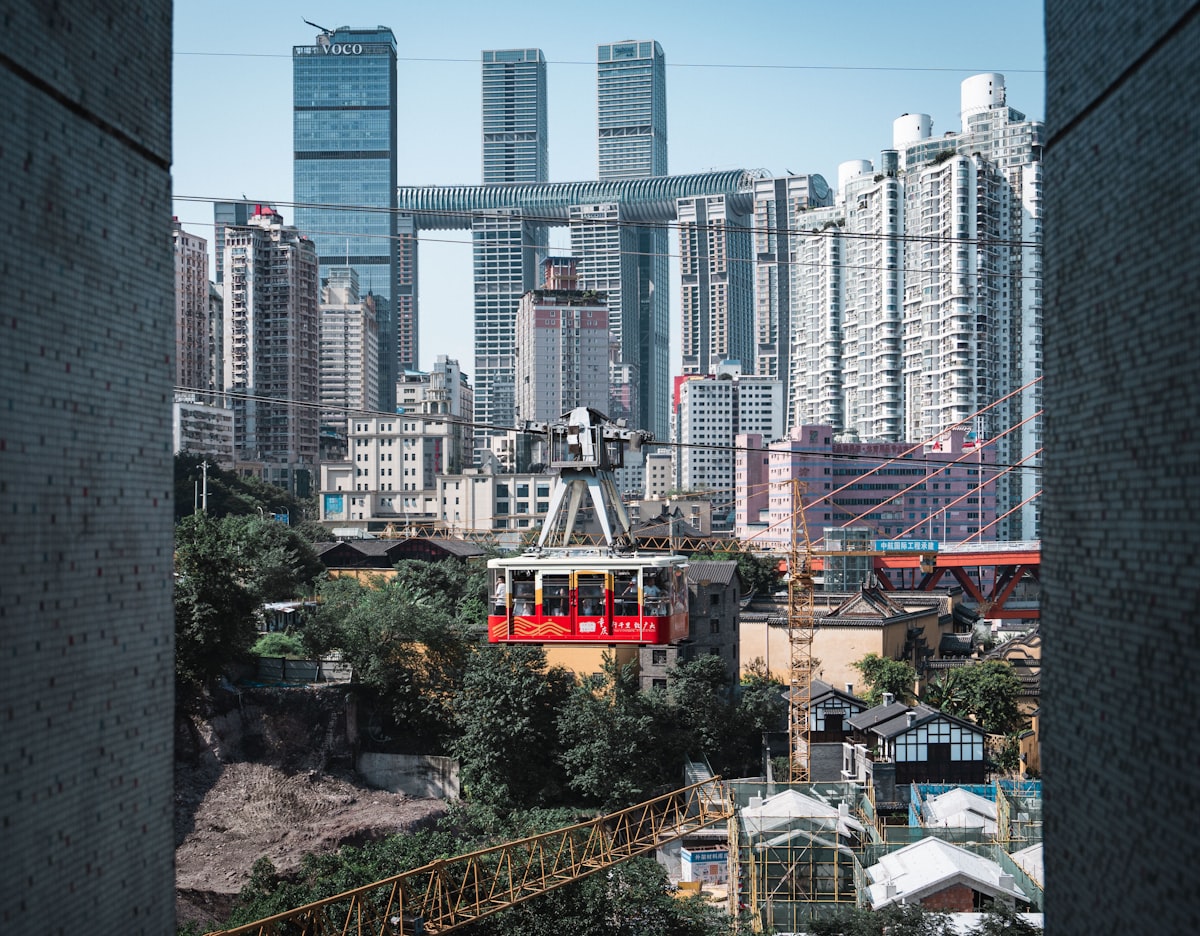
You enter a building on the ground floor. You exit on the 22nd floor — into a different neighborhood, on a different street. Your GPS says your hotel is 300 meters away and then leads you down 20 flights of stairs, across a pedestrian overpass, and up an outdoor escalator that serves as public transit.
This is Chongqing. The “8D Magical City.” And it’s the most wonderfully disorienting urban experience on earth.
This guide explains how it works, where to get the photos, what to skip, and how to pair it with Chengdu for the best week of your China trip.
What “8D City” Actually Means
Chongqing is built on mountains at the confluence of the Yangtze and Jialing rivers. The numbers tell the story: 76% mountains, 22% hills, 2% flat. The city doesn’t spread horizontally — it stacks vertically. Roads exist on levels 1, 3, 5, and 8 simultaneously. The same building can have entrances on three different floors connecting to three different streets.
Here are the phenomena that earned Chongqing its “8D” reputation:
| Phenomenon | What It Is | Where |
|---|---|---|
| Kuixinglou Skybridge (魁星楼) | Enter on floor 1, exit on floor 22 into a different neighborhood. The 22nd-floor exit has a pedestrian bridge connecting to the next building. | Near Linjiangmen Metro, Yuzhong District |
| Liziba Monorail (李子坝) | Line 2 train enters and exits the 8th floor of a 19-story residential building. Built together — the station doesn’t shake the apartments. | Liziba Station, Metro Line 2 |
| Huangjuewan Interchange (黄桷湾立交) | 5 levels, 20 ramps, 8 directions. GPS has a nervous breakdown here. | View from above (drone or hillside) |
| Kaixuan Road Elevator (凯旋路电梯) | A public elevator connecting lower and upper city halves. 11 stories. ¥1 per ride. Built as public infrastructure. | Near Jiaochangkou Metro |
| Crown Escalator (皇冠大扶梯) | One of the longest single escalators in Asia. 112m long, 52.7m vertical rise. ¥2 per ride. Commuters use this daily. | Lianglukou Metro |
These aren’t gimmicks. They’re how the city works. The elevator is transit. The escalator is a commute. The train through a building is just Line 2.
Navigation Survival Guide
Why GPS Fails Here
Maps — including Amap (Gaode), China’s best — calculate routes in 2D. They assume you can walk in a straight line. In Chongqing you can’t.
The map shows your destination is 300 meters away. It doesn’t know there’s a 50-meter cliff between you and it, requiring a 1-kilometer detour down stairs, through a tunnel, and up another series of ramps. Locals don’t use cardinal directions. They say “上去” (go up) and “下去” (go down). This is not poetic — it’s practical. In Chongqing, vertical direction is the only direction that matters.
How to Actually Navigate
| Strategy | How |
|---|---|
| Use Amap (高德地图), not Google Maps | Set language to English in app settings. It still struggles with verticality but has the most accurate street-level data for Chinese cities. Google Maps is borderline unusable here. |
| Ask locals | Point to the Chinese address on your phone. They’ll give you the real route, which often involves shortcuts through buildings, alleys, or staircases the map doesn’t know exist. |
| Yellow Taxis (黄色法拉利) | Chongqing’s yellow taxis — nicknamed “yellow Ferraris” — are legendary. Drivers know the maze instinctively. When lost, hail one. ¥10-30 for most city-center trips. They’re the most reliable navigation tool in the city. |
| Budget 30-50% extra time | Whatever your map says, add half again. A “20-minute walk” is often 35-40 minutes of stairs, ramps, and confused backtracking. |
| Plan by area, not distance | Stay in one district per half-day. Don’t try to crisscross the city. Yuzhong in the morning, Nan’an in the evening — not both at once. |
| Follow the crowd | If you see locals taking a specific staircase or alley between streets, follow them. They know the shortcuts. |
What to Wear
Grippy sneakers. Every day. No exceptions. The stairs are uneven, sometimes wet, and there are a lot of them. Travelers average 15,000+ steps per day in Chongqing — and unlike flat-city steps, most of these are vertical. Leave the fashion sneakers at home. Bring something with actual tread.
Crucial hotel tip: Some hotels require descending 200+ stairs from the nearest road. Before booking, check the hotel access — message the property and ask if there’s elevator access from the street. A room that looks 100 meters from the metro on a map may be 15 flights of stairs away in reality.
The Cyberpunk Photo Spots — When & How
Chongqing is arguably China’s most photogenic city. The stacked architecture, neon reflections on the rivers, mist curling around skyscrapers, and the sheer impossibility of the urban geography create images that don’t look real. Here’s the definitive shot list with timing:
| Photo Spot | What You Get | Best Time | Notes |
|---|---|---|---|
| Qiansimen Bridge → Hongyadong | The golden stilted complex + bridge + river + Raffles City in the background. THE shot. | After 7:30 PM, lights on. After rain for mirror reflections on wet pavement. | Use a wide-angle lens. Tripod helps but the bridge railing works as a stabilizer. |
| Liziba Monorail | Train entering/exiting the 8th floor of an apartment building. | Early morning (before 9 AM) or after 8 PM. Fewest crowds. | Two angles: street level looking up (shows the building context), and inside the train riding through it. Do both. |
| Nanshan One Tree Deck (南山一棵树) | Elevated panorama — entire Yuzhong peninsula, two rivers, neon skyline. | Magic hour 6:30-7:30 PM. Watch daylight → blue dusk → full lights transition. | ¥30 peak (Mar-Oct), ¥15 off-peak (Nov-Feb). Taxi up from Nanbin Road (¥30-40). Crowded on weekends. |
| Eling Park / Liangjiang Pavilion (鹅岭公园) | Free panoramic view. Similar angle to Nanshan but from the north side. | Late afternoon through sunset. | Free. 30-minute uphill walk from Liziba station. Less crowded than Nanshan. |
| Kuixinglou Skybridge (魁星楼) | The 22nd-floor “what floor am I on?” illusion. Bridge connects two towers with a 22-floor drop visible below. | Daytime. You need daylight to see the height difference clearly. | Free. Near Linjiangmen Metro. Open 24/7 — the skybridge is a public walkway between two buildings, not a gated attraction. The photo: stand on the bridge, look down. |
| Baixiangju (白象居) | Brutalist Soviet-era residential complex. Spiraling staircases, rooftop views, lived-in grittiness. | Late afternoon for golden light on the concrete. | Free. Respect residents — this is a lived-in complex. No photos into windows. No loud voices in hallways. |
| Nanbin Road Promenade (南滨路) | Riverside skyline view. Jiefangbei, Raffles City, the river confluence. | Sunset + evening. Some evenings feature drone light shows over the river. | Free. Best viewed from near the Yangtze River Bridge. |
| Metro Line 2 — moving train | Elevated river views from the train itself. Sit right side (Jiaochangkou → Yudong direction). | Late afternoon golden hour. | ¥3-7 metro fare. Between Liziba and Fotuguan is the best stretch. The train IS the observation deck. |
| Raffles City Skybridge (来福士探索舱) | Crystal bridge at 250m. Glass floor section. River confluence below. | Daytime for clarity, sunset for drama. | ¥120 basic deck, ¥180-200 with skywalk, ¥248 full package. Book ahead on Trip.com. |
| Shancheng Alley at night (山城巷) | Old stone stairways, red lanterns, atmospheric alley lighting. | After dark. | Free. More authentic and less commercial than Shibati. |
Photography Tips for Chongqing
- After rain = best reflections. Wet pavement turns the neon into mirror pools. Chongqing gets plenty of rain — use it.
- Wide-angle lens is non-negotiable. The scale demands it. Standard lenses can’t capture the verticality. A 16-35mm or equivalent is ideal.
- Tripod for night shots. The riverside skyline shots benefit enormously from long exposure. A compact travel tripod is worth the weight.
- Drone rules: Drones are restricted in most urban areas of Chongqing. Check local regulations before flying. The Nanshan area is more lenient than downtown Yuzhong.
- The yellow taxis are photogenic. The bright yellow fleet against grey concrete or blue neon makes a striking color contrast. Frame one against the Hongyadong lights for a classic Chongqing shot.
What to Skip — The Honest List
Not everything that goes viral on Chinese social media is worth your limited time. Here’s what to reconsider:
| Attraction | Why Skip | Do Instead |
|---|---|---|
| Ciqikou Ancient Town (磁器口) | Tourist trap. Same three souvenir products in every shop — dried fruit, chili sauce, wooden combs. Massively overcrowded by 10 AM. Don’t waste the taxi fare. | Shancheng Alley (山城巷) — authentic old Chongqing, cobblestone paths, stilt houses, real history, far fewer tourists |
| Hongyadong INTERIOR | Crowded souvenir mall. Elevators impossible to catch. Overpriced trinkets and food stalls. Claustrophobic at peak hours. | Qiansimen Bridge view — the exterior IS the attraction. The interior is just a mall. See it from across the river. |
| Shibati (十八梯) | Heavily commercialized reconstruction. Repetitive cafes and tourist shops. Dense crowds on weekends. | Shancheng Alley or Baixiangju — more authentic, fewer tourists, genuinely old rather than rebuilt-old |
| Yangtze River Cableway at peak hours | 1-2.5 hour queue for a 4.5-minute ride. Packed cabin like sardines. You’ll spend more time in line than on the cableway. | Ride at off-peak (early morning, right at opening) OR just walk across the bridge for free and get the same river view |
| Generic Jiefangbei food streets | Overpriced, mediocre, dominated by domestic tour bus groups. Generic chain snacks. | Guanyinqiao Food Street (观音桥) — where locals actually eat. More variety, real Chongqing street food |
| Liziba viewing platform at noon | Hundreds of people holding phones up for a 30-second train pass. Shoulder to shoulder. | Go early morning (before 9 AM) or late evening (after 8 PM). You’ll have space to breathe and frame your shot |
The pattern: the exterior is usually better than the interior, the local spot beats the viral spot, and off-peak timing transforms the experience.
Chengdu + Chongqing: The Perfect Combo
These two cities are 1-1.5 hours apart by high-speed rail — about 140-150 trains run daily in each direction, departing every 5-10 minutes during peak hours. They’re the most popular urban pairing in Southwest China for good reason: they’re complete opposites.
| Chengdu | Chongqing | |
|---|---|---|
| Vibe | Laid-back, soulful, livable | Cyberpunk, chaotic, thrilling |
| Star attraction | Giant pandas | The city itself |
| Best for | Relaxation, tea culture, families | Adventure, photography, nightlife |
| Food | Sichuan cuisine (balanced, nuanced) | Chongqing hot pot (fiery, no mercy) |
| Terrain | Flat, walkable, tree-lined | Vertical, endless stairs |
| Pace | ”Chengdu felt like a vacation, not a race." | "You will climb.” |
Recommended Combo Itinerary
- 3 days Chengdu: Panda base (morning — pandas are most active before 10 AM), People’s Park + Heming Tea House, Jinli Old Street at dusk, Sichuan opera in the evening, one full day for food exploration. The pace is relaxed. You sit in parks. You drink tea. You recover from wherever you were before.
- 2-3 days Chongqing: Hongyadong at night, Liziba monorail, hot pot dinner, Nanshan viewpoint at sunset, Shancheng Alley walk, one day trip (see our Chongqing day trips guide). The pace is intense. You climb. You get lost. You take incredible photos.
- Total: 6 days. The contrast makes each city more memorable. Chengdu calms you down. Chongqing wakes you back up.
The train: Chengdu East → Chongqing North or Shapingba. Second class ¥85-199 ($12-27), first class ¥207-318 ($29-44). The fastest non-stop trains do the trip in 62 minutes. Book 3-7 days ahead for weekends. The line is paperless — scan through gates with your passport.
See our full China high-speed rail guide for booking details, station navigation, and tips.
One traveler’s take: “After visiting Chengdu, it felt like a mistake not to go to Chongqing too.” Don’t make that mistake. The train is too cheap and too fast to skip the pairing.
The Stair Culture — What You Need to Know
Chongqing’s verticality has shaped its culture in ways that go deeper than photos:
No bicycle-sharing. In most Chinese cities, shared bikes are everywhere. In Chongqing, you’ll see almost none. Bicycles are useless on 45-degree inclines. The city skipped the bike-sharing revolution entirely.
The “Bang Bang” (棒棒) porters. Men who haul heavy loads up stairs with bamboo poles balanced across their shoulders — a dying but defining Chongqing profession. They once numbered in the tens of thousands, carrying everything from furniture to refrigerators up the city’s endless staircases. You might still see a few near Chaotianmen Wharf in the early morning. They’re a living piece of the city’s history, and they won’t be around forever.
Public escalators and elevators are real transit. The Kaixuan Road Elevator (¥1) and Crown Escalator (¥2) aren’t novelty attractions — they’re public infrastructure, built because walking up 11 stories of stairs to get from the lower city to the upper city is not reasonable. Pay your ¥1-2 and ride. Locals do this every day.
Stairs are the metric. In most cities, distance is measured in minutes. In Chongqing, it’s measured in flights of stairs. A local giving directions might say “just go up” — meaning 200 steps, not a slight incline. Budget your energy accordingly.
Best Time to Visit (For Views & Photos)
| Season | Verdict | Notes |
|---|---|---|
| October (skip Golden Week Oct 1-7) | BEST | The golden window. Dry, sunny, ~22°C. Best skyline visibility of the year. Book around the national holiday. |
| November | Excellent | Mild, uncrowded, autumn foliage adds color. Sweet spot between the October crowds and winter grey. |
| March-May | Good | Pleasant temperatures but rainy and foggy. The fog creates incredible atmosphere for street photography but kills long-range skyline views. |
| December-February | Mixed | 5-12°C but damp-cold bites harder than the number suggests. ~68 foggy days per year concentrated in winter. Cheap hotels but grey skies. |
| June-August | AVOID | 37-40°C + 80% humidity. “Steam bath.” Chongqing is one of China’s traditional “Three Furnaces” (along with Wuhan and Nanjing). The heat is relentless and the humidity makes stairs unbearable by midday. |
The fog paradox: Chongqing is the “Fog City” (雾都). Fog season peaks November through February. If clear night views are your priority, October or summer (despite the heat) offers the clearest visibility. If atmospheric misty photos are your priority, spring is ideal — the fog wraps around buildings in ways that look like a sci-fi film set.
Practical Phrases for 8D Navigation
These are the phrases you’ll actually use. None of them are “hello” or “thank you” — those you know. These are Chongqing-specific survival phrases:
| English | Chinese | Pinyin |
|---|---|---|
| How do I go up? | 怎么上去? | zěn me shàng qù? |
| How do I go down? | 怎么下去? | zěn me xià qù? |
| Is there an elevator nearby? | 附近有电梯吗? | fù jìn yǒu diàn tī ma? |
| Where are the stairs? | 楼梯在哪里? | lóu tī zài nǎ lǐ? |
| I’m looking for [place] | 我在找[place] | wǒ zài zhǎo [place] |
| Is it up or down? | 是上去还是下去? | shì shàng qù hái shì xià qù? |
| This floor is…? | 这是几楼? | zhè shì jǐ lóu? |
The two most important words in Chongqing are 上去 (up) and 下去 (down). Learn them. You will use them constantly.
Cost Summary
| Item | Price (¥) | Price ($) |
|---|---|---|
| Metro ride (including scenic Line 2) | ¥3-9 | $0.40-1.30 |
| Yellow taxi (city center trip) | ¥10-30 | $1.50-4 |
| Crown Escalator ride | ¥2 | $0.30 |
| Kaixuan Road Elevator | ¥1 | $0.15 |
| Nanshan One Tree Deck | ¥15-30 | $2-4 |
| Raffles City Skybridge (basic) | ¥120 | $17 |
| Raffles City Skybridge (skywalk) | ¥180-200 | $25-28 |
| Raffles City Skybridge (full package) | ¥248 | $35 |
| Yangtze River Cableway (one-way) | ¥30 | $4 |
| Chengdu → Chongqing HSR (second class) | ¥85-199 | $12-27 |
| Chengdu → Chongqing HSR (first class) | ¥207-318 | $29-44 |
| Kuixinglou Skybridge | Free | Free |
| Baixiangju | Free | Free |
| Shancheng Alley | Free | Free |
| Eling Park panoramic view | Free | Free |
Chongqing is remarkably cheap for a city this spectacular. You can photograph one of the world’s most futuristic cityscapes for the price of a metro ticket and a ¥2 escalator ride.
The Bottom Line
Chongqing doesn’t make sense. That’s the point.
It’s the only city in the world where a train runs through an apartment building, where you can walk into a building on the ground floor and leave on the 22nd floor, where public elevators are transit infrastructure, and where the yellow taxis are genuinely the most reliable navigation tools available.
Embrace the confusion. Get lost on purpose. Take the scenic metro line. Walk into a random staircase and see where it spits you out — it might be a neighborhood you’d never have found otherwise, with a noodle shop that’s been there for 40 years and a view of the river you’d never see from a guidebook.
For a first-timer’s orientation, see our Chongqing first-timer guide. For the food — and the food alone is worth the trip — see our Chongqing food guide. For getting out of the city into the surrounding mountains and ancient towns, see our Chongqing day trips guide.
And definitely, definitely visit Chengdu too. The contrast is the whole point.
Have you navigated Chongqing’s 8D maze? Found a shortcut or a photo spot that belongs on this list? Drop it in the comments — the best Chongqing tips always come from people who got lost first.