Chongqing First-Timer's Guide: Cyberpunk City, Hot Pot & 3-Day Itinerary (2026)
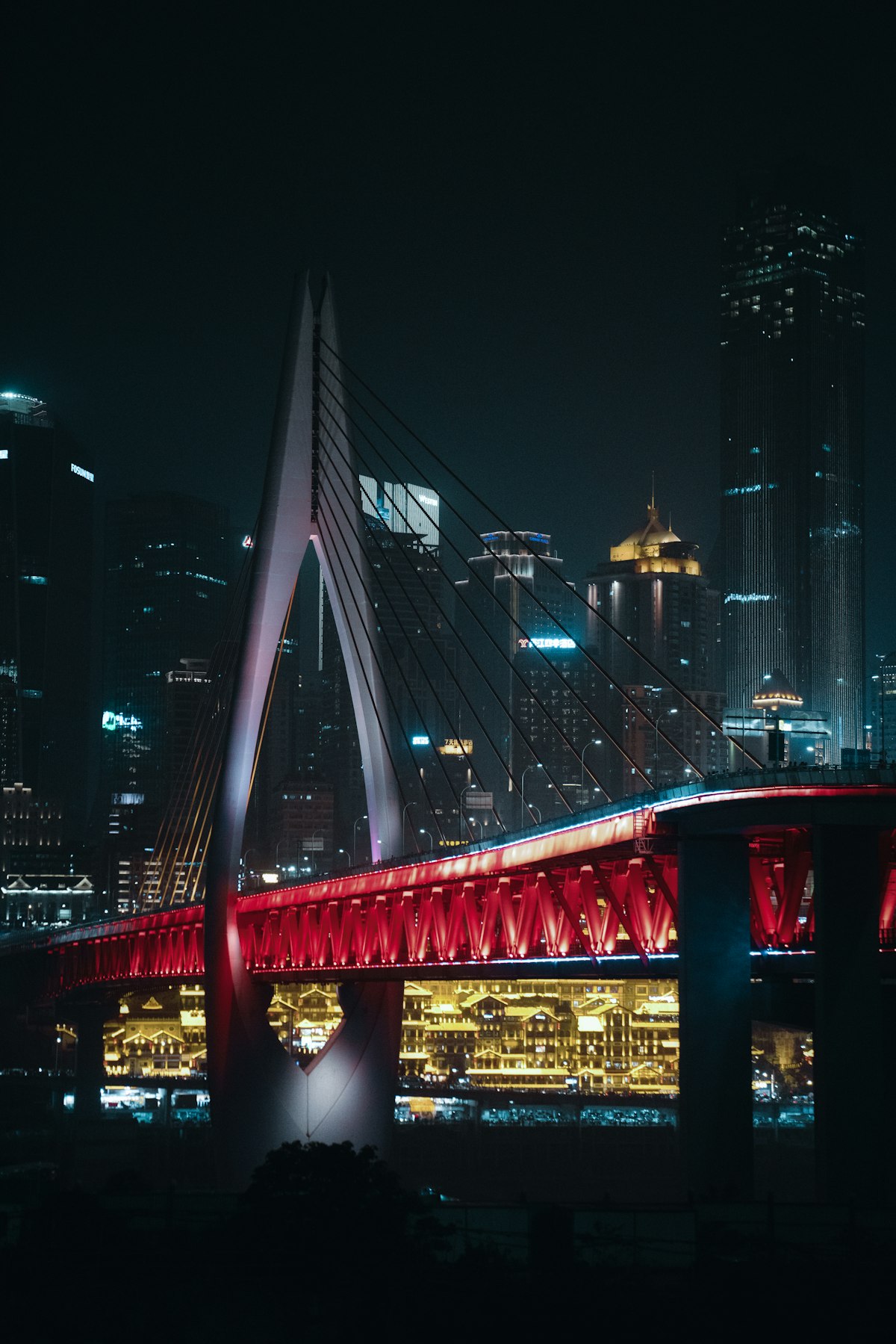
Chongqing is not like other cities. Trains run through the 8th floor of an apartment building. You enter a building on floor 1 and exit on floor 22 into a different neighborhood entirely. At night, the skyline pulses neon across two rivers and stacked layers of city that climb the mountainside. This is China’s most disorienting, most photogenic, most intense city. 32 million people live here. Three days is the sweet spot. This guide gets you through it without getting lost — too much.
Why Chongqing? The Vibe in One Paragraph
Not Beijing’s history. Not Shanghai’s cosmopolitan polish. Chongqing is raw, chaotic, vertical, and unlike anywhere else on earth. It is the city that went viral because it looks like Blade Runner, but the reality is stranger and better. Every corner forces you to reckon with the vertical dimension. Every meal is a trial by fire. And every night, when the neon ignites across the Jialing and Yangtze rivers, the city makes its case as the most cinematic urban landscape on the planet.
Before You Go — Chongqing-Specific Prep
Chongqing demands more preparation than most Chinese cities. The vertical dimension, the spice level, and the navigation challenges are real. These five tasks make the difference between loving this city and being flattened by it.
| Task | Why |
|---|---|
| Install Amap (高德地图) set to English | Google Maps is unreliable in China. Even Amap struggles with the vertical dimension — GPS calculates in 2D, but Chongqing is 8D. It is the best option available. |
| Pack grippy sneakers | You will climb stairs. A lot. Fashion shoes will ruin your trip. Sandals are dangerous on wet stone steps. Do not pack shoes you have not broken in. |
| Book Wulong day trip in advance | If adding a day trip (highly recommended), book the train + entry before arriving. Morning trains sell out. Read our Chongqing day trips guide for logistics. |
| Learn “wei wei la” (微微辣) | “Mild” spice level. Pronounced “way-way lah.” It is still hot. But saying this before ordering hot pot saves your stomach from the full Chongqing experience. |
| Set up Alipay | Full guide here. Chongqing is as cashless as everywhere else in China. Even the smallest noodle stall expects a QR scan. |
Getting There
Chongqing is well-connected, but distance matters. Chengdu is a casual train ride away. Beijing is a flight. Here is how the main routes break down.
| From | Method | Time | Cost (¥) | Cost ($) |
|---|---|---|---|---|
| Chengdu | High-speed rail | 1–1.5 hrs | ¥100–150 | $14–21 |
| Xi’an | High-speed rail | ~5 hrs | ¥280–380 | $39–53 |
| Beijing | Flight recommended | 2.5 hrs flight | ¥800–1500 | $112–210 |
| Guangzhou | High-speed rail | ~7 hrs | ¥400–550 | $56–77 |
| Anywhere | Chongqing Jiangbei Airport (CKG) + Metro Line 10 | 60 min to downtown | ¥7 metro | $1 |
Chengdu + Chongqing is the classic combo. Most travelers visit both. 1–1.5 hours by train for $14. The contrast — Chengdu’s calm teahouses and pandas versus Chongqing’s neon chaos — makes both cities better. Read our high-speed rail guide for full train booking instructions.
Where to Stay
Your neighborhood choice shapes your entire trip. Chongqing is large, and crossing the river eats time. Pick based on your priority: convenience, views, or local vibe.
| Area | Vibe | Price/Night (¥) |
|---|---|---|
| Jiefangbei (解放碑) | Dead center. Walking distance to Hongyadong. Tourist central but genuinely convenient for a first-timer. | ¥400–1200 |
| Nanbin Road (南滨路) | Riverside on the south bank. Best night views of the Yuzhong skyline. Quieter, more romantic. | ¥500–1500 |
| Guanyinqiao (观音桥) | Local vibe. Great food streets. Younger crowd. Less tourist infrastructure but more authentic. | ¥300–800 |
| Near Liziba | Mid-range, good metro access, less touristy. Convenient for the Metro Line 2 attractions. | ¥300–700 |
Recommendation: Jiefangbei for first-timers. The location is unbeatable — you can walk to Hongyadong, the Yangtze Cableway, and multiple metro lines. Yes, it is touristy. You are a tourist. The convenience wins.
Day 1: The Cyberpunk Welcome
Skyline, neon, the “holy sh*t” day. This is the Chongqing you saw on Instagram — and it delivers harder than the photos.
Morning: Jiefangbei & Xiaomian
Start at Jiefangbei (解放碑), the central pedestrian square. The monument is Chongqing’s “Times Square” — a WWII victory memorial from 1947, now surrounded by skyscrapers and giant LED screens. It is the city’s beating commercial heart. Get oriented. 30 minutes.
Lunch: Chongqing xiaomian (小面) — spicy noodles eaten for BREAKFAST by locals. ¥8–15 ($1–2). Any small shop near Jiefangbei with a line at the counter. Point and say “yi wan xiaomian” (一碗小面 — one bowl of noodles). The broth is red with chili oil, topped with minced pork, scallions, and pickled vegetables. Warning: even “mild” here is hot. Embrace it.
Afternoon: Metro Line 2 — The Monorail Through a Building
Ride Metro Line 2 from Jiaochangkou toward Yudong. Sit on the right side for sweeping river views — the elevated track runs alongside the Jialing River, and the perspective is unlike any metro ride on earth. The train itself is an attraction.
Get off at Liziba Station (李子坝) — the monorail station inside a 19-story apartment building. Go down to street level. Stand on the viewing platform across the road. Watch a train enter and exit the building. It is a 30-second spectacle. It is worth it. This is the single image that made Chongqing famous, and seeing it in person is genuinely surreal.
Ride the same line back one stop to Fotuguan (佛图关). This elevated stretch offers the best river panorama from the train — the Jialing River below, the stacked city climbing both banks, mountains in the distance.
Late Afternoon: Eling Park Panorama
Walk uphill (yes, more stairs) from Liziba to Eling Park (鹅岭公园). 30-minute climb, free entry. The Liangjiang Pavilion at the top has one of the best free panoramas in the city — two rivers converging, stacked city layers, mountains fading into haze. This is where you understand the scale. This is where the word “8D city” clicks.
Evening: Hongyadong — The Shot
Hongyadong (洪崖洞) is the 11-story stilted complex that defines Chongqing’s cyberpunk aesthetic. Here is the critical thing: go to Qiansimen Bridge (千厮门大桥), NOT inside the building.
The view FROM the bridge is what you want — the golden-lit stilted complex clinging to the cliffside, the Jialing River below, Raffles City glowing across the water. This is THE shot.
Timing: lights come on seasonally — approximately 7:30 PM in summer (June–August), 6:30 PM in spring/autumn (March–May, September–November), and 6:00 PM in winter (December–February). Arrive 30 minutes before lights-on to secure a spot on the bridge. Stay through blue hour — the 20 minutes after sunset, when the sky deepens to indigo and the building lights are at full intensity.
Skip the interior entirely. Hongyadong’s inside is a crowded souvenir mall of 11 floors. It is not the experience you came for. The view from outside is the experience.
Alternate photo spot: The riverbank near the Chongqing Grand Theatre, on the opposite side of the Jialing River. Wider angle, water reflections, fewer people.
Dinner: Your First Chongqing Hot Pot
This is not optional. Your first Chongqing hot pot is a rite of passage. Our Chongqing food guide covers the full strategy — but here are the essentials for surviving your first pot:
- Order “yuan yang guo” (鸳鸯锅) — the split pot: half fiery red chili broth, half mild bone broth. You will use both. Do not order the full-spicy pot unless you have trained for this.
- Make the dipping sauce: Sesame oil (香油) + minced garlic (蒜泥) + cilantro (香菜). Sesame oil neutralizes the heat. Do not skip this step. The oil forms a protective coating, and after 5 minutes in chili broth, you will understand why it matters.
- Classic first-timer order: Beef slices (肥牛), lamb slices (羊肉), tofu skin (豆皮), lotus root (藕片), potato slices (土豆片), and noodles (面条) for the end.
- Beer is mandatory. Order a Chongqing Beer (重庆啤酒), ice cold. The combination of fiery broth and cold lager is one of the great pairings in global cuisine.
Price: ¥80–150/person ($11–21) for a solid hot pot meal. Any shop with a queue at dinner time is a good shop.
Day 1 totals: ~15,000–18,000 steps. You felt every stair. You understand why this city is different.
Day 2: Old Chongqing & Deep Cuts
The day that surprises everyone. Yesterday was the neon postcard. Today is the Chongqing that survived — cobblestone alleys, thousand-year-old temples dwarfed by skyscrapers, and the food streets locals actually eat at.
Morning: Shancheng Alley — The Chongqing That Survived
Shancheng Alley / Mountain City Trail (山城巷) is old Chongqing — cobblestone lanes, traditional stilt houses (diaojiaolou), teahouses, views of the Yangtze River Bridge. This is NOT commercialized like Ciqikou. It is a living neighborhood that predates the skyscrapers.
Start at the bottom near Qixinggang Metro Station (七星岗), Exit 1. Walk up. The route climbs the hillside through narrow lanes, past wall murals, small temples, and viewpoints over the Yangtze. Takes 1.5–2 hours with photo stops. The Lantern Staircase section — a steep flight of stone steps lined with red paper lanterns — is especially photogenic.
Optional detour: Luohan Temple (罗汉寺). A 1,000-year-old Buddhist temple surrounded on all four sides by skyscrapers. The contrast IS Chongqing. Ancient Buddha statues, incense smoke, chanting monks — and outside the walls, glass towers. ¥20 entry (~$2.80). Inside the temple courtyard, you genuinely forget you are downtown. Metro Line 1 to Xiaoshizi, Exit 6. Budget 30–45 minutes.
Lunch: Guanyinqiao Food Street
Skip the tourist food streets near Jiefangbei. Guanyinqiao Food Street (观音桥好吃街) is where locals eat. Metro Line 3 to Guanyinqiao, Exit 5.
This is a multi-level indoor food hall with dozens of stalls. Walk through. Point at what looks good. A few things to find:
- Chuan chuan xiang (串串香) — skewer hot pot. Grab a basket, pick skewers from the fridge (¥0.5–3 each), hand them to the cook. They boil them in spicy broth and hand them back on a plate.
- Suan la fen (酸辣粉) — sour-spicy glass noodles. The signature Chongqing street snack. ¥8–12.
- Bingfen (冰粉) — iced jelly with brown sugar, peanuts, raisins, and osmanthus. Dessert. Cooling. Essential after spicy food. ¥6–10.
Budget: ¥30–60/person ($4–8). You will eat too much. That is the point.
Afternoon: Three Gorges Museum or Deep Exploration
Three Gorges Museum (三峡博物馆): Free entry. Covers the Three Gorges Dam, Chongqing’s role as China’s wartime capital (1937–1945), and Ba culture — the ancient civilization that predated Chinese settlement in this region. English signage is decent. 1.5–2 hours. Metro Line 2 to Zengjiayan, Exit A. Closed Mondays. Good rainy-day option.
Not a museum person? Instead, explore the streets between Jiefangbei and the river. The old neighborhoods around Baixiangju (白象居) — brutalist 24-story apartment buildings with no elevator, connected by skybridges at the 15th floor. This is where the “enter on floor 1, exit on floor 22” phenomenon lives. Free. Surreal. Bring your camera.
Evening: Nanbin Road & Nanshan
Cross the Yangtze to the south bank. Metro Line 6 to Shangxinjie (上新街). Walk toward the river.
Nanbin Road (南滨路) is the riverside promenade that gives you the classic postcard view — the entire Yuzhong peninsula skyline, Hongyadong glowing in the distance, Raffles City bridging the river confluence. Grab a drink at a riverside bar. This is where you sit, decompress, and watch the city do its thing.
For the elevated panorama: Take a taxi up to Nanshan One Tree Deck (南山一棵树观景台). ¥30 entry (~$4). This observation deck sits high on the Nanshan ridge and delivers the definitive Chongqing night panorama — the two rivers, the peninsula, and the infinite layers of city lights climbing the mountains. Taxi from Nanbin Road: ¥30–40, 20–25 minutes.
Timing: magic hour is 6:30–7:30 PM. Go before sunset. Watch the city transition from day to night. Stay 30–45 minutes. The platform can get crowded, but the view is big enough to share.
Day 2 totals: ~18,000–22,000 steps. You are starting to navigate instinctively. You still got lost twice. That is normal.
Day 3: Choose Your Adventure
By Day 3, you have seen the skyline and discovered the old city. Now pick your ending. Four options based on travel style:
| Style | What | Best For |
|---|---|---|
| 🏞️ Day Trip | Wulong Karst (UNESCO) — massive natural stone bridges, the Transformers filming location, a landscape that looks like another planet. Full day. Book trains in advance. → Chongqing Day Trips | Nature lovers, photographers, anyone who wants to escape the concrete for a day |
| 🗿 Day Trip | Dazu Rock Carvings (UNESCO) — 60,000 Buddhist, Taoist, and Confucian figures carved into cliffs, 9th–13th century. Full day. → Chongqing Day Trips | Culture and history buffs |
| 📸 Photography | Hit the deep-cut cyberpunk photo spots — Kuixinglou skybridge (22nd-floor illusion), Baixiangju brutalist apartments, Raffles City skybridge, Yangtze cableway at off-peak. → Chongqing 8D City Guide | Instagram/TikTok crowd, photographers |
| 🍲 Food Deep-Dive | Hot pot breakfast (yes, some places open at 9 AM), xiaomian neighborhood crawl, night market skewers (shaokao), underground hot pot in a WWII bomb shelter. → Chongqing Food Guide | Hardcore foodies |
Option A: Wulong Karst Day Trip (Detailed)
Wulong is a UNESCO World Heritage site and one of the best day trips from any Chinese city. Three Natural Bridges — Tianlong, Qinglong, and Heilong — are massive limestone arches spanning a deep karst valley. Avatar’s floating mountains borrowed from this region, and Transformers: Age of Extinction filmed here.
The train:
- Chongqing North Station → Wulong Station: approximately 1 hour, ¥52–82 ($7–11). Book the earliest morning departure (around 8:00 AM).
- From Wulong Station: blue shuttle bus to Xiannüshan Tourist Center, ¥10–16, 30–40 minutes.
- At the tourist center: buy your ticket, which includes the scenic shuttle bus into the park.
Tickets: Three Natural Bridges ¥125–155 ($17–22) including shuttle + glass elevator. Longshuixia Fissure Gorge (optional add-on) ¥55–115 ($8–16).
Timeline:
- 7:00 AM: Depart Chongqing
- 8:00–9:00 AM: Arrive Wulong
- 9:30–10:00 AM: Enter Three Natural Bridges
- 10:00 AM–1:00 PM: Explore (3–4 hours walking)
- 1:00–2:00 PM: Lunch
- 2:00–4:00 PM: Longshuixia Fissure Gorge (optional)
- 4:00–5:00 PM: Shuttle back to Wulong Station
- 5:00–6:00 PM: Train to Chongqing, back by dinner
Total cost: ~¥200–350/person ($28–49) for independent travel. Organized tours run ¥600+ ($84+) and include transport + tickets.
Key tips: Catch the first morning train. Last entry is typically 3:30–4:00 PM. Wear non-slip shoes — the canyon paths are often wet. Bring a light jacket — canyon temperatures run cooler than the city. Book return tickets in advance on weekends. Read our full day trips guide for Dazu Rock Carvings details.
Option B: Photography Circuit (Quick Notes)
- Kuixinglou (魁星楼): A pedestrian skybridge connecting the 22nd floor of one building to the ground floor of a street on the other side. Walk across. Look down. Cities are not supposed to work like this. Free. Near Linjiangmen, Yuzhong District.
- Baixiangju (白象居): Six 24-story residential towers from the 1990s, no elevators, connected by skybridges at floors 6, 10, and 15. Residents navigate this daily. The views through the corridors frame the Yangtze Cableway perfectly. Free. Be respectful — people live here.
- Yangtze Cableway (长江索道): ¥30 single ride (~$4.20). The aerial tram across the Yangtze River. Go at off-peak: before 10:00 AM or after 8:00 PM. Midday queues can exceed 90 minutes for a 5-minute ride. South station (Shangxinjie) is less crowded than north station (Xinhua Road). The view mid-river is worth it if you time it right.
- Raffles City (来福士): The horizontal skyscraper spanning four towers at the tip of the Yuzhong peninsula. The crystal skybridge at the top — the “Conservatory” — offers a 250-meter-high panorama. ¥180 (~$25). Go at sunset. Read our 8D city guide for the full photo spot list.
Option C: Food Deep-Dive (Quick Notes)
This is the day for people who came to Chongqing to eat. Read our full Chongqing food guide for the complete hit list. Highlights:
- Hot pot for breakfast: Some old-school shops open at 9:00 AM. Dongting Hotpot (洞亭火锅) operates inside a former WWII bomb shelter in Yuzhong. The atmosphere — eating spicy broth underground while the city hums above — is unmatched.
- Xiaomian crawl: Every neighborhood has its champion noodle shop. Each claims to be the best. Try three. Pick a winner.
- Night market shaokao (烧烤): Chinese BBQ skewers, Chongqing style. Heavily spiced, grilled over charcoal, eaten with cold beer at plastic tables on the sidewalk. Guanyinqiao area after 9:00 PM is the prime zone. ¥30–60/person ($4–8).
Navigation: The 8D City Survival Manual
Chongqing’s vertical dimension breaks GPS. This is not an exaggeration. Here is what to expect — and how to cope. Full deep dive in our 8D city guide.
- GPS calculates in 2D. It does not know you are on the 8th floor and your destination is on the ground floor of a different street. “300 meters on the map” can mean descending 300 stairs, crossing a pedestrian bridge, and taking an elevator up 5 floors.
- Follow landmarks, not maps. Locals navigate by asking directions. You should too. Learn the characters for your hotel and key destinations. Show them to people. Chongqing locals are famously helpful with lost foreigners.
- Yellow taxis are your friend. Chongqing taxi drivers are legendary for their maze knowledge. They know which elevator in which building connects to which street. Hail one when lost. ¥10 base fare, ¥30–40 for most cross-river trips. Hand them your destination in Chinese characters or show them on Amap.
- Budget 30–50% extra transit time. Whatever Google Maps tells you, add half. The vending machine water break, the wrong staircase, the elevator queue — it all adds up.
- Wear comfortable, grippy shoes. Every day. Not on Day 1. Not “most days.” Every single day. Stairs are the default mode of movement in Chongqing. Wet stone from river humidity is common. Your feet will hate you if you do not prepare.
Budget Planning
Three days, per person, excluding accommodation. Convert at approximately ¥1 = $0.14 USD.
| Level | Daily Cost (¥) | Daily Cost ($) | Includes |
|---|---|---|---|
| Budget | ¥150–300 | $21–42 | Street food, metro, free viewpoints, skip observation decks |
| Mid-range | ¥400–700 | $56–98 | Hot pot restaurants, Nanshan entry, DiDi, some bars |
| Comfort | ¥800–1500+ | $112–210+ | Fine dining, Raffles City skybridge, private tours, taxis everywhere |
Sample mid-range Day 1 breakdown:
- Xiaomian lunch: ¥12
- Metro rides: ¥15
- Hot pot dinner (split with friend): ¥100
- Chongqing Beer x2: ¥20
- Snacks and water: ¥20
- Total: ~¥167 ($23)
Chongqing is one of China’s best-value major cities. The skyline is free. The stairs are free. The xiaomian is $1.50. You can have an incredible three days on a shoestring — or splurge on riverside dining and rooftop bars.
Common Mistakes
Going inside Hongyadong instead of viewing from the bridge. The interior is an 11-floor souvenir mall. The view FROM Qiansimen Bridge is the experience you saw on Instagram. Skip the interior.
Wearing fashion shoes. “But they’re comfortable!” — No. Chongqing stairs are steep, uneven, often wet. Every single day involves thousands of steps. Bring shoes with grip that you have already broken in. Sandals are dangerous. This is not negotiable.
Not learning “wei wei la” before your first hot pot. Full-spicy Chongqing hot pot is orders of magnitude hotter than anything labeled “spicy” in the West. “Wei wei la” (微微辣 — “mild”) is still a challenge. Order the split pot (yuan yang guo). Your stomach will send a thank-you note.
Trusting Google Maps. Google Maps is unreliable for walking directions, business hours, and public transit in China. Use Amap (高德地图). Even then, expect GPS to mislead you vertically. When in doubt, ask a local or hail a yellow taxi.
Visiting Ciqikou Ancient Town expecting authenticity. Ciqikou (磁器口) is the famous “thousand-year-old town.” In 2026, it is a tourist gauntlet of identical souvenir shops, snack stalls, and crowd bottlenecks. Do Shancheng Alley (山城巷) instead — it is genuinely old, genuinely inhabited, and not yet overrun.
Taking the Yangtze Cableway at peak times. 11:00 AM–4:00 PM on weekends generates 1–2 hour queues for a 5-minute ride. Go before 10:00 AM or after 8:00 PM. Or ride from the south station (Shangxinjie) — consistently shorter lines.
Visiting in July–August. Chongqing is one of China’s “Three Furnaces” — the summer heat is legendary. 40°C (104°F) with 80% humidity. If you must visit in summer, do outdoor activities before 11:00 AM, stay hydrated, and embrace air conditioning. Best seasons: March–May and October–November.
Only eating at Jiefangbei tourist restaurants. The area around Jiefangbei has overpriced, mediocre food targeting visitors. Walk 10 minutes in any direction. The food gets better and cheaper immediately. Or head to Guanyinqiao (Metro Line 3, 15 minutes) for the real local food scene.
Underestimating the physical demands. This itinerary involves 15,000–22,000 steps per day, most of it on stairs and slopes. This is not a relaxing beach vacation. It is a vertical assault on your legs. Painfully worth it — but train accordingly.
Bottom Line
Chongqing is the most intense, most photogenic, most physically demanding city you will visit in China. It does not have the Forbidden City or the Great Wall. What it has is an urban landscape that literally does not exist anywhere else on earth — a city built up a mountain, split by two rivers, connected by trains that run through buildings and skybridges that laugh at the concept of “ground floor.”
Three days of stairs, spice, and neon. You will leave exhausted. Your legs will ache. Your spice tolerance will be permanently elevated. And within a week of leaving, you will start planning how to come back.
Related guides you will need:
- Chongqing Food Guide — hot pot strategy, xiaomian crawl, where locals actually eat
- Chongqing Day Trips — Wulong Karst and Dazu Rock Carvings logistics
- Chongqing 8D City Guide — navigation survival, photo spots, understanding the vertical city
- China High-Speed Rail Guide — train classes, booking, station navigation
- China Mobile Payment Guide — Alipay and WeChat Pay, step by step