Huangshan Travel Guide 2026: Yellow Mountain Hiking, Sunrise & Huizhou Villages
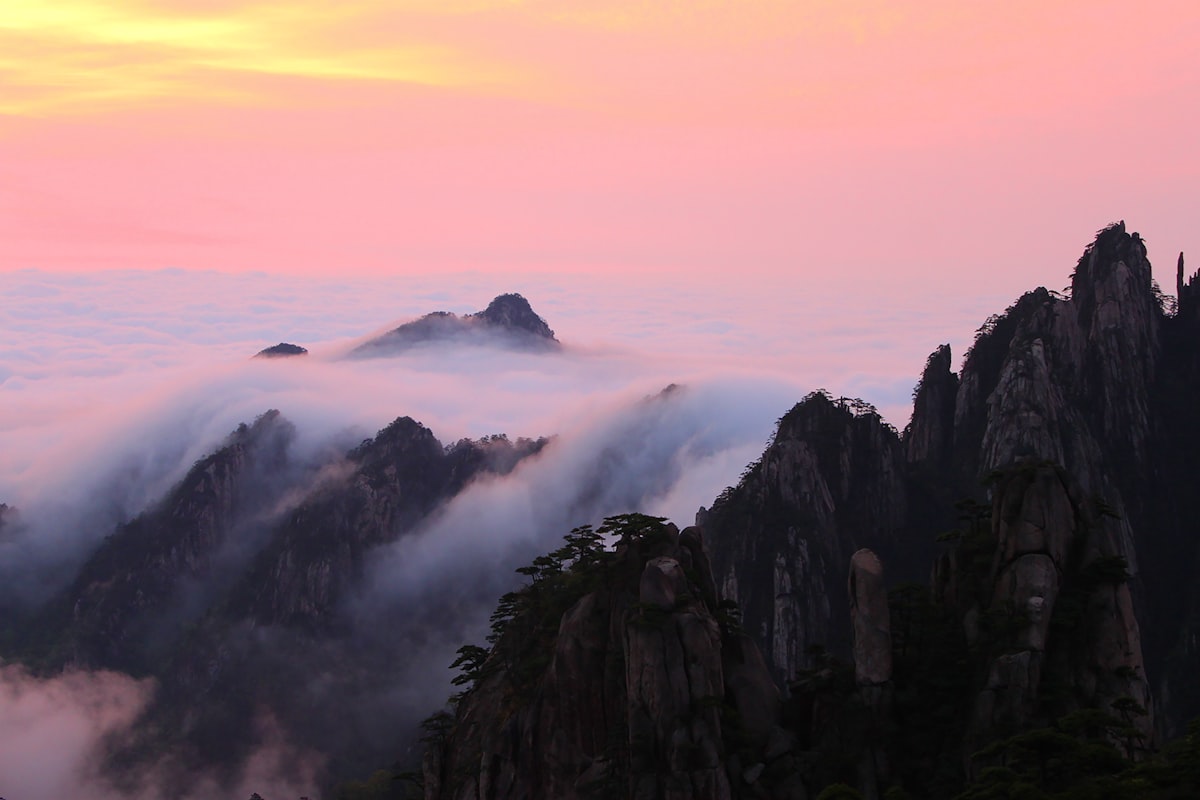
Huangshan (Yellow Mountain, 黄山) is the mountain that has inspired 1,400 years of Chinese ink painting. Granite peaks pierce through seas of mist. Ancient pines twist out of sheer rock faces. At sunrise, the clouds below you turn gold, then pink, then white — and for a moment you understand why generations of poets and painters came here and wept.
It’s also a mountain with 60,000 stone steps. There is no “trail” in the Western sense — you ascend and descend on granite staircases carved into cliffs. Your legs will hate you. Your camera roll will overflow. Worth it? Absolutely.
This guide covers everything: which route to take, where to photograph sunrise, how to survive the monkey gauntlet, and why you should add two ancient villages to your trip.
Why Huangshan?
| Reason | What It Means For You |
|---|---|
| 🌅 Sunrise Above the Clouds | Watch the sun rise from 1,860m as a sea of mist fills the valley below — the defining Huangshan moment |
| 🌲 The Four Wonders | Peculiar pines, absurd rocks, sea of clouds, hot springs — the mountain’s UNESCO calling card |
| 🏔️ West Sea Grand Canyon | Dramatic cliffside staircases descending into a deep gorge, plus a monorail ride back up |
| 🏘️ Huizhou Ancient Villages | Hongcun and Xidi (both UNESCO) — white-walled, black-tiled Ming/Qing dynasty villages within an hour of the mountain |
| 🚄 Fast Access | High-speed train: 1.5h from Hangzhou, 2.5h from Shanghai, 3.5h from Nanjing |
| ♨️ Wild Hot Springs | Soak 42°C mineral water at the mountain base after two days of stairs — ancient Chinese poets did the same |
Best Time to Visit
| Season | Months | Verdict |
|---|---|---|
| Autumn ⭐ | September–November | Best — crisp air, golden foliage, highest sea-of-clouds probability, stable weather |
| Spring ⭐ | April–June | Excellent — azalea blooms, green peaks, misty aesthetic. Most reliable cloud seas: November–May |
| Summer | July–August | ⚠️ Hot at base, possible rain, Chinese school holidays = big crowds. But waterfalls are full and lush. |
| Winter | December–February | ❄️ Stunning rime ice on pines (“fifth wonder”), few tourists, lowest prices — but freezing (-5 to -10°C), icy stairs, West Sea Canyon closed |
Avoid at all costs: Chinese national holidays — Golden Week (Oct 1–7) and Labor Day (May 1–5). The mountain hits capacity, and the narrow cliff staircases become one-way human traffic jams. Spring Festival (late January/February) is less crowded but very cold.
Best window: Late April to early June, or late September to mid-November.
How to Get There
By High-Speed Train (Recommended)
Huangshan is superbly connected to the Yangtze River Delta:
| From | Duration | Approx. Fare (¥) |
|---|---|---|
| Hangzhou | 1.5–2 hours | 82–120 |
| Shanghai | 2.5–3 hours | 191–206 |
| Nanjing | 3–4.5 hours | 238–328 |
| Hefei | 1–1.5 hours | 70–140 |
All trains arrive at Huangshan North Station (黄山北站).
From Huangshan North → Mountain (Tangkou South Gate):
- Shuttle bus: ~1 hour, ¥30
- Taxi / Didi: ~50 minutes, ¥150–180
- Then park shuttle bus from Tangkou to cable car station: ~20 minutes, ¥19
By Air
Huangshan Tunxi International Airport (TXN) has domestic flights from Beijing, Shanghai, Guangzhou, Chengdu, and Xi’an. The airport is closer to Tunxi Old Street than the mountain — 1–1.5 hours by shuttle to Tangkou.
Tip: Book train tickets on Trip.com (English interface, accepts foreign cards). Download offline maps before you go — cell service exists on most peaks but isn’t 100% reliable.
Tickets & Costs (2026)
| Item | Peak Season (Mar–Nov) | Off Season (Dec–Feb) |
|---|---|---|
| Park Entrance | ¥190 (~$26) | ¥150 (~$21) |
| Yungu Cable Car (up, back mountain) | ¥80 | ¥65 |
| Yuping Cable Car (down, front mountain) | ¥90 | ¥75 |
| West Sea Monorail | ¥100 | ¥80 |
| Hongcun Village | ¥104 | ~¥80 |
| Xidi Village | ¥104 | ~¥80 |
| Hot Springs | ¥150–198 | ¥120–150 |
- Ticket is valid for 3 days, single entry. If you exit and want to re-enter, register at the ticket office before leaving.
- Book everything through the WeChat mini-program “Huangshan Tourism Official Platform” or via Trip.com.
The Classic 2-Day Route (Back → Front Mountain)
This is the route 90% of travelers take. Back mountain up (gentler), front mountain down (steeper). You stay one night on the summit for sunrise.
Day 1: Back Mountain → West Sea Grand Canyon → Sunset
7:30 AM — Arrive at Tangkou South Gate. Take park shuttle bus to Yungu Cable Car station.
8:00 AM — Cable car up to the back mountain (Cloud Valley Temple area). The ride is beautiful — granite peaks emerging from mist.
8:30 AM–12:00 PM — Explore the back mountain ridge:
- Shixin Peak (Begin-to-Believe Peak, 始信峰) — The classic Huangshan introduction. Twisted pines clinging to rock, mist swirling through ravines. This is where you’ll take your first “I can’t believe this is real” photo.
- Black Tiger Pine — An 800-year-old pine with a trunk like a crouching tiger. One of Huangshan’s most famous trees.
- Monkey Watching the Sea (猴子观海) — A rock formation that genuinely looks like a monkey staring into a sea of clouds. If there’s no cloud, it’s “Monkey Watching the Plain.” Still good.
- Lion Peak (狮子峰) — Sweeping views over the Beihai area.
12:00 PM — Lunch. There are food stalls and small restaurants near Beihai Hotel and Xihai Hotel. Options: instant noodles (¥15–25), rice boxes (¥40–60), or bring a self-heating hot pot (自热锅). Prices are high — this stuff is carried up by porters on foot.
1:30 PM — West Sea Grand Canyon (西海大峡谷). This is the most dramatic part of Huangshan. The trail descends steep stone staircases carved into near-vertical cliffs. Metal railings. Mist swirling below. It’s terrifying and magnificent in equal measure.
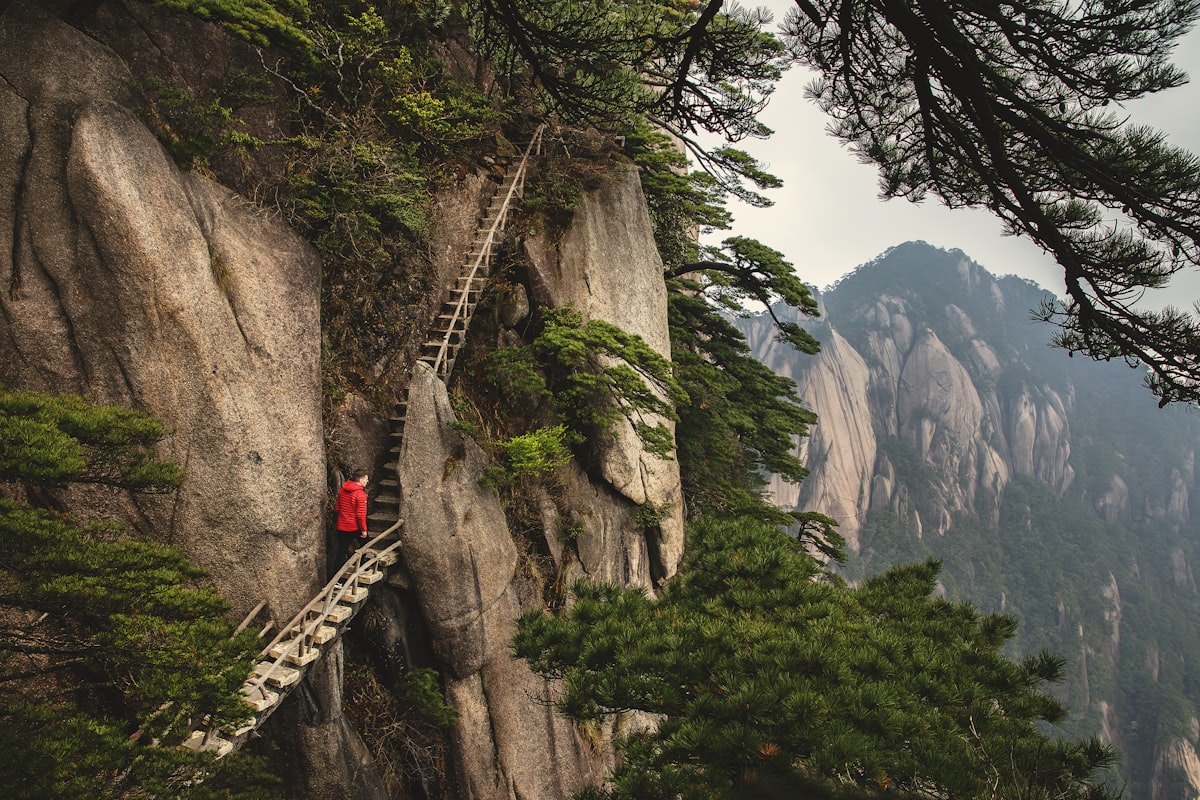
The full descent takes about 2 hours (one-way down). At the bottom, take the West Sea Monorail (¥100) back up to Tianhai station — the monorail itself is a 10-minute scenic ride through the gorge.
⚠️ The canyon closes December–March for winter maintenance. Check before you go.
5:30 PM — Sunset at Bright Summit Peak (光明顶, 1,860m). This is the highest point accessible on the main route and the best all-around viewpoint. Arrive 30–40 minutes early to claim a spot. If Bright Summit is packed, Paiyun Pavilion and Danxia Peak are good alternatives.
Overnight: On the mountain. Options:
- Baiyun Hotel (closest to Bright Summit, ~¥1,200–1,800/room)
- Bright Summit Lodge (rustic, best location, ~¥1,000–1,500)
- Beihai Hotel (comfortable, near Shixin Peak, ~¥1,000–2,000)
- Xihai Hotel (good for West Sea Canyon access, ~¥800–1,500)
- Dorm beds: ¥300–500/night at most hotels — book 1+ month ahead
Day 2: Sunrise → Front Mountain → Descend
4:30 AM — Wake up. Yes, it’s early. Yes, it’s worth it. Put on every layer you have. Grab your headlamp. Walk to Bright Summit.
5:00–5:30 AM — Sunrise. The sky turns from black to purple to orange to gold. If there’s a sea of clouds, the peaks below you emerge like islands from a white ocean. This is the reason you came. It lasts about 10 minutes.
7:00 AM — Back to the hotel for a quick breakfast (usually included with your room — congee, eggs, pickles).
8:00 AM–12:00 PM — Hike the front mountain:
- Flying-Over Rock (飞来石) — A 12-meter-tall boulder balanced improbably on a granite ledge. It’s been there for 100 million years. Allegedly.
- Aoyu Peak (鳌鱼峰) — A whale-shaped peak with panoramic views. The trail squeezes through a narrow rock tunnel called “Aoyu’s Mouth” — fun, unless you’re claustrophobic.
- Hundred-Step Cloud Ladder (百步云梯) — A staircase so steep it feels vertical. Hold the railing. Take your time. The views are excellent, but looking down is not recommended.
- Welcoming Guest Pine (迎客松) — Huangshan’s symbol. This 1,000-year-old pine extends one branch like an arm welcoming guests. It’s by Yuping Pavilion, right before the cable car down. There will be a queue for photos. Worth it.
- Celestial Capital Peak (天都峰) — If it’s open (alternates with Lotus Peak every ~5 years) and you still have legs, this is the most thrilling climb on the mountain. The “Carp’s Back” ridge section requires holding chains bolted into the rock face. Not for anyone with vertigo. Check the opening status before your trip.
12:30 PM — Descend via Yuping Cable Car. You’re done. Your legs are jelly. You smell. You have 300 photos of mist. You are a new person.
1:00 PM — Park shuttle bus back to Tangkou. Lunch. A well-deserved beer. Or hot springs.
🐒 Monkey Warning (Read This)
Huangshan has wild macaques. They are not cute Disney monkeys. They are bold, aggressive, and know that humans = food.
Rules:
- Do not feed them. It’s illegal and encourages aggression.
- Do not carry visible plastic bags. Monkeys associate plastic bags with food and will snatch them.
- Do not make eye contact or bare your teeth — this is a threat signal.
- Keep snacks hidden. If a monkey approaches, don’t turn your back. Walk away calmly, keeping your belongings close.
- Watch your phone. Monkeys have been known to grab phones and cameras.
Encounters are most common near Beihai and on the trail between Yungu Temple and the cable car station. Most encounters are aggressive begging, not attacks. But they will absolutely grab an unattended bag.
Photography Guide
Sunrise
| Spot | Vibe | Crowd Level |
|---|---|---|
| Bright Summit | Highest, 360° panoramic, best all-around | Very high — arrive 45 min early |
| Shixin Peak | Pine-framed foreground, classic composition | High |
| Refreshing Terrace (Lion Peak) | Sea of clouds specialist, less busy | Medium |
Sunset
| Spot | Vibe | Crowd Level |
|---|---|---|
| Paiyun Pavilion | West-facing, valley below, spectacular colors | Medium |
| Danxia Peak | Intimate, rock formations in foreground | Low |
| Bright Summit | Works for everything | High |
Sea of Clouds
The “sea of clouds” (云海) happens when a temperature inversion traps moisture in the valleys, and the peaks rise like islands above a white ocean. Probability is highest November–May, especially the morning after rain followed by clear skies. Check the weather forecast: you want a day with rain followed by a cold, clear night.
Gear
- Tripod — Essential for low-light sunrise shots (but lightweight — you’re carrying it up 60,000 stairs)
- Polarizing filter — Cuts glare on wet rocks and boosts cloud contrast
- Extra batteries — Cold drains them faster
- Wide-angle lens — For the grand vistas
- Telephoto — For isolated peaks in mist and detail shots of pines
- Rain cover — Weather changes in minutes
Hongcun & Xidi: The Ancient Villages
Huangshan isn’t just a mountain. The surrounding Huizhou region is home to two of China’s most beautiful ancient villages, both UNESCO World Heritage. They’re an hour from the mountain base and absolutely worth adding a day to your trip.
Hongcun (宏村) — “Village in a Chinese Painting”
Hongcun was laid out in the 12th century in the shape of an ox, with an elaborate water canal system that still runs past every house. It’s the village from Crouching Tiger, Hidden Dragon’s flying chase scene.
What to see:
- South Lake (南湖) — The defining view: white-walled houses, arched stone bridge, perfect mirror reflection. Come at 7 AM before the crowds for glassy water.
- Moon Pond (月沼) — A half-moon shaped pond in the village center, surrounded by ancestral halls. Magical at dusk when lanterns reflect in the water.
- Chengzhi Hall (承志堂) — A merchant’s mansion with fine wood carvings. The detail is staggering — gold leaf, mythological scenes, 2,000+ carved figures.
- Art students — You’ll see dozens of easels set up around the village. Hongcun is a pilgrimage site for Chinese art students. Their paintings make great photos.
Xidi (西递) — The Scholar’s Village
Xidi is smaller, quieter, and architecturally richer than Hongcun. Built by the Hu family during the Ming and Qing dynasties, it’s a maze of narrow stone alleys, carved archways, and courtyard homes.
What to see:
- Hu Wenguang Memorial Archway (胡文光牌坊) — The only remaining of 13 original ceremonial arches, carved in 1578. The village landmark.
- Ruiyu Courtyard (瑞玉庭) — A classic Huizhou courtyard home where a descendant still lives and serves tea.
- The alleyways — Just wander. Xidi is less manicured than Hongcun, more lived-in. You’ll see villagers washing vegetables in stone gutters and drying persimmons on door frames.
Logistics
| Hongcun | Xidi | |
|---|---|---|
| Distance from Huangshan | 40 km (~1 hour) | 45 km (~1 hour) |
| Time needed | 2–3 hours | 2–3 hours |
| Ticket | ¥104 | ¥104 |
| Best time | 7–8 AM (reflections, no crowds) | Late afternoon (golden light on stone) |
How to combine: Do the village(s) on Day 1, stay in Tangkou that night, then hit the mountain early Day 2. Or reverse — descend Day 2 afternoon, stay in Hongcun that night (village guesthouses are beautiful).
Where to Stay
| Location | Pros | Cons | Recommendation |
|---|---|---|---|
| Mountain summit | Sunrise access, evening solitude, sea of clouds at dawn | Expensive, basic amenities, books out weeks in advance | Baiyun Hotel or Bright Summit Lodge |
| Tangkou Town | Cheaper, hot springs, closer to park entrance | Miss sunrise | Any guesthouse on Tangkou Main Street |
| Huangshan City (Tunxi) | Most hotels & restaurants, good for arrival/departure | 1 hour from mountain | Near Tunxi Old Street for evening strolls |
| Hongcun Village | Beautiful night atmosphere, lake reflections at dawn | 1 hour from mountain | Qingheyue Inn or Pig’s Inn (boutique) |
⚠️ Mountain hotels sell out during weekends and holidays. Book 1–2 months in advance for peak seasons. Dorm beds fill up first (budget travelers), then private rooms.
Food You Must Try
Huizhou cuisine (徽菜) is one of China’s Eight Great Cuisines — hearty mountain food with an emphasis on braising, stewing, and wild ingredients.
| Dish | What It Is | Where |
|---|---|---|
| Stinky Mandarin Fish (臭鳜鱼) | THE signature dish — fish fermented with salt and spices, braised with chili and scallion. Smells alarming, tastes incredible. | Any Huizhou restaurant |
| Hairy Tofu (毛豆腐) | Fermented tofu with a white mold “fur,” crispy-fried, served with chili dip. Much better than it sounds. | Street stalls, local restaurants |
| Stone Ear Chicken Stew (石耳炖鸡) | Free-range chicken with “stone ear” (rock lichen harvested from cliffs) — medicinal, rich broth | Upscale Huizhou restaurants |
| Wenzheng Mountain Bamboo Shoots (问政山笋) | Tender spring bamboo shoots braised with ham — delicate and seasonal | Spring only |
| Crab Shell Baked Cake (蟹壳黄烧饼) | Crispy stuffed pastry with plum vegetable and pork, named for its crab-shell shape | Street vendors, ¥5–10 |
| Huangshan Maofeng Tea (黄山毛峰) | One of China’s Top 10 teas — delicate green tea grown on the mountain’s slopes. Buy from a tea house. | Tea shops in Tunxi |
On the mountain: Food is expensive and limited. Instant noodles (¥15–25), rice boxes (¥40–60). Bring your own snacks and a self-heating hot pot.
What to Pack
| Essential | Why |
|---|---|
| Non-slip hiking shoes | 60,000 stone steps. Smooth granite + rain = slippery. Good grip saves ankles. |
| Layers (base + fleece + windbreaker) | Summit is 8–10°C colder than base. Wind chill on exposed ridges is real. |
| Rain jacket (not umbrella) | Weather changes in minutes. Umbrellas are useless in wind. |
| Headlamp | For pre-dawn sunrise walks — trails are lit but a headlamp gives you confidence. |
| Hiking poles | Your knees will thank you on the descent. Buy ¥3–5 bamboo poles at Tangkou. |
| Gloves | For holding cold railings on steep sections. Essential in winter. |
| Power bank | Cold + constant photography = dead phone by noon. |
| Snacks + water bottle | Mountain food is limited and pricey. Free hot water refills at rest areas. |
| Passport (non-negotiable) | Required for tickets and hotel check-in. |
| Cash (¥500–1,000) | Alipay/WeChat work most places, but cash is backup for small vendors. |
| Tissues + wet wipes | Toilets on the mountain are scarce and basic. |
| Sunscreen + hat | You’re at 1,800m — UV is stronger than you think. |
3-Day Itinerary: Mountain + Villages (Recommended)
| Day | Plan | Stay |
|---|---|---|
| Day 1 | Arrive Huangshan North Station. Visit Hongcun (2–3h) → late afternoon at Xidi (2h) → drive to Tangkou | Tangkou Town |
| Day 2 | Early start → Yungu Cable Car up → Shixin Peak → Beihai → West Sea Grand Canyon → sunset at Bright Summit | Mountain summit hotel |
| Day 3 | Sunrise at Bright Summit → Flying-Over Rock → Hundred-Step Ladder → Welcoming Guest Pine → Yuping Cable Car down → optional hot springs → depart | — |
If you only have 2 days: Skip the villages. Go straight to the mountain. The mountain alone is worth the trip.
Budget Estimate (Per Person, 3 Days)
| Item | Budget (¥) | Mid-Range (¥) |
|---|---|---|
| Train: Shanghai ↔ Huangshan | 382 | 382 |
| Park entrance | 190 | 190 |
| Cable cars (up + down) | 170 | 170 |
| West Sea Monorail | 100 | 100 |
| Mountain hotel (1 night dorm/room) | 300 | 1,200 |
| Tangkou hotel (1 night) | 150 | 400 |
| Hongcun + Xidi tickets | 208 | 208 |
| Food (3 days) | 300 | 600 |
| Local transport | 100 | 200 |
| Total | ~1,900 | ~3,450 |
That’s roughly $260–480 USD. For one of the most spectacular mountain landscapes on Earth, plus two UNESCO villages — outstanding value.
Final Honest Take
Huangshan will test your legs. 60,000 stone steps is no joke — you will feel every one of them the next day. But watching the sunrise from Bright Summit as a sea of clouds rolls through the valleys below, with twisted pines silhouetted against gold… there’s a reason Chinese artists have been painting this mountain for fourteen centuries.
And the villages — Hongcun at dawn, when the lake is glassy and the only sound is a duck paddling across a perfect reflection of white walls and black tiles — is one of the most beautiful things I’ve ever seen.
Is it worth it? Take the stairs. See for yourself.
Planning a Huangshan trip? Have questions about hiking the West Sea Canyon? Reach out — I’d love to help.