Shanghai Arrival Guide: PVG Airport, Maglev, SIM Cards & Your First 24 Hours (2026)

You have landed. The airport WiFi blocks Google. Your phone has no Chinese SIM. You cannot read the signs. And you need to get to your hotel in a city of 25 million people.
This is the moment every first-timer dreads. But Shanghai in 2026 has made this easier than you think — the airport has a 24/7 one-stop service center, immigration has gone mostly digital, and the Maglev train still hits 430 km/h. This guide walks you from Pudong Airport to your hotel room, step by step, with zero gaps.
Before You Land — The 3 Things
Do these before the wheels touch down. They are small actions that save real time and stress.
| Task | Why |
|---|---|
| Fill out the online arrival card | Since November 2025, China has an online arrival card system. Fill it out at s.nia.gov.cn or via the “NIA 12367” app before you land. Saves 15–20 minutes in the immigration queue. Airlines may also provide a QR code at check-in or on board. |
| Enable eSIM data roaming | If you are using an international eSIM (Airalo, Holafly, Trip.com, Nomad), turn on data roaming for that line. A working data connection the moment you land is worth its weight in gold. |
| Have your hotel address in Chinese | Screenshot it. Save it to your photos. Set it as your lock screen wallpaper if you want. You will show it to taxi drivers, metro staff, and anyone who needs to point you in the right direction. English addresses mean nothing here. |
Immigration — Step by Step
Shanghai Pudong handles more international arrivals than any airport in China — over 4.9 million foreign travelers in 2025 alone. The process is smooth but you need to know the flow.
The arrival sequence
- Quarantine / health check — Usually just a thermal scan. Walk through. Nothing to do unless you are visibly unwell.
- Fingerprint collection — Mandatory for ages 14–70. Self-service kiosks with English instructions are located in both terminals (T1 near gate 17, T2 near gates 75/77). Takes under a minute.
- Immigration counter — Present your passport and your completed arrival card (digital or paper). Answer any questions. Get stamped.
- Baggage claim — Standard. Free luggage carts available.
- Customs — Nothing to declare lane unless you are carrying restricted items. Walk through.
Documents you need
- Passport (obviously — valid for 6+ months beyond your stay)
- Arrival card — Digital confirmation on your phone, or the paper card if you filled one out on the plane. Paper cards are no longer handed out on most flights; the online system is the standard.
- Hotel booking confirmation — Not always asked, but have it ready. Immigration officers may want to confirm where you are staying.
Questions they may ask
This is routine. Short, honest answers. Do not over-explain.
| Question | What They Mean |
|---|---|
| ”Purpose of visit?” | Tourism. Say “tourism” or “travel." |
| "How many days?” | Give your exact length of stay. |
| ”Where are you staying?” | Name your hotel. Have the booking confirmation ready. |
Important rules
- NO photos at immigration counters. No phones. Period. This is strictly enforced and signs make it clear. Do not test this.
- Immigration hotline: 12367 — Multi-language support, 24 hours. Call if you run into any issue.
- Queue time: 15–45 minutes depending on time of day. Morning (7–10 AM) is the busiest window. Evening arrivals tend to move faster.
The Arrivals Hall — What to Do FIRST
You are through immigration. You have your bags. You are standing in the arrivals hall. Here is the order of operations.
1. ATM / Cash
Withdraw ¥300–500 ($42–70) in small bills. UnionPay ATMs in the arrivals hall accept foreign Visa and Mastercard. Look for ATMs with the international card logos.
Do not exchange a large amount — airport exchange rates are bad. ¥500 is your emergency cash: a taxi if your phone dies, a bottle of water, a metro ticket. In 2026 Shanghai, 99% of transactions are digital, but cash is the backup you want in your pocket.
2. The One-Stop Service Center
Look for signs reading “International Visitors Service” in the international arrivals hall of both T1 and T2. This center is open 24 hours a day, 7 days a week and was designed specifically because China’s digital ecosystem is hard for new arrivals to navigate.
At the one-stop center you can:
| Service | Details |
|---|---|
| Buy a local SIM card | China Unicom counter inside the center. Passport required. 15–20 minutes. |
| Rent pocket WiFi | If you prefer a hotspot over a SIM swap. |
| Get help setting up Alipay / WeChat Pay | Staff can walk you through linking your foreign card. This is the single most useful thing you can do before leaving the airport. |
| Buy a Shanghai Pass | Transport card + attraction entry + some shops. |
| Exchange currency | Better rates at the center than at standalone kiosks. |
| Get free tourist maps and guides | Multilingual — Chinese, English, Japanese, Korean. Grab the free copy of A Guide to Shanghai for Expats. |
Staff speak basic to moderate English. It is not perfect, but it is enough to solve problems.
3. Metro Card or Shanghai Pass
You need a way to move around the city.
| Option | Cost | Best For |
|---|---|---|
| Shanghai Pass (General) | ¥20 card deposit + top up ¥50–100 | Multi-day visitors. Works on metro, buses, Maglev, taxis, ferries, and even some shops and attractions. Refundable (balance under ¥100 fully refunded upon departure). Available at airport service counters. |
| Shanghai Pass (One Day) | ¥198 | 24 hours unlimited metro/bus/ferry + Huangpu River cruise + Yu Garden + sightseeing bus + shopping discounts. Good value if you plan to use the included attractions. |
| Shanghai Pass (Three Day) | ¥499 | 3 days unlimited transport + 22+ attractions including Oriental Pearl Tower + ¥800+ in shopping coupons. Only worth it if you are in Shanghai for 3+ days and visit multiple paid attractions. |
| Alipay Transport QR code | Free (just the fare) | If you already set up Alipay at home. Switch location to Shanghai, scan the QR at metro gates. This is the most foreigner-friendly option if it is working. |
| Single-journey metro ticket | ¥3–9 per ride | One-off rides from ticket machines. Machines have English. Accepts cash and foreign cards. |
If you did not set up Alipay before your flight, buy the Shanghai Pass General card. It solves transportation immediately and you can set up Alipay later at your hotel. The ¥20 deposit is refundable when you leave.
4. SIM Card (If You Did Not Get an eSIM)
If you are using an international eSIM with data roaming, skip this section — you are already connected.
If you need a physical Chinese SIM, go to the China Unicom counter in the arrivals hall (T1: near Wuzhou South Road, booth 2D-7-1; also available in T2). China Unicom is the best carrier for foreign phones — best international band compatibility and strong 5G in cities.
| Duration | Data | Calls | Price (¥) | ~USD |
|---|---|---|---|---|
| 7 days | 10 GB | 100 mins | ¥58–80 | $8–11 |
| 15 days | 20 GB | 200 mins | ¥100–130 | $14–18 |
| 30 days | 30 GB | 300 mins | ¥150–200 | $21–28 |
Requirements: Physical passport. Staff will photograph you and your passport for real-name registration (mandatory under Chinese law). One SIM per passport. Activation takes 10–15 minutes.
Important caveat: A Chinese SIM does not bypass the Great Firewall. Google, Instagram, WhatsApp, Gmail, Facebook, Twitter — all blocked. You still need a VPN. The SIM gives you a Chinese phone number (useful for DiDi, restaurant queues, some app registrations) and local data speed, but it does not replace a VPN. If you want unrestricted internet without a VPN, an international eSIM (Airalo, Holafly) routes data through Hong Kong or Singapore and bypasses the firewall.
Getting Downtown — All Options Compared
Pudong Airport is 30 km east of downtown Shanghai. You have five options. Here they are, ranked by real-world usefulness.
| Option | Time | Cost (¥) | Cost ($) | Best For |
|---|---|---|---|---|
| Maglev + Metro | 40–55 min | ¥50 + ¥5 | ~$8 | Fun + fast. The 430 km/h experience. Best with light luggage and curiosity. |
| Metro Line 2 | 70–80 min | ¥8 | ~$1 | Budget. Direct but slow. No transfers needed if your hotel is on Line 2. |
| Airport Bus | 60–90 min | ¥20–30 | $3–4 | OK if your hotel is on a bus route. Check the route map first. |
| DiDi / Taxi | 45–70 min | ¥150–250 | $21–35 | Easiest with luggage. Door to door. The move when you are tired. |
| Private transfer | 45–60 min | ¥300–500 | $42–70 | Book via Trip.com or your hotel. Driver meets you at arrivals with a sign with your name. Zero stress. |
Maglev in detail
The Shanghai Maglev is the fastest commercial train on Earth. It covers 30 km from Pudong Airport to Longyang Road in 7–8 minutes at up to 430 km/h. The speed display inside the cabin is worth the ticket price alone — watching the number climb past 300, then 400, then 430 while the train floats above the track is a hell of a welcome to China.
At Longyang Road, you transfer to Metro Line 2 (or Lines 7, 16, 18) for the rest of the journey downtown. The transfer is a 5-minute walk through a connector hallway but requires a separate metro ticket and another security screening.
Maglev ticket prices:
| Ticket | Price (¥) |
|---|---|
| Single trip (economy) | ¥50 |
| Round trip (economy, 7-day validity) | ¥80 |
| Single trip + Metro 1-Day Pass | ¥55 |
| Round trip + Metro 1-Day Pass | ¥85 |
| Discounted single (with same-day flight ticket) | ¥40 |
Operating hours: roughly 6:45 AM to 9:40 PM. If you land on a late-night flight, the Maglev will be closed — go to Metro or DiDi.
When to take the Maglev: You have one carry-on bag and a sense of adventure. You want to say you rode the fastest train in the world. You land during operating hours and your hotel is near a Line 2 station.
When to skip the Maglev: You have two large suitcases. You are running on 3 hours of sleep. Your flight landed after 9 PM. You just want to be horizontal. Take DiDi.
Metro Line 2 in detail
The cheapest option. Metro Line 2 runs directly from Pudong Airport through the heart of Shanghai — Nanjing Road, People’s Square, Jing’an Temple — all the way to Hongqiao in the west. No transfers needed if your hotel is along this corridor.
The downside: 70–80 minutes, 20+ stops, and the train is an ordinary metro car, not the Maglev experience. Standing room only during rush hours (7:00–9:00 AM, 5:00–7:00 PM). With luggage, this is a long ride.
DiDi in detail
DiDi is China’s Uber. The DiDi pickup at PVG is at designated ride-hailing zones — follow signs for “Ride-Hailing” or look for the DiDi logo. The easiest way to use it is through Alipay’s built-in DiDi mini-program, which has an English interface.
Steps: Open Alipay → DiDi mini-program → set destination to your hotel’s Chinese address → confirm. The fare is auto-charged to your Alipay-linked card. No cash. No haggling. No explaining an address to a driver who does not speak English.
Expect ¥150–250 ($21–35) to most downtown areas. More at night, in rain, or during peak hours. The ride takes 45–70 minutes depending on traffic.
If you do not have Alipay set up yet, you can hail a taxi at the official taxi queue outside arrivals. Have your hotel’s Chinese address ready to show. Taxis are metered (flag fall ¥14 for the first 3 km) and drivers rarely speak English. Cash is accepted. Total should be similar to DiDi — ¥150–250.
First 24 Hours — What to Actually Do
What you do in your first hours in Shanghai depends entirely on what time you land. Here is the plan for each arrival window.
If you arrive in the morning (before noon)
You have a full day ahead. This is the best arrival window. Do not waste it.
- Drop your bags at the hotel. Do NOT lie down. Do NOT close your eyes. Power through the jet lag — napping now guarantees you will wake up at 3 AM and never adjust.
- Lunch: Find the nearest xiaolongbao (soup dumpling) spot. Jia Jia Tang Bao (佳家汤包) on Huanghe Road is the classic — thin-skinned dumplings filled with pork and scalding broth, made to order, ¥20–40 for a basket. See our Shanghai Food Guide for more options.
- Afternoon — The Bund orientation walk (30–45 min): Start at the south end near the old signal tower. Walk north along the promenade. On your left: a kilometer of colonial-era buildings — the old Hong Kong and Shanghai Bank, the Customs House with its Big Ben clock, the Peace Hotel. On your right across the Huangpu River: the Pudong skyline — Shanghai Tower, Shanghai World Financial Center (the “bottle opener”), the Oriental Pearl Tower, all gleaming in the afternoon light.
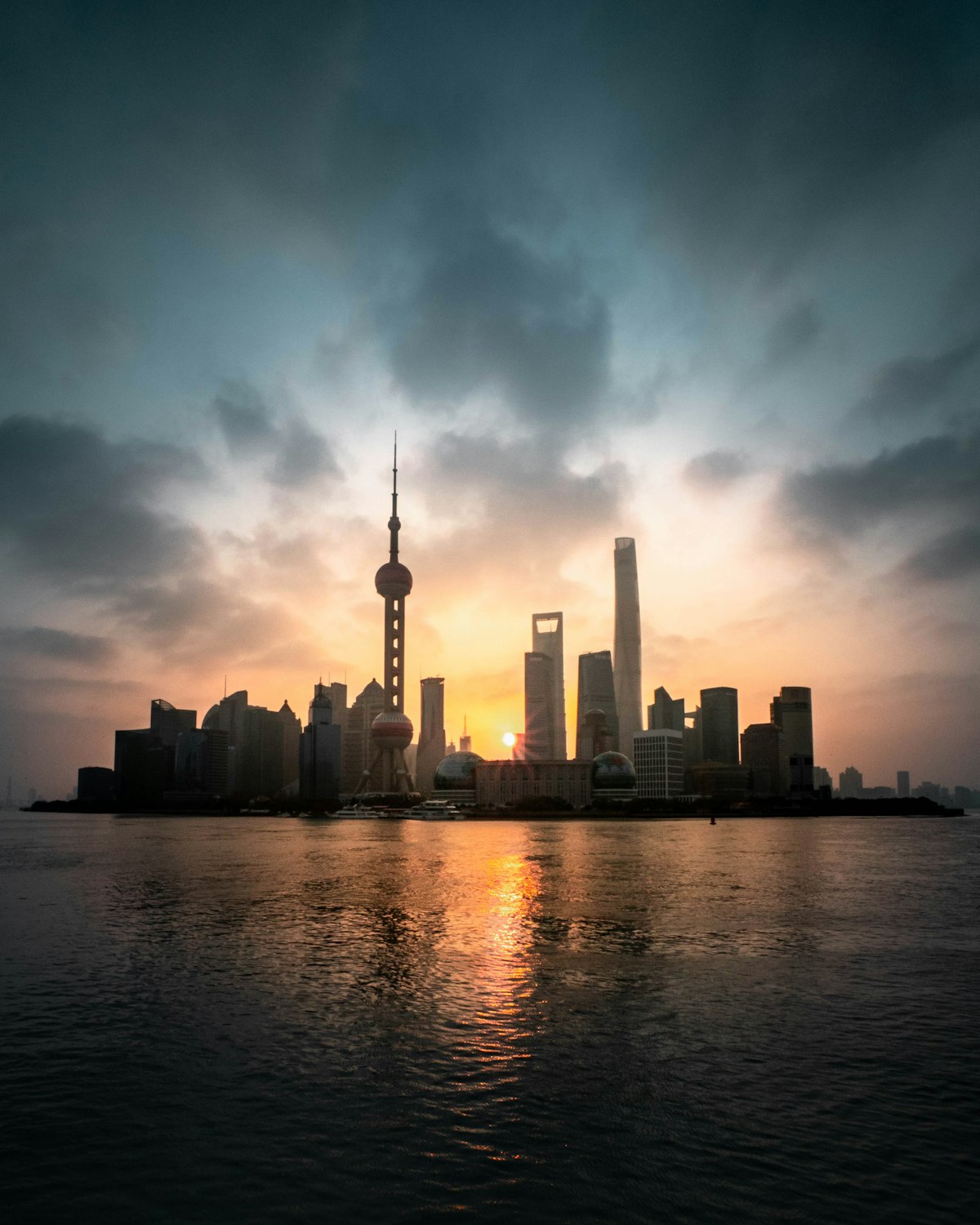 Walk all the way to the Waibaidu Bridge at the north end, where Suzhou Creek meets the Huangpu. This walk is the single best orientation to Shanghai. It costs nothing.
- Cross the river: Two options. The Bund Sightseeing Tunnel (¥50, touristy, a slow tram through a light-show tunnel under the river — kitschy but fun if you are in the mood) or Metro Line 2 from East Nanjing Road to Lujiazui (¥3–5, 2 stops). Take the metro.
- Shanghai Tower (上海中心大厦): 632 meters, 128 floors, the tallest building in China and the second-tallest in the world. Buy a ticket for the observation deck on the 118th and 119th floors (¥180–260 depending on peak/off-peak). Go around 4:00 PM — you will see daylight, golden hour, sunset, and the city lighting up, all from the same spot. This is the tallest observation deck on the planet. The elevator takes 55 seconds to reach the top.
- Evening — back to the Bund side: The Pudong skyline lights up around 6:00–7:00 PM. Walk back onto the Bund promenade and find a spot at the railing. The view of the illuminated skyline reflected in the Huangpu River at night is universally described as the highlight of Shanghai. This moment — standing on the Bund, looking at those towers — is worth the flight.
If you arrive in the afternoon (noon–4 PM)
You have lost the morning but still have a solid evening. Do not stay in the hotel.
- Drop bags. Do not nap. Go straight out.
- Walk the Bund in late-afternoon light. The light is better at this hour anyway — soft and golden on the colonial facades. Same walk: south to north along the promenade, 30–45 minutes.
- Dinner — shengjianbao: Find Yang’s Fry Dumplings (小杨生煎), the Shanghai chain that made pan-fried pork buns famous. Unlike steamed xiaolongbao, shengjianbao are fried in a large flat pan — crispy bottom, soft top, pork filling swimming in hot broth. Eat them carefully: bite a small hole in the top, blow to cool, slurp the broth, then eat the rest. Burn your mouth on the first one and you will remember the lesson. ¥12–20 for a portion of 4. Yang’s has locations everywhere; the one on Wujiang Road is the original.
- Evening — Bund lights: Same as above. The night view from the Bund is the payoff. If you still have energy after, head to the French Concession (take a DiDi or Metro Line 1/10/12) for a drink at a courtyard bar along Wukang Road or Anfu Road. Tree-lined streets, 1920s lane houses converted into bars and cafes, a completely different Shanghai from the skyscrapers.
If you arrive at night (after 6 PM)
You are tired. The city is lit up. Keep it simple.
- Get to your hotel. Taxi or DiDi is the move — you do not want to figure out the Maglev transfer at night after a long flight.
- If you are near the Bund: Drop your bags and walk straight out to the Bund. It is more magical after dark anyway. The light show on the Pudong towers runs until late — buildings cycle through colors, the river reflects everything, and the promenade is lively with locals and tourists. Walk for 20–30 minutes. It resets you after the flight.
- Late-night food: If you need a real meal, look for Lanzhou lamian (兰州拉面) shops — Muslim noodle joints identifiable by their green signs and Chinese characters. Hand-pulled noodles in beef broth, ¥15–25. Many stay open past midnight. Alternatively, FamilyMart or Lawson convenience stores (every few blocks in central Shanghai) have rice balls, steamed buns, and drinks — perfectly decent emergency food at 1 AM.
- Go to sleep. Set an alarm for a reasonable morning hour. Tomorrow is your real Day 1. See our Shanghai 3-Day Itinerary for the full plan.
Where to Stay for the First Night
Where you sleep on Night 1 sets the tone for your entire stay. Choose by location, not by hotel brand.
| Area | Vibe | Price/Night (¥) | Why |
|---|---|---|---|
| The Bund / Nanjing Road East | Most central. Walk to the Bund in 5 minutes. Touristy but unbeatable for a first night. | ¥500–1,500+ | You land, drop bags, walk outside, and you are already at the Bund. No metro needed. The Les Suites Orient and the Captain Hostel (budget, great rooftop) are here. |
| People’s Square | Metro hub. Lines 1, 2, and 8 intersect here. Mid-range hotels concentrated south of the square. | ¥400–1,000 | Best for connecting to everywhere. You are 10 minutes from the Bund on foot, 2 metro stops from the French Concession, and on the Line 2 direct to the airport. |
| Jing’an | More local character. Jing’an Temple, great food streets, parks. Better for stays of 2+ days. | ¥400–1,200 | Good if you want a neighborhood feel rather than a tourist-center feel. The Kerry Hotel and the Puli are here at the high end. |
| French Concession (Xuhui) | Tree-lined streets, boutique hotels, cafes, cocktail bars. Shanghai at its most charming. | ¥500–1,500+ | Best for repeat visitors or longer stays. Slightly farther from the Bund (15–20 min by metro or DiDi). The Donghu Hotel and boutique lane-house hotels are here. |
| Near Pudong Airport | Convenience only. Chain hotels near the terminals. | ¥300–800 | Only if you have an early flight the next morning. Otherwise avoid — you are 45+ minutes from anything interesting. |
Recommendation for first-timers: The Bund / Nanjing Road East area. On your first night, proximity to the Bund is worth the premium. You can move to Jing’an or the French Concession on Day 2 or 3 if you want a different vibe.
Price note: Convert at approximately ¥1 = $0.14 USD. A ¥500 room is about $70. A ¥1,200 mid-range room is about $168.
The Digital Survival Check (First Night)
Before you go to sleep on Day 1, run through this checklist. Each item takes 2–5 minutes. Skipping any of them risks losing hours the next day.
- Alipay working? Walk to the nearest convenience store (FamilyMart, Lawson, 7-Eleven — there is one within 3 blocks of any central Shanghai hotel). Buy a bottle of water. Pay with Alipay. If the transaction goes through, you are good. If it fails, fix it now — the most common issue is that your foreign card was not properly linked or your bank blocked the transaction. See our China Mobile Payment Guide for setup and troubleshooting.
- VPN connected? Open Gmail. Open Instagram. Open Google. If any of them do not load, your VPN is not working. Fix it now, on hotel WiFi, with a clear head. It is harder to download a backup VPN inside China — many VPN websites are blocked. If your VPN consistently fails, your fallback is your international eSIM (which routes data outside the firewall) or switching to a different VPN protocol. For a complete digital setup walkthrough, see our China Digital Survival Guide.
- Amap (高德地图) installed and showing your hotel location? Google Maps is unreliable in China — wrong building placements, missing metro entrances, bad walking directions. Amap is the local standard. Download it from your app store, set the language to English in Settings, and confirm it shows your hotel correctly. Apple Maps is a decent backup — it works in China without a VPN and uses Amap data underneath.
- Hotel name and address in Chinese — screenshot saved? While you are thinking clearly: screenshot the hotel name and address in Chinese characters from your booking confirmation. Set it as your lock screen wallpaper. This way you can show it instantly — to a taxi driver, a metro attendant, a police officer — without unlocking your phone, opening an app, and scrolling through emails while someone waits.
- Tomorrow’s plan saved offline? Screenshot or save offline: your hotel’s nearest metro station name (in Chinese), the names of the 2–3 attractions you will visit (in Chinese), and the metro lines you need. The internet may or may not cooperate tomorrow. Paper beats pixels when things go wrong.
- WeChat installed? Even if you do not plan to use it for payment, WeChat is how every business, tour operator, and local contact in China communicates. Download it, verify your account if possible, and have it ready. You may not use it on Day 1, but by Day 3 you will wish you had it.
For the full digital setup — Alipay, WeChat Pay, VPN recommendations, map apps, translation tools, and everything else you need on your phone before and after landing — read our China Digital Survival Guide.
Pudong Layover? Here Is What to Do
Shanghai offers a 144-hour (6-day) visa-free transit policy — and in many cases, it has been expanded to 240 hours (10 days) — for travelers from 55 eligible countries, including the US, UK, Canada, Australia, New Zealand, most EU nations, Japan, South Korea, Singapore, Brazil, and others. If you have a confirmed onward ticket to a third country (Hong Kong, Macau, and Taiwan count as separate regions), you can leave the airport and explore Shanghai without a visa.
Layover by length
| Layover | What to Do |
|---|---|
| 10+ hours | Maglev to Longyang Road → Metro Line 2 to Lujiazui → Shanghai Tower observation deck → Metro across the river → walk the Bund → meal → back to PVG. This is a genuine Shanghai mini-visit. Tight but absolutely worth it. Budget 90 minutes each way for the airport round trip to be safe. |
| 6–8 hours | Maglev to Longyang Road → Metro Line 2 to Lujiazui → view the Pudong skyline from the base of the towers → cross to the Bund → 30-minute walk → quick meal → back to PVG. Skip Shanghai Tower (the ticket queue can eat unpredictable time). You still get the skyline and the Bund. |
| Under 6 hours | Stay in the airport. Terminals have improved significantly but remain disappointing for long waits. Priority Pass lounges exist and are functional. The China Eastern lounge in T1 is decent. Free WiFi is available but blocks Google, Gmail, and most Western services — you will need your VPN or international eSIM to stay connected to the outside world. |
The visa-free transit rules
- Eligible nationalities: 55 countries as of 2026, covering the US, Canada, UK, Australia, New Zealand, EU/Schengen states, Japan, South Korea, Singapore, Brazil, Mexico, Argentina, Chile, UAE, Qatar, and more.
- The golden rule: Your onward ticket must be to a third country or region — not your country of origin. USA → Shanghai → Japan: valid. USA → Shanghai → USA: not valid. Hong Kong, Macau, and Taiwan count as separate regions.
- Time calculation: Your 144 hours starts from 00:00 the day after you receive your permit. Land at 8 PM on a Monday, and your clock starts Tuesday at midnight — effectively giving you nearly 7 days.
- Where you can go: Shanghai, Jiangsu Province, and Zhejiang Province. You can visit Shanghai, Suzhou, Hangzhou, and Nanjing — all connected by high-speed rail within 1–2 hours.
The viral “empty PVG airport” Reddit post was from 2024 when international travel was still recovering. In 2026, Pudong is busy — shops, restaurants, and services are open. The one-stop service center operates 24/7.
Common First-Day Mistakes
These are the mistakes that turn an exciting arrival into a frustrating first day. Every one of them is avoidable.
1. Napping after arrival
You land at 2 PM. You tell yourself you will just close your eyes for an hour. You wake up at 8 PM, wired, unable to sleep. You lie awake until 5 AM. Your body clock is now anchored to the wrong time zone and takes 3–4 days to recover. Do not nap. Go outside. Walk. Eat. Keep moving until at least 9 PM local time.
2. Not having the hotel address in Chinese
You hand the taxi driver your phone showing “Shanghai Marriott Hotel City Centre, 555 Xizang Road.” The driver stares at it. He does not read English. He hands the phone back and shrugs. You are now standing at the taxi queue with your luggage, no ride, and no way to communicate. The Chinese version is: 上海雅居乐万豪酒店, 西藏中路555号. Screenshot it.
3. Trying to pay with cash
Shanghai in 2026 is a nearly cashless city. Convenience stores, restaurants, metro ticket machines, even some street food vendors — they expect a QR code scan. Handing over a ¥100 note often results in the cashier searching for change for 5 minutes or simply refusing the sale. Set up Alipay. Test it at the airport. Cash is your backup, not your primary payment method. See our China Mobile Payment Guide.
4. Not testing the VPN immediately
You assume the VPN you installed at home works. You check into the hotel, shower, sleep, wake up refreshed, open Instagram — nothing loads. You spend the next 2 hours troubleshooting, downloading alternative VPNs, and getting progressively more frustrated. Test the VPN at the airport or immediately at the hotel. If it does not work, fix it before you go to sleep. A Day 2 without internet access to the outside world is a lost day. Read the China Digital Survival Guide for VPN setup and backup options.
5. Taking the Maglev with 2 large suitcases and 3 hours of sleep
The Maglev is incredible. It is also a train that requires boarding with your luggage, disembarking with your luggage, walking through Longyang Road station, going through another security check, finding the Metro Line 2 platform, and riding the metro for another 20–30 minutes with all your luggage. After a long-haul flight, this sequence is exhausting. If you are tired or heavily loaded, take a DiDi. Save the Maglev for the ride back to the airport when you are fresh.
6. Forgetting your passport at the hotel
In China, your passport is not just identification — it is your ticket. You need it for SIM cards, some attraction entries (Shanghai Tower may check), hotel check-in, and random identity checks. Your passport IS your ID in China. A photo on your phone is not accepted. Carry the physical passport with you at all times.
7. Underestimating the size of the airport
Pudong Airport is enormous. Terminals 1 and 2 are far apart — connected by a shuttle bus and a metro ride, but not by walking. Know which terminal you land at and which terminal your departure is from if you have a connection. The Maglev station and Metro Line 2 station are between the two terminals — a long indoor walk from either one.
8. Booking a hotel too far from a metro station
Shanghai’s metro is the lifeline of the city. A hotel that looks close to the Bund on a map can still be a 20-minute walk from the nearest station if you do not check. Confirm the closest station on Amap before booking, and aim for within 500 meters.
Phrases to Have Ready
You do not need to speak Chinese to navigate Shanghai. But having these six phrases ready — saved as a note on your phone, spoken badly, or shown as text — will solve most situations.
| English | Chinese | Pinyin |
|---|---|---|
| Please take me to [hotel] | 请带我去[hotel] | qǐng dài wǒ qù [hotel] |
| Where is the metro station? | 地铁站在哪里? | dì tiě zhàn zài nǎ lǐ? |
| SIM card | 手机卡 | shǒu jī kǎ |
| Shanghai Pass card | 上海卡 | shàng hǎi kǎ |
| One-way ticket | 单程票 | dān chéng piào |
| The Bund | 外滩 | wài tān |
| Thank you | 谢谢 | xiè xiè |
Bottom Line
Shanghai Pudong Airport in 2026 is one of the better entry points to China. The infrastructure is exceptional. The one-stop service center in the arrivals hall solves most immediate problems — SIM card, Alipay setup, Shanghai Pass, currency exchange — in one place, 24 hours a day. The Maglev still hits 430 km/h. And the city center is reachable within an hour by multiple options at every budget.
The travelers who have the smoothest arrival are not the ones who speak Chinese or who have been to China before. They are the ones who did the pre-flight setup: Alipay linked to a foreign card, eSIM or VPN installed and tested, hotel address in Chinese screenshotted, online arrival card filled out.
Do that work before you board the plane. Then land, walk the Bund at sunset, and let Shanghai do the rest.
Related guides for your trip:
- China Digital Survival Guide — VPN, SIM cards, maps, translation tools, everything on your phone
- China Mobile Payment Guide — Alipay and WeChat Pay setup, step by step
- Shanghai 3-Day Itinerary — what to do after your first 24 hours
- Shanghai Food Guide — where and what to eat, from xiaolongbao to shengjianbao and beyond