Tiger Leaping Gorge & Shangri-La: Trekking the World's Deepest Canyon & Tibetan Yunnan (2026)

This is the finale of Yunnan’s golden route — two experiences that could not be more different, sitting improbably side by side on the map. Tiger Leaping Gorge is one of the world’s great canyon treks: a 2-day walk along a path carved into the wall of the deepest river gorge on Earth, with snow-capped 5,000-meter peaks above you and the roaring Jinsha River a vertical kilometer below. Shangri-La, just a few hours north by bus, is Tibetan Yunnan at 3,200 meters — monasteries with golden roofs, prayer flags snapping in thin mountain air, yak butter tea that tastes like nothing you have ever had, and the kind of altitude that makes climbing a flight of stairs feel like a workout.
Together they are the high-altitude climax of any Yunnan trip — the reward for spending a week working your way up the province. By the time you reach these two places, you will have acclimatized through Dali (1,970m) and Lijiang (2,400m), and you will be ready for both the physical challenge of the gorge and the thin-air surrealism of Tibetan Yunnan.
If you are still planning the broader route, start with the Yunnan First-Timer Golden Route Guide. For the ancient towns that come before this leg, see the Dali & Lijiang Ancient Towns Guide.
PART 1: TIGER LEAPING GORGE (虎跳峡)
What Makes It Special
The Jinsha River — the upper stretch of the Yangtze — squeezes between Jade Dragon Snow Mountain (5,596 meters) on the east and Haba Snow Mountain (5,396 meters) on the west, carving a canyon that drops over 3,790 meters from peak to riverbed. This is, by most geological definitions, the deepest river gorge on Earth. The legendary tiger that gives the gorge its name supposedly leaped across the narrowest point — barely 25 meters wide — to escape a hunter.
The High Trail (高路) follows an ancient trading path along the north side of the gorge, tracing the contours of Haba Snow Mountain. You walk through pine forests, past waterfalls that cascade over the trail, along exposed cliff edges, with Jade Dragon’s snow-capped ridgeline dominating the southern skyline and the river — barely audible, impossibly far below — a constant reminder of the vertical scale you are suspended within.
This is not the most technically difficult trek you will ever do. There is no glacier travel, no ropes, no route-finding. The path is well-established and well-marked. But the setting — walking at ~2,400 meters between two 5,000m+ peaks with the gorge plunging away beneath your feet — is exceptional. It belongs in the same conversation as the Inca Trail, the Annapurna foothills, and Patagonia’s W Trek. And it costs roughly $60 to $110 per person for two days, including accommodation, meals, and transport.
The Route: Classic 2-Day Trek
Most hikers now start from Naxi Family Guesthouse (纳西雅阁) in Nuoyu Village, not from the old trailhead at Qiaotou (桥头). The Qiaotou section was a boring road walk with construction traffic — starting at Naxi Guesthouse cuts straight to the good stuff and saves you roughly two hours of unremarkable hiking.
Day 1: Naxi Guesthouse → 28 Bends → Halfway Guesthouse
| Segment | Distance | Time | Difficulty |
|---|---|---|---|
| Naxi Guesthouse to 28 Bends start | ~3km | ~1 hour | Easy — gentle climb through pine forest and terraced farmland. Good warm-up. |
| The 28 Bends (二十八道拐) | ~1.5km | 40-60 min | Hardest section of the entire trek. Continuous switchbacks climbing ~300m. Steep, relentless, no flat recovery sections. |
| 28 Bends summit to Tea Horse Guesthouse | ~4km | ~2 hours | Easy-moderate. Mostly flat contour trail. The best views of the entire trek. Jade Dragon fills the southern skyline. |
| Tea Horse to Halfway Guesthouse | ~3.5km | ~1.5 hours | Easy. Gentle undulations through forest, past small waterfalls. |
| Day 1 Total | ~12km | 5-7 hours | Moderate overall |
The 28 Bends get a lot of hype as the “brutal” part of the trek. They are steep and sustained, yes. But if you are moderately fit — you can walk up several flights of stairs without needing to stop — you will be fine. Take breaks. There is no prize for speed. A local vendor has set up a stall at the top of the switchbacks selling water, snacks, and encouragement. The prices are marked up (¥10-15 for water, roughly $1.40-$2.10), but the woman who runs it carried every bottle up there on her back. She earned it.
After the 28 Bends, the trail flattens out onto the contour path and the reward begins. This is the section where you will stop every five minutes to take photos. Jade Dragon Snow Mountain, impossibly massive, fills the entire southern horizon. The gorge drops away beneath you. Haba Snow Mountain rises behind you.
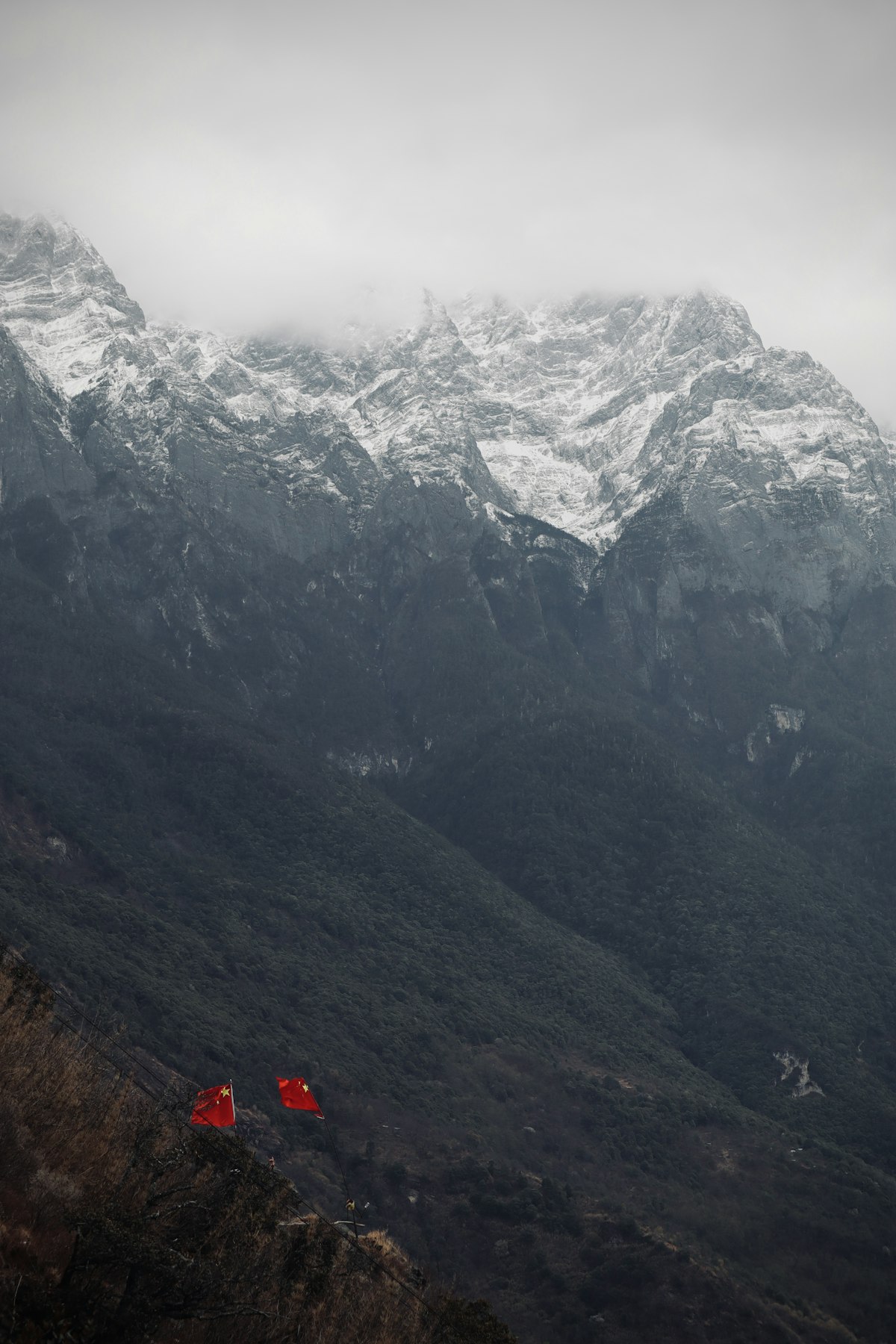 You are walking on a ribbon of trail suspended between two of Yunnan’s highest peaks. The light in late afternoon turns the canyon walls golden. This is not an exaggeration — it is one of the finest stretches of trail hiking anywhere in Asia.
Tea Horse Guesthouse (茶马客栈) is a legitimate alternative to Halfway for your overnight stop. Located in Yacha Village, about 5km before Halfway, Tea Horse consistently gets higher ratings (9.1 on Trip.com) than its more famous neighbor. Many hikers who have stayed at both report that Tea Horse has better views of Jade Dragon from its terrace, a better café, and excellent yak meat dishes. The downside: you will have a longer Day 2 ahead of you. If you arrive at Tea Horse and feel good, push on to Halfway (another 1.5 hours) to balance your two days.
Halfway Guesthouse (中途客栈) is the legendary stop — the one everyone talks about. Its claim to fame is the “world’s best toilet”: a glass-walled bathroom facing directly at Jade Dragon Snow Mountain. The terrace at sunset, with a cold beer and a bowl of matsutake chicken soup, watching the last light hit the snow peaks, is one of those travel moments that stays with you for decades. The guesthouse is basic but comfortable — hot showers (solar-heated, so shower early), clean private rooms, decent food. Book weeks ahead in peak season (April-May and October-November). Halfway fills up.
Day 2: Halfway → Tina’s → (Middle Gorge) → End
| Segment | Distance | Time | Difficulty |
|---|---|---|---|
| Halfway to Tina’s Guesthouse | ~8km | 2-3 hours | Easy-moderate. Mostly flat and downhill. Past a waterfall that crosses the trail. |
| Middle Gorge descent (optional) | ~2km round trip | 2 hours | Hard. Steep descent, iron ladders, cliffside paths. Not for vertigo sufferers. |
| Day 2 Total | ~8-10km | 2-5 hours | Easy to hard depending on Middle Gorge |
Day 2 is shorter and easier than Day 1 — unless you add the Middle Gorge descent. The morning walk from Halfway to Tina’s is a pleasure: mostly flat and gently downhill, through pine forest with dappled morning light, past a dramatic waterfall that cascades directly over the trail (bring a rain jacket; you will get sprayed). The trail eventually switchbacks steeply down to the road where Tina’s Guesthouse sits.
The Middle Gorge (中虎跳) situation — read this carefully because the access has changed:
As of 2025, the classic direct descent path from Teacher Zhang’s Guesthouse to the river is closed. The river-level access has been restricted, reportedly for safety reasons after incidents on the steep ladders. Here is what is available now:
- Via Tina’s with a local guide: Organized group descents, roughly ¥600 per group. If you share with 3-4 other hikers, about ¥150/person ($21). The guide knows the current safe access routes.
- Alternative entrance near Xiapan Gusu Wangshan Hotel: About a 45-minute walk past Tina’s. Ask locally for current status — this changes.
- Unofficial paths: Local villagers may offer to guide you down for ¥20-30 per person. These are unregulated, uninsured, and at your own risk. The paths involve steep iron ladders bolted into cliff faces and narrow paths with significant exposure.
- Honest assessment: The Middle Gorge descent is exhilarating. Standing at river level, the walls of the gorge towering above you, the roar of the Jinsha squeezing through the narrow rock channel — it is memorable. But the views from the High Trail are already spectacular. If the descent is closed, or if you are tired, or if heights make you uncomfortable, you miss nothing essential by skipping it. The trek stands on its own without the river descent.
Reverse direction? Some hikers go Qiaotou → Halfway → Naxi instead. The traditional Naxi → Halfway direction is standard because you end at Tina’s, where buses to both Lijiang and Shangri-La depart. The logistics simply work better this way.
Guesthouse Directory
| Guesthouse | Location | Dorm (¥) | Private (¥) | Dorm ($) | Private ($) | Notes |
|---|---|---|---|---|---|---|
| Naxi Family Guesthouse (纳西雅阁) | Trailhead, Nuoyu Village | — | ¥60–120 | — | $8–17 | Simple, clean Naxi family-run inn. Good lunch stop before starting the trek. Supplies, water, and snacks available. |
| Tea Horse Guesthouse (茶马客栈) | Yacha Village, ~5km before Halfway | ¥60–100 | ¥150–300 | $8–14 | $21–42 | 9.1 rating on Trip.com. Famous terrace with arguably better views than Halfway. Excellent café. Yak meat dishes are a specialty. Many experienced hikers prefer it to Halfway. |
| Halfway Guesthouse (中途客栈) | Bendiwan Village, end of Day 1 | ~¥70 | ¥150–350 | $10 | $21–49 | THE legendary trek stop. Glass-walled bathroom facing Jade Dragon. Book weeks ahead in peak season. Terrace dinner at sunset is memorable. |
| Tina’s Guesthouse (中峡客栈) | Middle Gorge road, end of Day 2 | — | ¥100–200 | — | $14–28 | Bus ticket hub for Lijiang and Shangri-La. Luggage storage. Restaurant. The de facto end point for most trekkers. |
| Teacher Zhang’s Guesthouse | Middle Gorge area | — | ¥100–180 | — | $14–25 | Trail end alternative. Luggage pickup available. Note: river descent from here currently closed. |
The luggage system: This is one of the best logistical features of the trek. When you take the bus from Lijiang, tell the driver you are hiking the High Trail and ask them to take your main bag to Tina’s Guesthouse. Your luggage rides the bus through the road tunnels to Tina’s while you hike the High Trail with only a daypack. At the end of Day 2, your bag is waiting for you at Tina’s. Cost: ¥20-30 ($3-4). This system has been operating for years and works reliably. Bring a daypack (30-40L) with one night’s essentials, your water, snacks, and layers.
Food on the Trail
All guesthouses serve meals. The food is simple homestyle Chinese cooking — fried rice, noodle soups, stir-fried vegetables, meat dishes. It is not gourmet, but after 6 hours of hiking at altitude, it tastes incredible.
| Item | Price (¥) | Price ($) |
|---|---|---|
| Fried rice / fried noodles | ¥25–40 | $3.50–5.50 |
| Naxi Baba (Naxi flatbread) | ¥15–25 | $2–3.50 |
| Matsutake chicken hot pot (Halfway) | ~¥135 | $19 |
| Yak meat dishes | ¥40–70 | $5.50–10 |
| Stir-fried seasonal vegetables | ¥20–35 | $3–5 |
| Coffee at guesthouse cafés | ¥25–40 | $3.50–5.50 |
| Bottled water (1.5L) | ¥5–10 | $0.70–1.40 |
| Beer (Dali or Lijiang local) | ¥15–25 | $2–3.50 |
Halfway Guesthouse serves a famous matsutake chicken hot pot on the terrace at sunset. It is ¥135 ($19) — expensive by trail standards but, given that matsutake mushrooms are a premium wild-foraged ingredient and you are eating them while watching the sun set on a 5,500-meter snow mountain, it feels like a bargain.
Complete Cost Breakdown (Per Person)
| Expense | Price (¥) | Price ($) |
|---|---|---|
| Bus Lijiang → Trailhead (one-way) | ¥40–50 | $5.50–7 |
| Taxi/minivan Qiaotou → Naxi Guesthouse | ¥20–30 | $3–4 |
| Park entrance fee | ¥45 | $6 |
| Guesthouse (1 night, private room) | ¥150–300 | $21–42 |
| Meals (2 days, breakfast+lunch+dinner+snacks) | ¥150–250 | $21–35 |
| Luggage forwarding to Tina’s | ¥20–30 | $3–4 |
| Bus Tina’s → Lijiang or Shangri-La | ¥40–100 | $5.50–14 |
| Middle Gorge guide (optional, shared) | ¥150 | $21 |
| Total (approx.) | ¥400–800 | $56–112 |
For one of the world’s defining treks, this is remarkably affordable. The Inca Trail costs $500-800 per person and requires permits booked months in advance. The W Trek in Patagonia runs $200-400 just for accommodation and park fees. Tiger Leaping Gorge delivers a exceptional canyon hiking experience for the price of a nice dinner in a Western city.
Getting to the Trailhead from Lijiang
Public bus: From Lijiang Bus Station to Qiaotou (Tiger Leaping Gorge town). Three daily buses at 8:30 AM, 9:00 AM, and 9:30 AM. ¥40-50 ($5.50-$7). The 9:30 AM bus is the one most hikers take — it reliably handles luggage forwarding to Tina’s. To reserve: message Lijiang Bus Station on WeChat at 15308884482, or buy tickets in person at the station the day before. The ride takes about 2.5 hours.
From Qiaotou drop-off to actual trailhead: The bus drops you at Qiaotou, but you want to start hiking from Naxi Family Guesthouse in Nuoyu Village, about 8km further up the mountain road. Taxi and minivan drivers wait at Qiaotou specifically for this. They will ask for ¥60. Negotiate to ¥20-30 ($3-4). Share with other hikers from your bus — you will all be going the same direction.
After the trek (from Tina’s Guesthouse): Tina’s staff can arrange bus tickets. Options:
- To Lijiang: ¥40-50, roughly 2.5 hours. Buses depart throughout the afternoon.
- To Shangri-La: ¥60-100, roughly 3 hours. This is the smart move if you are continuing the Yunnan golden route north — you are already halfway between Lijiang and Shangri-La. No need to backtrack.
Safety & Trail Conditions (2025-2026)
The trail is open and hikeable as of 2025-2026. But there are important safety considerations that every hiker should understand before setting out:
1. Landslide risk. The High Trail traverses geologically unstable terrain. During and immediately after heavy rain, sections of the trail — particularly between the 28 Bends and Tea Horse — are vulnerable to rockfall and small landslides. This is the primary reason to avoid the rainy season (July-August). The trail is most stable in spring (April-May) and autumn (September-November).
2. No guardrails. Many sections of the trail run along exposed cliff edges with no guardrails — no cables, no fences, no safety infrastructure of any kind. The path is generally 1-2 meters wide and perfectly safe if you are paying attention and not under the influence of anything. But hikers with severe vertigo should think carefully. One misstep on certain sections would be catastrophic. This is not Disneyland. Treat the trail with respect.
3. Middle Gorge access changes. As detailed above, the classic descent from Teacher Zhang’s is closed. Access via Tina’s with a guide exists but should not be attempted independently. The iron ladders on the Middle Gorge routes are steep, old in places, and not subject to any safety inspection regime you would recognize from a Western country. Descend only with a guide who knows the current conditions.
4. Cell signal. WeChat and Alipay work along most of the High Trail — you can pay for everything with your phone. Signal drops in a few dead zones between guesthouses, but it is never absent for long. Download offline maps (Gaode Maps or Maps.me) before starting.
5. Weather. Check the forecast the morning you leave Lijiang. Thunderstorms on exposed trail sections are dangerous. The trail becomes slippery in rain — the red dirt turns to slick mud. November through March can have icy patches at higher elevations, particularly on north-facing sections near the 28 Bends.
6. Solo hiking. Generally safe — you will encounter other hikers regularly during all but the deadest off-season periods. The trail is well-marked with painted arrows and occasional signs. That said, do not hike alone in bad weather, and consider waiting for other hikers at the trailhead if you are the only one starting out in the off-season.
Best Season for the Trek
| Season | Months | Verdict | Conditions |
|---|---|---|---|
| Spring | Apr–May | BEST | Mild temperatures (15-25°C daytime), clear skies, wildflowers, waterfalls swollen with snowmelt. The mountains still have snow on their peaks. This is the ideal window. |
| Early Summer | Jun | Good but declining | Warming up, still mostly dry. Landslide risk increases toward late June. Morning haze can reduce visibility of the peaks. |
| Peak Summer | Jul–Aug | AVOID | Rainy season. Heavy downpours. Landslide danger is real. Clouds obscure the mountains. Trails turn to mud. Do not plan your trek for these months. |
| Autumn | Sep–Nov | BEST | Cool, crisp, the clearest skies of the year. Golden autumn light on the canyon walls. October is arguably the single best month — stable weather, peak visibility, comfortable temperatures. Can be cold at night (near freezing at elevation). |
| Winter | Nov–Mar | Doable but cold | Daytime highs 5-15°C, nighttime below freezing. Icy patches on north-facing trail sections. Guesthouses may have reduced services and unreliable hot water. Snow occasionally closes higher sections temporarily. Check locally before committing. |
What to Pack
Non-negotiable:
- Sturdy hiking shoes or boots with good grip. Trail runners with aggressive tread are fine. Street sneakers are not. The trail has loose rock sections and potentially wet, slippery surfaces.
- Daypack (30-40 liters). Your main luggage goes to Tina’s via the bus system.
- Rain jacket. Even in dry season, the waterfall section near Halfway will spray you.
- 1-2 liters of water capacity. Refill at guesthouses along the way.
Strongly recommended:
- Trekking poles. Your knees will thank you on Day 2’s steep descent to Tina’s. If you only bring one piece of optional gear, make it poles.
- Layers: t-shirt, fleece or lightweight insulated jacket, windproof outer layer. Temperatures swing 15+ degrees between midday sun and evening.
- Sunscreen, hat, and sunglasses. At 2,400 meters, the UV is significantly stronger than at sea level — even on overcast days.
- Power bank. Guesthouses have electricity, but outlet availability can be limited when the guesthouse is full.
Nice to have:
- Knee brace or compression sleeve if you have knee issues (that Day 2 descent is no joke).
- Headlamp (for pre-dawn starts or the rare guesthouse power outage).
- Cash: ¥200-500 as backup. You will pay for almost everything with WeChat/Alipay, but having physical yuan is always smart in rural China.
- Lightweight sleeping bag liner (guesthouse bedding is clean but basic).
- Earplugs (guesthouse walls are thin, and Chinese hiking groups tend to wake up early and loudly).
Alternatives if You Cannot Do the Full Trek
Not everyone has two days, the fitness level, or the inclination to walk 20 kilometers along a cliff. Here are your options:
1. Upper Gorge Day Trip Take a bus or DiDi to the Upper Tiger Leaping Gorge scenic area — the developed section with paved walkways, viewing platforms, and guardrails. This is where the river channel narrows to its famous 25-meter width — the legendary tiger’s leap point. ¥45 entry. 1-2 hours to walk the platforms. The gorge here is genuinely impressive, with the Jinsha River thundering through the narrow channel. BUT: this is coach tour territory. You will be shoulder-to-shoulder with hundreds of Chinese tour groups, complete with flag-waving guides and matching caps. If you cannot hike, this is your option. If you can hike, do the High Trail instead — it is a fundamentally different experience.
2. Middle Gorge Day Trip from Tina’s Take the bus directly to Tina’s Guesthouse (the road goes through tunnels; you bypass the High Trail entirely), then descend to the Middle Gorge river level and back up. Half-day. Intense but shorter than the full trek. Only viable if river access is open.
3. Drive the Gorge Road The road along the gorge floor is now mostly tunnels. You see brief flashes of canyon between tunnel entrances. This is not worth doing as a standalone experience. The High Trail exists precisely because the road misses everything worth seeing.
PART 2: SHANGRI-LA (香格里拉)
You finish the gorge trek at Tina’s Guesthouse, dusty and tired. A bus takes you north, climbing steadily, the landscape changing from forested canyons to high-altitude grassland. Three hours later you step off the bus into air that feels noticeably thinner, noticeably colder, and carries the faint smell of juniper incense and yak butter. You are in Shangri-La.
The Name: Marketing or Meaning?
Shangri-La was called Zhongdian (中甸) until 2001, when the Chinese government officially renamed the county after the fictional Himalayan paradise in James Hilton’s 1933 novel Lost Horizon. It was one of the most successful tourism branding exercises in modern history — and it worked. A generation of travelers now cannot separate the name from the place.
Underneath the branding, there is a real Tibetan town here. Shangri-La — known as Gyalthang in Tibetan — has been a center of Tibetan Buddhist culture for centuries. The monasteries are real, not theme-park replicas. The prayer flags are real, faded by actual mountain wind and sun. The monks are real, studying Buddhist scripture in halls that have functioned continuously (with a significant interruption during the Cultural Revolution) since the 17th century. The yak butter tea is exactly as authentically strange-tasting as it is in Tibet proper.
Just do not expect a mystical paradise untouched by time. Expect a real Tibetan town — with tourism infrastructure, souvenir shops, and Chinese urban planning — that also happens to have golden-roofed monasteries, prayer wheels the size of buildings, and a cultural identity distinct from Han China. It is better than the fantasy, because it is real.
Altitude Reality — Take This Seriously
Shangri-La sits at 3,200 meters (10,500 feet). This is higher than Cusco, Peru (3,399m — close, but Shangri-La’s town center is slightly below Cusco’s elevation while nearby attractions reach higher). Altitude sickness is real, common, and does not care how fit you are.
The golden rule: Do not fly directly into Shangri-La. By the time you arrive via the Yunnan golden route — Kunming (1,890m) → Dali (1,970m) → Lijiang (2,400m) → Shangri-La (3,200m) — you will have spent 5-7 days at progressively higher altitudes. Your body will have produced additional red blood cells. You will be partially acclimatized. This is the correct way to do it. People who fly directly into Shangri-La from sea level have a meaningfully higher risk of altitude sickness.
Day 1 in Shangri-La — the rules:
| Rule | Why |
|---|---|
| NO alcohol | One beer at 3,200m = three beers at sea level. Alcohol suppresses breathing at altitude, worsens dehydration, and amplifies all altitude symptoms. Just skip it. |
| NO intense exercise | Walking slowly is fine. Running up stairs is not. Your body is working hard just existing at this elevation. Do not add unnecessary load. |
| NO long hot showers | Hot water + steam + altitude = fainting risk. The combination dilates blood vessels, lowers blood pressure, and in low-oxygen conditions, can put you on the bathroom floor. Keep showers brief and lukewarm. |
| YES to constant hydration | Altitude dehydrates you faster. Drink water continuously — more than you think you need. |
| YES to light eating | Heavy meals divert blood to your digestive system when your body wants it for oxygenation. Eat light, eat carbohydrates, eat frequently. |
| YES to slow walking | Moving slowly is not weakness — it is acclimatization strategy. Your body is adapting. Let it. |
Supplements and aids:
- Rhodiola rosea (红景天): A traditional Tibetan herbal supplement. Start taking it 1 week before arriving at altitude. Scientific evidence for its effectiveness is mixed, but it is widely used across the Tibetan Plateau and many travelers report it helps. It will not hurt.
- Oxygen cans: Sold everywhere in Shangri-La for about ¥20 ($3). Small pressurized cans with a mask. Have one in your bag. You probably will not need it after proper acclimatization, but it is comforting to have, and useful if a headache gets stubborn. Most travelers never use them. The ones who do are glad they had them.
- Ibuprofen: For the mild altitude headache that is common on Day 1. Safe and effective. Bring your own — pharmacies in Shangri-La exist but do not count on finding your preferred brand.
Symptoms — what is normal vs. concerning:
| Symptom | Verdict | Action |
|---|---|---|
| Mild headache | Normal | Take ibuprofen. Drink water. Rest. |
| Shortness of breath on stairs | Normal | Walk slower. Breathe deeply. Your body is working harder. |
| Loss of appetite | Normal | Eat light carbohydrates anyway. Your body needs fuel. |
| Difficulty sleeping | Normal | Altitude disrupts sleep. Avoid sleeping pills — they suppress breathing. |
| Persistent headache that does not respond to ibuprofen | Concerning | This is a warning sign. Rest. If it worsens, prepare to descend. |
| Nausea or vomiting | Concerning | Possible acute mountain sickness (AMS). Descend if it persists. |
| Severe dizziness, confusion, loss of coordination | EMERGENCY | Descend IMMEDIATELY. This could be high-altitude cerebral edema. Get to lower elevation now. |
The cure for altitude sickness is descent. Everything else — oxygen, ibuprofen, rest — manages symptoms. Going down is what actually fixes the problem. Shangri-La to Lijiang is only 1-1.5 hours by train or bus, dropping you 800 meters. Altitude sickness resolves quickly with descent. If symptoms are serious, do not try to tough it out. Go down.
Who should be extra careful: Anyone with heart or lung conditions, anyone who has experienced altitude sickness before (past episodes predict future ones), anyone flying directly from sea level without acclimatization, and anyone who is pregnant (consult your doctor).
Songzanlin Monastery (松赞林寺) — The “Little Potala”
Songzanlin is the largest Tibetan Buddhist monastery in Yunnan province. Built in 1679 under the Fifth Dalai Lama, it was modeled after the Potala Palace in Lhasa — hence its nickname, the “Little Potala.” It houses approximately 700 monks and sprawls across a hillside in a cascade of whitewashed buildings, golden roofs, and prayer halls. This is a functioning monastery, not a museum piece — monks study, pray, debate philosophy, and live their monastic lives here.
Entry: ¥90 ($12.50), which includes the mandatory shuttle bus from the visitor center at the base of the hill to the monastery complex. The visitor-center-to-monastery model is standard at major Chinese scenic sites and is non-negotiable — you cannot walk from the entrance gate.
Photography: Allowed in most outdoor areas and some interior halls. No photography inside the main assembly hall — signs are clearly posted. Respect them. Some side chapels allow photography without flash — ask the attending monk with a gesture toward your camera and a questioning expression. They will nod or shake their head.
What you will see:
- The main assembly hall (Tsongkhapa Hall): The centerpiece. A towering golden roof visible from across the valley. Inside: a cavernous prayer hall with rows of monk seats, enormous thangka paintings (Tibetan Buddhist scroll art), butter lamps flickering in the semi-darkness, and the overwhelming smell of yak butter and juniper incense. The atmosphere is ancient, solemn, and genuinely transporting.
- The monk quarters: Hundreds of whitewashed Tibetan buildings cascading down the hillside below the main halls. Monks live, eat, study, and pray in these buildings. You will see monks walking between them, deep in conversation or silent contemplation. This is their home — behave accordingly.
- Morning prayers: If you arrive before 9 AM, you may hear the deep, resonant chanting from the assembly hall. Tibetan Buddhist chanting — multiphonic, rumbling, otherworldly — is one of the most haunting sounds you will ever encounter. It is worth the early alarm.
- The golden roofs at sunrise: The monastery faces east. The first rays of morning sun hitting the gilded roofs is the image that appears on every Shangri-La postcard. It deserves to be.
Best time to visit: Morning. The light is better for photography before noon. The visitor numbers are lower before 10 AM. And in the early morning, you can join Tibetan pilgrims walking the kora — the circumambulation path around the monastery, turning prayer wheels as they go. Walk clockwise.
Photography tip: The classic shot of Songzanlin is from the small lake or pond in the valley below the monastery. The golden roofs reflect in the water with the hills rising behind. This shot works best at sunrise. It requires being at the lake before dawn, which means arranging transport the night before — DiDi to the lake viewpoint, not to the monastery entrance.
Monastery etiquette:
| Rule | Why |
|---|---|
| Walk clockwise around stupas, prayer wheels, and temples | The direction of the earth’s rotation in Buddhist cosmology. Walking counter-clockwise is disrespectful. |
| Do not point at Buddha statues | Gesture with an open palm, fingers together, palm up. Pointing is rude in Tibetan Buddhist culture. |
| Do not touch monks’ robes or ritual implements | These are sacred, not props. |
| Dress modestly | Shoulders and knees covered. No tank tops, no short shorts. This applies to all genders. |
| Remove hats when entering temple halls | Standard religious etiquette globally. |
| Ask before photographing monks | Most are fine with it and some are genuinely delighted to be photographed. But asking first shows respect. If they decline, accept it gracefully. |
| Do not step on thresholds | Step over them. In Tibetan Buddhist tradition, stepping on a threshold is disrespectful to the deity protecting the entrance. |
Dukezong Old Town (独克宗古城)
Shangri-La’s old town was devastated by a fire in January 2014 that destroyed approximately 240 homes and shops — roughly one-third of the historic area. It has been extensively rebuilt. The result is a mix of genuine surviving Tibetan architecture and faithful (if modern) reconstruction. Some travelers find it “too new” to feel authentic. I understand that critique. But the layout — the winding cobblestone lanes, the whitewashed Tibetan buildings with their distinctive trapezoidal windows, the prayer wheels at every corner, the yak butter lamps glowing in doorways — still feels distinctly Tibetan, not Han Chinese. And the atmosphere, especially after dark, is genuinely atmospheric.
Key experiences in Dukezong:
The Giant Prayer Wheel (转经筒) — In Guishan Park at the top of the old town. This is the largest prayer wheel in the world: 21 meters tall, 60 tons, covered in gold plate. It takes at least 10 people pulling together on the heavy ropes to turn it. The tradition is to turn it three times clockwise. Even if you are not Buddhist, join the queue of people pulling — it is a shared physical effort that creates a moment of collective goodwill. The view from Guishan Park over Dukezong’s rooftops to the snow mountains beyond is the single best panorama in Shangri-La. Free. Go at sunset.
Square dancing in the main plaza — Every evening, locals (both Tibetan and Han) gather in the central square of Dukezong for traditional circle dancing. It is a form of Tibetan guozhuang (锅庄) — community circle dance with simple repeated steps. Tourists are welcome to join. Is it touristy? Yes. Is it genuinely fun and cross-cultural? Also yes. You will be terrible at the steps. Nobody cares. The grandmothers in traditional Tibetan aprons who have been doing this for 60 years will smile at your efforts. Free.
Night stroll — After dark, when the lanterns come on and the cobblestones gleam with reflected light, Dukezong becomes properly atmospheric. The cold mountain air, the glow of the prayer wheel above, the smell of yak butter and wood smoke, the sound of Tibetan music drifting from restaurants — it is a sensory experience that has no equivalent anywhere else in China. The altitude makes everything feel slightly dreamlike. Wander. Get lost in the lanes. That is the point.
Napa Lake (纳帕海) — The Seasonal Wonder
Napa Lake is a high-altitude seasonal lake about 8 kilometers from Shangri-La’s center. In summer — the rainy season — it swells into a vast lake reflecting the surrounding mountains. In winter and spring, the water recedes, exposing grasslands where yaks and Tibetan ponies graze. The landscape transforms entirely depending on when you visit. Both versions are spectacular in different ways.
Getting there and exploring:
- DiDi: ¥20-30 ($3-4) from Shangri-La. Quick and easy. Ask the driver to take you to the cycling rental area near the lake.
- E-bike rental: ¥60-80 ($8-11) for the day. The cycling loop around Napa Lake is approximately 40 kilometers, mostly flat, on public roads with spectacular mountain-and-grassland views. This is Shangri-La’s answer to cycling around Erhai Lake near Dali.
- Horseback riding: Local Tibetan families offer rides through the grasslands on sturdy Tibetan ponies. ¥80-200 ($11-28) depending on distance and route. Negotiate politely. The horses appear well-cared-for — these are working animals that are part of Tibetan families’ livelihoods. Riding through Napa’s grasslands with snow mountains on the horizon is arguably the most defining Shangri-La experience you can have.
Bird watching: In winter (November through March), Napa Lake is a critical habitat for black-necked cranes (黑颈鹤) — one of the world’s rarest crane species and the only alpine crane, breeding exclusively on the Tibetan Plateau. They winter at Napa Lake by the hundreds. If you are a birder, bring binoculars and time your visit for the winter months.
Cost caveat: The official Napa Lake scenic area charges ¥60 ($8) for entry. However, the cycling route mostly uses public roads that skirt the lake. Many visitors cycle the loop and stop at viewpoints without ever entering the paid scenic area. Whether you pay the entry fee depends on which roads and viewpoints you access. The cycling itself — the grassland views, the mountains, the yaks — does not require the paid ticket.
Pudacuo National Park (普达措国家公园) — Worth It?
Pudacuo was established in 2007 as China’s first national park. It encompasses alpine lakes, old-growth spruce and fir forests, high-altitude meadows, and wetlands at elevations ranging from 3,500 to 4,200 meters. It is, by any measure, a spectacular natural area. The question is not whether Pudacuo is beautiful — it is. The question is whether the managed, shuttle-bus-and-boardwalk experience delivers what you are looking for.
Entry: ¥100 ($14) — park entry plus mandatory shuttle bus. The park is too large to walk between zones; you ride shuttle buses on fixed routes.
Key zones:
- Shudu Lake (属都湖): The main accessible area. A 3.3-kilometer boardwalk looping around a pristine alpine lake, through ancient spruce forests draped with old man’s beard lichen, past Tibetan prayer flag clusters, with grazing yaks in the distance. Beautiful. Well-maintained. The boardwalk makes it universally accessible — but it also means you are on a prescribed path with no off-trail exploration.
- Bita Lake (碧塔海): Larger and wilder than Shudu Lake. Access may be restricted seasonally — check at the visitor center or ask your guesthouse for the current status.
- Alpine meadows: In July and August, the meadows erupt in wildflowers and the scenery is extraordinary. Outside those two months, it is grassland — pleasant but not transcendent.
The honest assessment:
| PROS | CONS |
|---|---|
| Genuinely beautiful alpine lake-and-forest scenery at 3,500m | ¥100 is steep for what is essentially a boardwalk walk |
| The old-growth forest with lichen-draped trees is atmospheric | Mandatory shuttle bus + fixed boardwalk = theme-park wilderness |
| Well-managed, clean facilities, easy navigation | No off-trail exploration allowed — you cannot wander freely |
| Tibetan cultural elements (prayer flags, grazing yaks) are authentic | At 3,500-4,200m, altitude adds physical burden to a relatively passive experience |
| Good option if you are not doing any other nature activities | Many visitors find it underwhelming compared to freely explorable landscapes elsewhere in Yunnan |
Verdict: If you are not hiking Tiger Leaping Gorge and need a nature experience in Shangri-La, go — Pudacuo fills that gap. If you are already doing the Tiger Leaping Gorge trek, Pudacuo is redundant — the gorge trek delivers a far more immersive and thrilling nature experience. If you have seen serious alpine lakes before — Switzerland, New Zealand’s South Island, the Canadian Rockies, Chilean Patagonia — Pudacuo will feel pleasant but not life-changing. If you are on a tight budget, skip without regret. If you are traveling with someone who cannot hike but wants to see alpine scenery, Pudacuo’s boardwalks make it genuinely accessible.
Tibetan Food in Shangri-La
Shangri-La’s food is Tibetan food — distinct from both Han Chinese and Southeast Asian cuisines. It is hearty, high-calorie, and designed for life at altitude. The flavors are earthy, savory, and unapologetically rustic.
| Dish | Description | Price (¥) | Price ($) |
|---|---|---|---|
| Butter Tea (酥油茶) | THE Tibetan drink. Yak butter churned with brick tea and salt. Salty, rich, oily, savory. An acquired taste — think savory hot broth, not “tea.” Tibetans drink it constantly for warmth and energy at altitude. Try it, even if you do not love it. Understanding why Tibetans drink this is part of understanding the place. | ¥10–25 | $1.50–3.50 |
| Tsampa (糌粑) | Roasted highland barley flour mixed with butter tea into a dough, eaten with hands. Nutty, earthy, incredibly filling. The Tibetan staple food for millennia. | ¥10–20 | $1.50–3 |
| Yak Meat Hot Pot (牦牛肉火锅) | Lean, slightly gamey yak meat in a rich, aromatic broth with vegetables. Hearty and warming — exactly what you want at 3,200 meters after the sun goes down. Yak meat is leaner and more flavorful than beef. | ¥88–168 | $12–23 |
| Yak Yogurt (牦牛酸奶) | Thick, creamy, intensely tart. Often served in small clay pots topped with sugar or honey. The tartness is aggressive — be ready. Tibetans eat it plain; most travelers add sugar. | ¥10–25 | $1.50–3.50 |
| Tibetan Barley Wine (青稞酒) | Fermented from highland barley. Mild, slightly sweet, typically 3-5% alcohol. ALTITUDE WARNING: alcohol hits roughly twice as hard at 3,200m. One glass of barley wine = two glasses at sea level. Skip entirely on Day 1. If you drink on Day 2+, go very slowly. | ¥15–30 | $2–4 |
| Momo (馍馍) | Tibetan steamed dumplings filled with yak meat or vegetables. Similar to Chinese jiaozi or Nepali momos. Satisfying, familiar, excellent at altitude when your appetite is suppressed and you need something easy to eat. | ¥25–48 | $3.50–7 |
| Thenthuk (面片) | Hand-pulled noodle soup with yak meat, vegetables, and rich broth. The Tibetan comfort food. When you are cold, tired, and altitude-weary, a bowl of thenthuk is restorative. | ¥20–38 | $3–5 |
Where to eat: The Tibetan family-run restaurants in Dukezong Old Town are your best bet. Look for places with Tibetan families eating inside, not places with laminated English menus and photos of every dish. The best meals in Shangri-La come from small kitchens run by Tibetan grandmothers who have been making the same dishes for 50 years. Ask your guesthouse owner for their favorite local spot — they will almost certainly direct you somewhere not on any guidebook list.
The Yak Restaurant (牦牛火锅城) and Compass Restaurant are the well-known options in Dukezong. They are reliable and tourist-friendly. They are also more expensive than the unnamed family-run places two lanes away. Use them as fallbacks, not first choices.
Tibetan Cultural Etiquette
Tibetan culture has specific norms that differ from both Han Chinese and Western customs. Observing them is a matter of respect, not performance. Shangri-La is a real place with real people who live real lives — not a living museum for tourist consumption.
| Practice | Detail |
|---|---|
| Walk clockwise | Around monasteries, stupas, prayer wheels, and temple interiors. Always clockwise. This represents alignment with the natural order in Buddhist cosmology. You will notice Tibetan pilgrims doing this — follow their lead. |
| Do not touch religious objects | Monks’ robes, butter lamps, thangkas (sacred paintings), ritual implements, and prayer beads are not props. Do not touch them without explicit invitation. |
| Ask before photographing monks | Most monks are fine with photos. A few prefer not to be photographed. Asking with a gesture — camera raised, questioning expression — is sufficient. Respect the answer. |
| Do not point at Buddha statues | Use an open palm, fingers together, palm facing up — a presenting gesture. Pointing is considered aggressive and disrespectful. |
| Dress modestly in monasteries | Shoulders and knees covered. No tank tops, no shorts above the knee. This applies to everyone regardless of gender. |
| Remove hats in temple halls | Standard practice in most religious spaces globally. Tibet is no exception. |
| Do not step on prayer flags | Prayer flags are sacred objects, not decoration. If you encounter flags on the ground (they sometimes fall), step over or around them. |
| Do not engage in political discussions | You are a tourist, not a journalist or an activist. Asking Tibetan locals about sensitive political topics — the Dalai Lama, Tibetan independence, the Chinese government’s Tibet policies — puts ordinary people at risk and you in an uncomfortable position that will go nowhere productive. Enjoy the culture, the landscapes, and the food. If you want to understand Tibetan political history, do your reading before or after your trip, from sources on all sides of the issue. |
How Many Days in Shangri-La?
| Duration | What You Can Do | Verdict |
|---|---|---|
| 1 day (minimum) | Morning: Songzanlin Monastery. Afternoon: Dukezong Old Town exploration. Sunset: prayer wheel and Guishan Park panorama. Evening: Tibetan dinner + square dancing. Sleep. Depart next morning. | Rushed but doable. You will hit the highlights. You will wish you had more time. |
| 2 days (recommended) | Day 1: Arrive, rest and acclimatize (take this seriously), afternoon walk through Dukezong, prayer wheel at sunset, Tibetan dinner. Day 2: Songzanlin Monastery early morning, Napa Lake afternoon (cycling or horseback riding), evening square dancing, farewell barley wine (one glass, slowly). | The sweet spot. Covers the core experiences with time to absorb the altitude and atmosphere. |
| 3 days (ideal) | Adds: Pudacuo National Park on Day 3 (if you want the alpine lake experience) OR a lazy day spent doing kora at Songzanlin at dawn, exploring Tibetan villages outside town, longer Napa Lake cycling loop, and just existing at 3,200 meters with no agenda. | For travelers who want depth over breadth. The altitude forces a slower pace — lean into it. Three days lets Shangri-La breathe. |
Practical Transport Notes
Getting from Tiger Leaping Gorge to Shangri-La: From Tina’s Guesthouse, buses to Shangri-La depart throughout the afternoon. ¥60-100 ($8-14), roughly 3 hours. The road climbs steadily — you will feel the altitude change. Tina’s staff can arrange tickets. This is the natural continuation of the Yunnan golden route.
Getting from Lijiang to Shangri-La (if skipping the gorge):
- High-speed train: Lijiang to Shangri-La station. ~1.5 hours. ¥63-200 ($9-28) depending on class. The train is new (the Lijiang-Shangri-La railway opened in November 2023) and comfortable. This is now the default option.
- Bus: ~3.5 hours, ¥60-80 ($8-11). Still available but the train has made buses largely obsolete for this route.
Leaving Shangri-La:
- Flights: Shangri-La Diqing Airport (DIG) has flights to Kunming, Chengdu, Chongqing, Lhasa, and a few other Chinese cities. Altitude note: flying from Shangri-La to sea level in a few hours is the reverse of acclimatization — your body will adjust down quickly and you will feel normal shortly after landing.
- Train back to Lijiang/Kunming: The high-speed line runs in reverse. Shangri-La → Lijiang (~1.5hrs) → Kunming (~4hrs total).
- Continuing to Tibet: Shangri-La is not a gateway to Lhasa. Flights exist but Tibet Travel Permits are required and must be arranged through a registered Chinese travel agency before arrival. See our Xinjiang First-Timer Guide for information on border permits and restricted-area travel in western China — similar administrative logic applies to Tibet.
The Bottom Line
Tiger Leaping Gorge is one of those rare treks that deserves every superlative thrown at it. It is accessible enough for moderately fit hikers who have never done a multi-day trek before. It is affordable enough for backpackers counting yuan. And it is spectacular enough for serious trekkers who have walked the Annapurna Circuit and the Torres del Paine. The 28 Bends will make you sweat. The views from the contour trail will make you forget you ever sweated. And the sunset from Halfway Guesthouse’s terrace, with Jade Dragon Snow Mountain turning gold above you, will be one of the photographs in your mental album that you return to for the rest of your life.
Shangri-La is the spiritual finale of the Yunnan golden route — and by “spiritual,” I mean both the literal Tibetan Buddhist spirituality and the altitude-induced, oxygen-deprived dreaminess that makes everything feel slightly surreal. The monastery at sunrise, with chanting rumbling from the assembly hall. The prayer wheel turning against a Tibetan sky. Yak butter tea that tastes like nothing you have ever encountered, and that you might never want to encounter again. The thin mountain cold that makes your first breath off the bus feel like you have arrived somewhere genuinely different.
They make sense together: the physical challenge of the gorge, then the thin-aired contemplation of Shangri-La. Body, then spirit. Earth, then sky.
This is not the mystical paradise of Lost Horizon. It is something messier, more complicated, and infinitely more interesting. It is a real place — Tibetan, Chinese, ancient, modern, sacred, commercial, all at once. And it is waiting at the top of Yunnan.
Continue planning:
- Yunnan First-Timer: The Golden Route Planner — how to structure your entire Yunnan trip
- Dali & Lijiang Ancient Towns Guide — the two stops before Tiger Leaping Gorge & Shangri-La
- Yunnan Deep Cuts: Tengchong, Shaxi & Jianshui — when you want to go beyond the Golden Route
- China Digital Survival Guide — VPN, WeChat, Alipay, offline maps, and everything you need to function as an independent traveler in China
- Xinjiang First-Timer Guide — if you are drawn to high-altitude China and considering Xinjiang as a next destination