Yunnan Deep Cuts: Tengchong Hot Springs, Shaxi Tea Horse Town & Jianshui Ancient City (2026)
The Kunming-Dali-Lijiang-Shangri-La circuit is Yunnan’s greatest hits album. You fly into Kunming, ride the high-speed train to Dali, bus or train up to Lijiang, then push north to Shangri-La. A clean two-week loop. It is the right way to start. But Yunnan is not four stops.
Yunnan is the size of Germany. It touches Myanmar, Laos, and Vietnam. Its altitude ranges from 76 meters at the Red River delta to 6,740 meters at Meili Snow Mountain. The province contains 25 of China’s 56 ethnic groups. Most visitors see maybe four towns, all within 300 kilometers of each other.
If you have already done the classic loop, or if you simply want to skip the parts that now feel like a Lijiang gift shop, you need a different Yunnan. This article covers three destinations that do not appear on most first-timer itineraries. Each one is a real town with real people living in it, not a stage set.
All three are reachable. All three reward slow travel. None of them are secrets to Chinese domestic tourists, but they get a thin slice of the international crowd that pours through Dali and Lijiang.
Tengchong (腾冲): volcanoes, hot springs, and a border town with a past
Tengchong sits in far western Yunnan, about 70 kilometers from the Myanmar border as the crow flies. It is volcano country. The ground leaks steam in half a dozen valleys. If you drive through the countryside east of town, you pass cone-shaped hills that were once active vents. They have not erupted in recorded history, but the geothermal plumbing beneath them is very much alive.
This is not a gentle onsen village. The geothermal features at Rehai — the main hot spring scenic area — are properly dramatic. Boiling mud pools churn and pop. Jets of steam hiss from fissures in the rock. Sulfur stains the ground yellow. The centerpiece is the Big Boiling Pot (大滚锅), a pool of bluish water that sits at 96 degrees Celsius. It does not bubble gently. It rolls.
People boil eggs in the geothermal vents near the entrance. Vendors sell strings of quail eggs that you lower into steaming pools on a stick. They cook in about 10 minutes. The eggs come out with a faint sulfur tang that you either like or do not.
The scenic area ticket costs 50 yuan. That gets you the walking path through the geyser field. Bathing costs extra: 180 to 280 yuan depending on which pool complex you choose. The hot spring pools are separate from the geyser viewing area. They are proper mineral pools with different temperatures and supposedly different therapeutic properties. The water is alkaline, silica-rich, and hot enough that you cannot stay in for long.
Go in autumn or winter. The steam looks far more impressive against cold air. Soaking in a 42-degree pool when the air is 10 degrees hits different than doing it in June humidity. November through February are the best months.
Heshun Ancient Town
About 4 kilometers southwest of Tengchong proper lies Heshun (和顺古镇). It is a 600-year-old market town on a spur of the old Tea Horse Road, the trade network that connected Yunnan tea country to Tibet and beyond.
What makes Heshun different from every other Yunnan ancient town is the architecture. Heshun sent a lot of men abroad during the late Qing and Republican periods — mostly to Myanmar, India, and Southeast Asia. They made money, sent it home, and their families built houses that blended Chinese courtyard layouts with European decorative elements. You see arched windows with wooden shutters, stone lintels carved with Art Deco motifs, and two-story brick homes that would not look out of place in colonial Yangon. It is Chinese vernacular architecture with foreign money and foreign taste mixed in. I have not seen this anywhere else in Yunnan.
The town’s library dates from 1928. It was founded by overseas Heshun natives who believed their hometown should have the same access to books as the cities they had lived in abroad. At its peak it held over 100,000 volumes. It is still a working library today. That a rural town of a few thousand people built a library this large, this early, tells you something about the place.
The entrance ticket is 55 yuan. That covers the library, several restored courtyard homes open as small museums, and a temple complex at the south end of town. Plan half a day if you walk quickly. Spend a night if you can. Heshun at dawn, when mist sits over the rice paddies and the duck farmers are already out, is the best version of the town. By 10 a.m. the day-tripper vans pull in and the main street fills.
Stay at a courtyard guesthouse inside the old town walls. Prices run 200 to 500 yuan a night. Book directly with the guesthouse if you can. The ones on Western booking platforms mark up 30 percent.
Volcanoes and war
Tengchong Volcano Geological Park, about 10 kilometers north of town, contains 97 dormant volcanic cones across a 100-square-kilometer area. You can hike up to the crater rim of Daying Mountain in about 40 minutes. The trail is a well-maintained staircase. From the top, you see green cones receding into haze. Hot air balloon rides operate on clear mornings for 200 yuan. The views are better from the balloon, but I preferred the hike. You earn it.
Tengchong was a major battlefield in the China-Burma-India theater of World War II. In 1944, Chinese Expeditionary Forces retook the town from the Japanese after a brutal 127-day siege. Much of Tengchong was destroyed. The National Cemetery (国殇墓园) on the east side of town is a memorial to the Chinese soldiers who died in the campaign. It is free to enter. The graves are arranged in neat rows on a hillside, each with a small stone marker. A memorial hall at the top has exhibits in Chinese. The place is sobering and well cared for. If you have any interest in the Pacific War beyond the island-hopping campaign, go.
Food
Tengchong’s signature dish is Da Jiujia (大救驾) — stir-fried rice cakes with egg, pork, pickled vegetables, and chili. The name translates to “Rescue the Emperor.” According to local lore, the fleeing Ming emperor ate this dish here and was revived. The rice cakes are chewy and soak up the sauce. It is the kind of quick, salty, slightly greasy plate of food that makes sense when you have been walking all day and the temperature is dropping.
Also worth eating: clay pot fish (slow-cooked in an earthenware pot with ginger and mountain herbs), any mushroom dish in season, and Baoshan coffee. The Baoshan region produces Yunnan’s best coffee, and the Arabica is good enough that you will wonder why it is not more famous. Probably because Yunnan’s tea industry has a thousand-year head start on marketing.
Getting there and around
Tengchong Tuofeng Airport (TCZ) has direct flights from Kunming (1 hour), Chengdu, Chongqing, and Xi’an. No international flights. No high-speed rail yet. Construction on the Dali-Ruili railway is creeping forward but the line to Tengchong is years away. For now, Baoshan is the nearest HSR station, about two hours by road.
By car, Tengchong is five to six hours from Dali. Buses run from Dali’s bus stations and take about the same time.
Inside Tengchong, the town is walkable. For Rehai, the volcano park, and Heshun, you will need taxis or Didi. Budget about 150 yuan for a half-day of Didi running between sites. The tourist bus network exists but is slow and signage-poor.
Who Tengchong is for
Tengchong suits travelers who want a physical landscape rather than another old town. The geothermal activity is the real draw. If hot springs, volcanic geology, and World War II history interest you, Tengchong delivers all three. It also works as a winter escape: daytime temperatures in December and January hover around 15 to 18 degrees, and soaking in hot springs when the air is cold feels right. Skip it if you are counting on high-speed rail connections or want nightlife. Tengchong goes to bed early.
Shaxi (沙溪): the Tea Horse Road market town that Dali used to be
Shaxi is what people who complain about Dali’s commercialization actually want. It is a small valley town about 120 kilometers north of Dali, tucked between mountain ridges at about 2,100 meters altitude. For centuries it was a major trading post on the Tea Horse Road, the route that carried Yunnan’s Pu’er tea to Tibet in exchange for Tibetan horses. The market square at Shaxi was the last stop before the caravans climbed into the high country.
Dali and Lijiang were also Tea Horse Road towns, but they have been repackaged into tourist products. Shaxi has not. The scale is too small, the access too indirect, and the town is still a working agricultural community. Farmers park tractors next to the restored courtyard guesthouses.
Sideng Square
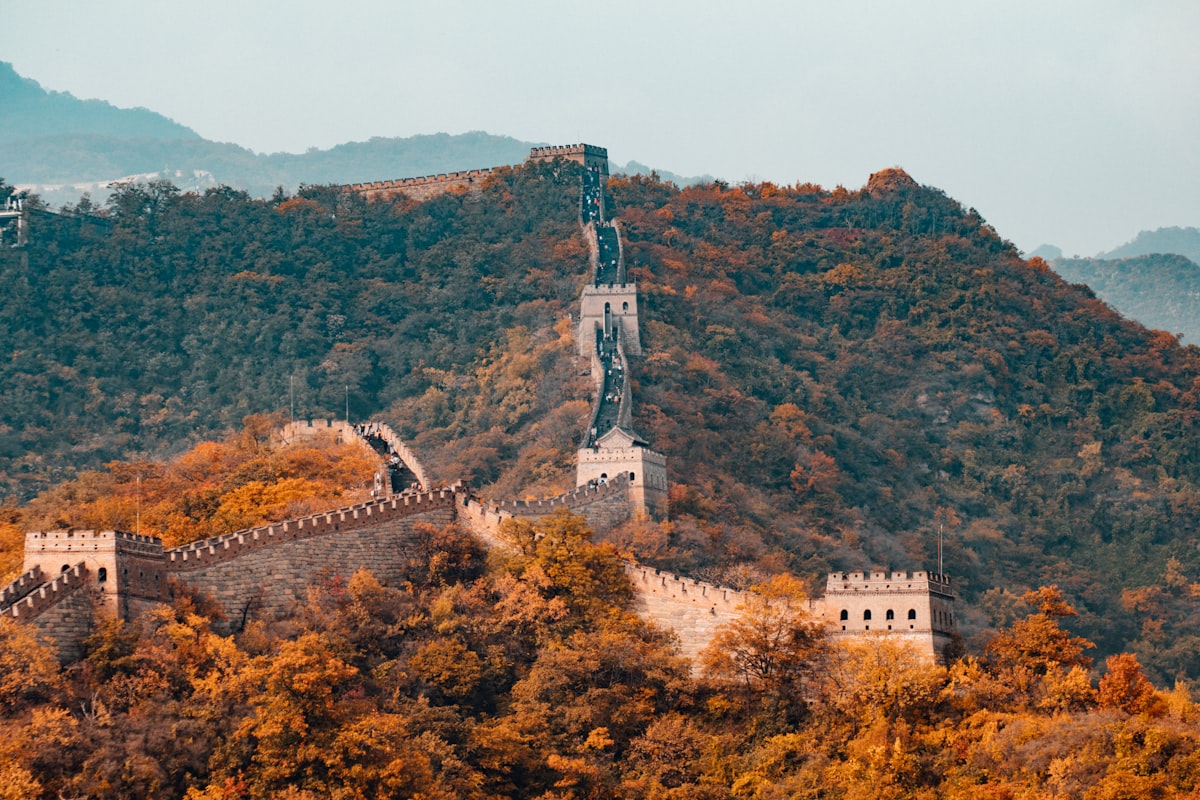
The heart of Shaxi is Sideng Square (寺登街), a cobblestone market plaza with the Opera Stage on one side and Xingjiao Temple on the other. This is the best-preserved Tea Horse Road market square anywhere. The Opera Stage is a three-story wood structure from the Qing Dynasty with elaborate roof brackets and carved panels. It faces the temple across the square, not by accident: performances were offerings to the gods as much as entertainment for traders.
The square is not large. Maybe 50 meters across. On market days, it would have been packed with horse traders, tea merchants, muleteers, and the various fixers and brokers who made the caravans work. Today it is mostly empty in the mornings, a few visitors posing for photos in the afternoons, and back to quiet by dusk.
The temple, Xingjiao Si, dates from the Ming Dynasty and follows the Bai ethnic architectural tradition. Inside are faded Ming murals that have not been aggressively restored. I prefer them this way. What you gain in fidelity to the original art, you lose in the story the age tells.
The bridge at sunrise
About 800 meters east of the square, the Yujin Bridge (玉津桥) spans the Heihui River in a single stone arch. It was built during the Qing Dynasty and rebuilt in the 1930s. Before the modern road reached Shaxi, every horse caravan crossed this bridge.
Go at sunrise. The mist rises off the river around 6:30 a.m. in autumn and spring. The first light catches the bridge stones and the willow trees on the bank. Behind it, the mountains layer into blue-grey silhouettes. Real: I have gotten better photographs here than at any of the more famous viewpoints in Lijiang or Dali, and I had the bridge to myself.
After sunrise, walk back through the village lanes. The old residential quarter sits north of the square. The houses are Bai-style: whitewashed walls, grey tile roofs, gateways decorated with calligraphy and flower paintings. Chickens in the alleys. Old men carrying shoulder poles. This is not a curated experience. People live here.
Shibaoshan Grottoes
About 25 kilometers from Shaxi, Shibaoshan (石宝山) is a serious historical site that barely registers on international tourism. The grottoes contain Buddhist and Bai ethnic carvings from the Nanzhao Kingdom (8th-10th centuries) and the Dali Kingdom (10th-13th centuries). These are contemporaneous with the Tang and Song dynasties and represent a distinct regional Buddhist tradition.
The most famous carving is a female生殖崇拜 figure in a niche called “Ayang Bai,” but the real highlight is the set of Nanzhao-period Buddha figures in Cave 5, carved with Indian-influenced drapery that shows how far the trade routes reached.
Entry is 43 yuan plus 40 yuan for the sightseeing bus. The bus is mandatory if you want to reach the main cave cluster. Opening hours are 9:00 to 17:00. Go in the morning and allow three hours.
One warning: Shibaoshan is home to a large troop of wild macaques. They are aggressive and clever. Do not carry food. Do not make eye contact. Do not smile at them — showing teeth is a threat signal. I watched a macaque unzip a woman’s backpack and methodically remove every item. If you get chased, drop whatever you are holding and walk away calmly.
Pioneer Bookstore
A converted grain barn on the north edge of town now houses a branch of the Pioneer Bookstore (先锋书店) chain. The architecture is the draw: a traditional wood-truss barn interior with bookshelves built into the grain-storage bays. Good coffee, better than you would expect. Worth 30 minutes. Buy a book in Chinese even if you cannot read it; the staff curation is solid and the bookmarks are nice souvenirs.
Bai food and where to sleep
The cuisine is Bai — the ethnic group that dominates the Dali-Shaxi corridor. Eat grilled er kuai (饵块), which are rice cakes toasted over charcoal until the outside blisters and the inside goes chewy. Eat mountain mushrooms in summer and autumn. Eat wild vegetables you will not find translated on any menu. The food is simpler and cheaper than Dali’s restaurant scene. A good meal runs 30 to 50 yuan per person.
Guesthouses cluster in the renovated buildings around the old town. Prices: 150 to 400 yuan for a standard courtyard room, 500 to 800 yuan for a boutique option with Western bathrooms and heating. Book ahead on weekends and during the May and October holidays when domestic tourism spikes. Heating matters more than you think. At 2,100 meters, Shaxi nights are cold from October through March, and not every guesthouse has decent heating.
Getting to Shaxi
From Dali Old Town, Shaxi is about two and a half hours by car. The new Dali-Lijiang expressway has cut the time from what used to be four hours on mountain roads.
By bus: Dali North Bus Station to Jianchuan (2 hours, about 35 yuan), then a local minibus from Jianchuan to Shaxi (30 minutes, 8 yuan). The minibus drops you at the edge of the old town.
By private car: 300 to 400 yuan from Dali. Split with other travelers if you can find them.
There is no train station. No airport within reasonable distance. The relative inaccessibility is part of why Shaxi has stayed Shaxi.
Who Shaxi is for
Shaxi is for travelers who found Dali’s Old Town too loud and too retail. It rewards slowness. The ideal Shaxi stay is two to three nights. One night if you are rushing; you will regret it. The mornings and evenings, when the day-trippers have not arrived or have already left, are when the town feels like itself.
Do not come expecting nightlife, restaurant variety, or polished tourist infrastructure. Come for the bridge at sunrise, the walk to the grottoes, and the quiet of a market square that has been doing its job for 600 years.
Jianshui (建水): tofu, purple clay, and a lived-in Ming city
Jianshui sits in southern Yunnan’s Honghe Prefecture, about 180 kilometers south of Kunming. Unlike Tengchong’s volcanic drama and Shaxi’s high-mountain isolation, Jianshui is a lowland city of about half a million people. It is alive and messy and real. The old town is not a restored theme park. People have been living in it continuously for 600 years.
The high-speed train from Kunming South Station takes about two hours and costs 60 to 95 yuan. That makes Jianshui a plausible day trip from Kunming, but day-tripping misses the point. Stay at least one night. Two is better.
A Ming city that is still a city
The Chaoyang Tower (朝阳楼) is Jianshui’s landmark. Built in 1389, it is a red-walled, multi-eaved gate tower that looks like a scaled-down version of Beijing’s Tiananmen — and it predates Tiananmen by about 30 years. Unlike Tiananmen, you can walk right up to it, photograph it from any angle, and climb it for a view over the old town roofs. Locals fly kites here in the late afternoon.
The old town radiates out from the tower in a grid of narrow lanes. Jing wells — communal wells that have supplied the town’s water since the Ming Dynasty — are set into the street corners. People still draw water from them. In the early morning, you see residents carrying plastic buckets and thermoses to fill at the wells, lining up and chatting. This is not performance. The water table here is shallow and the wells still run clean.
The old streets are a mix of restored shopfronts, crumbling courtyard homes, tofu grills, and small workshops making purple pottery. You can walk the old town in two hours but you would miss the point. The appeal of Jianshui is not a list of sights. It is the feel of a place that has not stopped being itself.
Zhu Family Garden
The Zhu Family Garden (朱家花园) is the big-ticket sight and it earns its 35 yuan entry fee. Built by a wealthy merchant clan over about 30 years in the late Qing Dynasty, the compound contains 42 courtyards connected by covered corridors, carved doorways, rock gardens, and lotus ponds. It has 218 rooms. The wood carving alone — door panels, window screens, bracket sets under the eaves — is worth an hour of your time.
What I liked about it: the gardens are not a showpiece. They are the family’s actual living compound, arranged for household function, not Instagram. The courtyards alternate between public reception spaces and private family quarters in a deliberate hierarchy. The guided audio tour (available in English via QR code) explains who lived where and why.
The second-largest Confucian temple in China
Jianshui’s Confucian Temple (建水文庙) is the second-largest Confucian temple in China after the one in Qufu, Shandong (Confucius’s hometown). It was built in 1285, during the Yuan Dynasty, when Jianshui was a garrison town on the frontier of the Mongol empire. The scale surprises you. The main hall is surrounded by a large artificial lake with pavilions and bridges. Cypress trees that are centuries old shade the courtyards.
Entry is 60 yuan. That is steep for a temple ticket in China, and the price will annoy you if you are templed-out. But if you are going to see one Confucian temple in China, this or Qufu are the ones. The others are smaller, less complete, or too restored. Jianshui’s temple has genuine age, a dignified setting, and very few visitors compared to Qufu. I have walked through the lakeside courtyards in the late afternoon and counted fewer than ten other people inside.
The bridge
Three kilometers west of town, the Double Dragon Bridge (双龙桥) crosses the confluence of two rivers in 17 stone arches. It was built during the Qing Dynasty. At 148 meters long, it is one of the longest ancient bridges in China. The center section has a three-story pavilion whose roof curves up at the eaves in the Yunnanese style.
The bridge is free. The light is best at sunrise (when the arches reflect in still water) and sunset (when the stone turns warm orange). In winter, the river is often calm in the morning. A local farmer might lead water buffalo across while you are setting up your shot. This happens regularly, not as a arranged photo-op.
Purple pottery
Jianshui is one of China’s four historic pottery towns, alongside Yixing in Jiangsu, Qinzhou in Guangxi, and Rongchang in Chongqing. The local clay is purple (紫陶, zi tao), distinct from Yixing’s brown zisha clay. The pottery tradition here goes back to the Song Dynasty.
You can visit workshops along the streets north and west of the Chaoyang Tower. Potters throw on kick wheels, carve designs into leather-hard clay, and fire in wood kilns. Most workshops sell their work. A hand-thrown teapot runs 100 to 300 yuan depending on the carver’s reputation. That is cheap for this quality. In Jingdezhen or Yixing, comparable work costs two to three times as much. If you are building a tea collection, Jianshui is where you buy.
The tofu and the noodles
Jianshui’s food scene revolves around two things: roast tofu and crossing-the-bridge noodles.
The tofu (烧豆腐, shao doufu) is made in small squares about the size of a mahjong tile. Vendors grill it over charcoal braziers set up on street corners. You stand around the grill, pluck pieces off the wire mesh with chopsticks, dip them in a dry mix of chili powder and salt or a wet sauce of fermented bean paste and herbs, and eat them hot enough to burn your tongue. Each piece costs 0.5 to 1 yuan. The vendor keeps count by dropping a soybean or a corn kernel into a bowl for each piece you eat. Settle up when you are done. This is the cheapest and most satisfying street food ritual I have found in China. A dozen pieces and a beer from the corner shop next door: dinner for under 20 yuan.
Crossing-the-bridge noodles (过桥米线, guoqiao mixian) are the Yunnan classic, and the dish supposedly originated near Jianshui. The Jianshui version comes with a wider bowl, a richer broth, and more condiments than you get in Kunming. The ritual is half the experience: they bring you a bowl of near-boiling broth covered with a layer of oil, then plates of raw meat slices, quail eggs, tofu skin, vegetables, and rice noodles. You add the raw ingredients first (they cook in the broth), then the noodles, then the herbs. Mix, wait 30 seconds, eat. A good bowl costs 15 to 30 yuan.
Pairing Jianshui with Yuanyang
Jianshui is the natural gateway to the Yuanyang Rice Terraces, another two to three hours south by road. The terraces are at their best from November through March, when they are flooded and the sun angles are low. Jianshui plus Yuanyang makes a logical three- to four-day trip from Kunming: train to Jianshui, one to two days exploring the old town, then bus south to Yuanyang for sunrise at the terraces, then back.
Do this in January or February and you catch both the dry-season blue skies and the terraces at peak mirror-reflectivity. That is the move.
Getting to Jianshui
High-speed rail from Kunming South Station: about two hours, 60 to 95 yuan one way. Trains run roughly hourly during the day. Jianshui Station is about 8 kilometers north of the old town. A taxi from the station to the old town costs about 20 yuan.
Buses from Kunming’s south bus station: three to four hours, 80 to 100 yuan. Less comfortable, but useful if you are traveling during a holiday and train tickets are sold out.
From Yuanyang: buses and shared minivans run between the two regularly. Two to three hours depending on road conditions.
Where to stay
Old town courtyard guesthouses: 150 to 400 yuan a night. These are typically converted courtyard homes with small gardens, wooden interiors, and inconsistent hot water. Check recent reviews for plumbing complaints. A few heritage hotels occupy larger converted mansions at 400 to 800 yuan and offer reliable heating and better soundproofing. The old town walls mean thin windows and early-morning street noise, so bring earplugs if you are a light sleeper.
Who Jianshui is for
Jianshui suits travelers who care about Chinese history, architecture, and food more than dramatic scenery. It is the most urban of these three destinations. If you want mountains and hot springs, go to Tengchong. If you want a quiet valley town, go to Shaxi. If you want a living city with Ming bones, Sichuan-adjacent food intensity, and the ability to take a high-speed train back to Kunming in two hours, Jianshui is your pick.
Choosing your deep-cut Yunnan
These three towns are far apart. You cannot combine them efficiently in a single trip unless you have at least two weeks and a tolerance for long bus rides.
| Tengchong | Shaxi | Jianshui | |
|---|---|---|---|
| Vibe | Border town with volcanic landscapes | Quiet Tea Horse Road valley village | Lived-in Ming city, urban and real |
| Best for | Hot springs, geology, WWII history | Slow travel, mountain light, morning walks | Architecture, pottery, street food |
| Season | October–February | March–May, September–November | November–March |
| Getting there | 1-hour flight from Kunming, or 5-6 hours by road from Dali | 2.5 hours by car from Dali, bus via Jianchuan | 2 hours by high-speed train from Kunming |
| Stay | 1–2 nights | 2–3 nights | 1–2 nights, ideally paired with Yuanyang |
| Daily budget | ¥300–600 | ¥200–400 | ¥200–400 |
| Who should skip | Anyone who needs train access or nightlife | Anyone in a hurry; Shaxi resists checking boxes | Anyone seeking dramatic natural scenery |
If you are deciding in 30 seconds:
Pick Tengchong if you want to soak in mineral hot springs while looking at volcanoes. It is the most physically dramatic of the three.
Pick Shaxi if you miss what Dali used to be 20 years ago and want a small, walkable town where the mornings are quiet and the light is good.
Pick Jianshui if you want to eat superlative street food, buy purple clay teapots at workshop prices, and walk through a Ming Dynasty city that is still a city. The high-speed rail access makes it the easiest logistical add-on to a Kunming-based trip.
None of these places are undiscovered. Chinese domestic tourists fill the guesthouses during holidays. But the international crowd stays thin, the infrastructure is less polished, and the experience is closer to actual Yunnan than the smooth machine that runs Dali and Lijiang. If you have already done the classic route, pick one and go.