Mid-Autumn Festival 2026: Mooncakes, Lanterns, and Where to Go
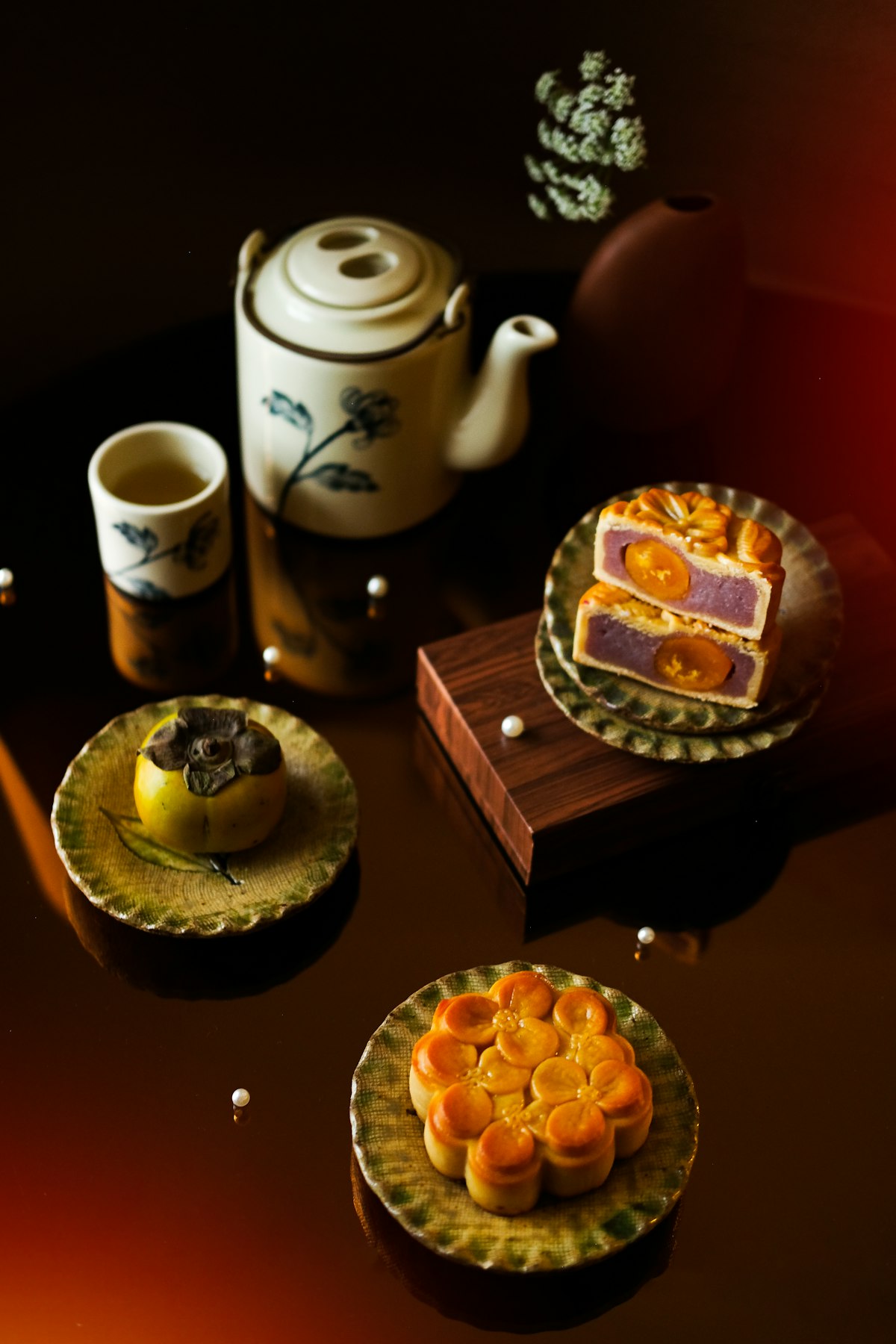
Mid-Autumn Festival is the quiet one.
No firecrackers ripping through the night like Spring Festival. No drums pounding across riverbanks like Dragon Boat. No week-long national migration like Golden Week. Instead, China gets still. Families gather for dinner, then drift outside after dark. Parks and rooftops fill with people drinking tea, eating mooncakes, and watching the moon rise fatter and brighter than any other night of the year.
The festival falls on the 15th day of the 8th lunar month, when the harvest moon is at its fullest and roundest. A circle: reunion, completeness, the shape of a family gathered. The short version of the origin story is that Chang’e drank an immortality potion and floated to the moon, leaving her husband Hou Yi behind on Earth. Once a year, on this night, they are symbolically reunited. That is enough backstory. The festival today is not about mythology. It is about food, moonlight, and the people you eat and watch it with.
If you have never been in China during Mid-Autumn, it is hard to describe the atmosphere without making it sound slight. Lanterns in parks. The smell of osmanthus in southern cities. Mooncake displays in every bakery, supermarket, and hotel lobby in the country. At street level it looks like commerce, and partially it is. But after dark, when families spread blankets on the grass and crack open a box of mooncakes and pour tea from a thermos while the moon climbs, it becomes something else. Something quieter and harder to package.
That is what this guide covers: what the festival actually involves, where to experience it, which mooncakes are worth your money, and how to handle the logistics if you are traveling through China when it happens.
2026 dates and what they mean for your trip
Mid-Autumn Festival 2026 falls on September 25, a Sunday. The official public holiday runs September 25 through 27, Friday to Sunday. Three days.
There is a timing quirk in 2026 worth knowing. Mid-Autumn falls on September 25, and Golden Week starts October 1 — just four days later. The two holidays sit back-to-back, creating an extended travel window. Some domestic travelers will combine them into a 10+ day break, which means late September and early October both run busy. The practical effect: you are traveling during a compressed peak season while also getting the cultural payday of the mooncake festival.
Let me be specific about what this means.
The good part: Mid-Autumn is not a disruptive holiday. Unlike Spring Festival, which shuts down small businesses and turns intercity train travel into a survival event, Mid-Autumn is gentle. Restaurants stay open. Shops stay open. Public transit runs normal schedules. The events are all free, public, and evening-based. You participate by being outside after dark. That is the entry requirement.
The difficult part: Golden Week logistics apply to everything around the festival. Train tickets vanish within minutes of release. Hotels in popular destinations charge peak rates. Tourist attractions hit capacity by 10am. The Mid-Autumn activities themselves are not the problem. The infrastructure you need to reach them is.
If you are reading this before booking flights: consider arriving after September 27, when the holiday crowds start thinning. You will miss the exact festival date but get nearly the same experience. Mooncakes stay on sale for weeks. Lantern displays often run through the full Golden Week. The moon is nearly full on September 24 and 26. The lunar calendar is precise about the 15th day. Your experience as a traveler does not need to be.
If you are already committed to traveling through late September: book everything aggressively. The survival section at the end of this guide has the timeline. For the Golden Week picture (which follows right after), read our holiday survival guide.
Mooncakes: what is actually worth eating
Mooncakes (月饼, yuèbǐng) are the festival food. Dense, palm-sized pastries stamped with intricate patterns, traditionally filled with lotus seed paste and salted duck egg yolk. They appear everywhere in the two weeks before the festival. Supermarket aisles. Hotel lobby displays. Street vendor carts. Office building lobbies stacked floor to ceiling with gift boxes wrapped in gold foil.
A good mooncake is excellent. A bad one is a brick of sugar and grease that sits in your stomach like a paperweight. The difference is knowing which styles exist, what they should taste like, and where to buy them.
The five regional styles
| Style | Region | Pastry | Filling | Sweet or savory | Worth it? |
|---|---|---|---|---|---|
| Cantonese (广式) | Guangdong, Hong Kong | Thin, soft, glossy | Lotus seed paste + salted duck egg yolk | Sweet with savory yolk | Yes. The classic |
| Suzhou (苏式) | Jiangsu, Shanghai | Flaky, layered, shatters | Minced pork and scallion, or red bean | Savory or sweet | Yes. Eat warm |
| Beijing (京式) | Beijing, north | Shortbread-like, heavier | Five kernel: nuts, seeds, candied fruit, ham | Sweet-savory | Try one, not a box |
| Snow skin (冰皮) | Hong Kong, modern | Mochi-like glutinous rice, served cold | Matcha, durian, mango, chocolate | Sweet | Yes. Refreshing |
| Yunnan (滇式) | Yunnan | Flaky, different lamination | Xuanwei ham + honey | Sweet-savory-funky | The best one nobody knows about |
Cantonese mooncakes
This is the default mooncake. The one in every red and gold tin. Dense lotus seed paste surrounding one or two salted duck egg yolks, encased in a thin, soft pastry stamped with elaborate characters. The yolk is the point: bright orange, slightly oily, intensely savory against the sweet paste. The contrast is what makes it work.
A good Cantonese mooncake, from a proper bakery or hotel kitchen, is excellent. Dense but not heavy. Sweet but balanced by the yolk. A cheap one, from the supermarket discount bin, is cloying and industrial. The lotus paste tastes like sugar and nothing else. The yolk is pale yellow instead of orange. Pale yolk means low quality every time.
Buy from a bakery, not the supermarket. Expect to pay ¥25-50 for a good single mooncake. The salted egg yolk should be visible orange. A reputable Chinese bakery in any major city will sell them individually from glass display cases during the festival weeks.
Suzhou-style mooncakes
Entirely different from the Cantonese version. The pastry is flaky and layered, closer to a puff pastry or a savory pie crust. It shatters when you bite it. The classic filling is minced pork with scallion and a touch of sweetness. Sweet versions exist with red bean or black sesame, but the pork ones are what make this style worth knowing about.
These are smaller and lighter than Cantonese mooncakes. More like a savory pastry than a dessert. Eaten warm, fresh from the oven, they are genuinely good: rich, flaky, savory, the pastry leaving crumbs down your shirt. You will make a mess. That is part of the experience.
Suzhou is the source, but Shanghai bakeries sell decent versions during the festival. Look for them at old-school bakeries in the French Concession or near Yu Garden. They should be sold warm or clearly baked that day.
Beijing-style mooncakes
Heavier. The pastry is more like a shortbread cookie. The defining filling is five kernel (五仁, wǔ rén): chopped walnuts, almonds, sesame seeds, candied winter melon, and cured ham, bound with sugar and oil. It tastes dense and complicated. Sweet, savory, nutty, chewy, all at once.
Five kernel mooncakes are the fruitcake of Chinese festivals. Everyone has an opinion. Chinese social media erupts every year with arguments about whether 五仁 should continue to exist. Some people genuinely grew up eating them and look forward to them. More people tolerate them because their grandparents do. Younger generations have largely moved on.
If you want to try one for the cultural experience, buy a single one. Do not buy a box. One bite tells you everything you need to know.
Snow skin mooncakes
A modern invention from Hong Kong that has spread everywhere. The “pastry” is a mochi-like skin made from glutinous rice flour, served cold from the refrigerator case. The fillings are contemporary: matcha, durian, mango, chocolate, black sesame, green tea. These are not shelf-stable. They live in the cold section of bakeries and upscale supermarkets.
Snow skins are actually good. More like a Japanese mochi dessert than a traditional mooncake. The texture is chewy and cold, which is refreshing after a heavy meal. Durian snow skins have a cult following in Southeast Asia and southern China. Matcha and black sesame are safer entry points for first-timers. Buy from a chain bakery like Holiland or an upscale supermarket. They need to stay cold, so eat them the day you buy them.
Yunnan-style mooncakes
The dark horse. The filling is Xuanwei ham (宣威火腿), a dry-cured ham similar to prosciutto or country ham, minced and mixed with honey and sugar. Sweet, salty, funky, rich. The pastry is flaky like the Suzhou style but uses a different lamination technique.
This is the mooncake that converts mooncake skeptics. The ham-honey combination sounds wrong on paper and tastes right in practice. It is savory enough to feel like food rather than confectionery, sweet enough to read as a festival pastry, and funky enough to be interesting.
The problem: these are hard to find outside Yunnan. If you see a box labeled 云腿月饼 (Yún tuǐ yuèbǐng), buy it. In Kunming and Dali during the festival, they are everywhere. Elsewhere, check Yunnanese restaurants or specialty food stores.
Gift box economics
Mooncakes operate on a strange economy. A good individual mooncake from a bakery costs ¥15-50. A gift box of six from a mid-range hotel costs ¥200-400. A luxury box from a five-star hotel, in an elaborate tin with gold foil, sometimes including a bottle of wine or a tea set, can cost ¥500-1,500.
The mooncakes inside the ¥800 box and the ¥25 bakery mooncake are often from the same manufacturer. This is an open secret. The box is the product. It signals status when you hand it to a business contact or an in-law. Nobody is confused about what they are buying.
For eating: buy from bakeries. For a souvenir tin that looks nice on a shelf: the boxes are genuinely attractive and reusable. For value: wait until September 27, when unsold gift boxes get marked down 50-70%. The mooncakes inside are still fresh for another week or two.
Where to buy as a foreigner
Bakeries are the answer. Every bakery in every Chinese city sells mooncakes individually during the two weeks before the festival. Walk in. Look for gold-colored trays with individual mooncakes in glass display cases. Point at the ones you want. They will box them for you. No Chinese required.
Hotel bakeries at high-end hotels (Peninsula, Mandarin Oriental, local five-star chains) produce their own mooncakes and sell them in the lobby. These are consistently good and expensive. The packaging is elaborate. This is where Chinese people buy gift boxes for people who matter.
Supermarkets have dedicated mooncake aisles during festival season. Quality ranges from fine to bad. The advantage: you can see prices clearly, choose your own, and no one is trying to upsell you. Useful for sampling multiple single mooncakes across different styles without committing to a box.
Wet markets and street vendors sell fresh-made mooncakes, often Suzhou or Yunnan style, still warm. Higher risk, higher reward. Watch for stalls with a queue. If locals are buying, the turnover is high and the food is fresh.
Where to experience Mid-Autumn
Mid-Autumn is not a ticketed event. There is no arena, no official ceremony, no thing you need permission to attend. The experience is ambient: lanterns in parks, families on picnic blankets, the moon rising over a skyline. You participate by being outside after dark with the rest of the city.
Some places do it better than others. Here is what to expect in the cities you are likely to be in.
Beijing
Beijing’s Mid-Autumn feels traditional and slightly austere, which suits the city. The center of gravity is the parks. Jingshan Park, the hill directly north of the Forbidden City, is the classic moon-viewing spot. Climb to the pavilion at the top and you get the full moon rising over the Forbidden City rooftops. It will be packed. Go anyway.
The Summer Palace puts on lantern displays along Kunming Lake. The Seventeen-Arch Bridge lit at night, with the moon reflected in the water, is the Beijing Mid-Autumn postcard. Beihai Park, Houhai, and the lakes around Shichahai also fill with families and lantern sellers.
Temple fairs appear in larger parks during the holiday. These are smaller and more local than the Spring Festival temple fairs. Folk performances, calligraphy demonstrations, snack stalls selling fresh tanghulu (candied hawthorn) and mooncakes. The Ditan Park temple fair is the largest and most reliable.
One Beijing-specific detail: the rabbit god, Tu’erye (兔儿爷). Clay figurines of a rabbit dressed as a warrior, based on a folk tale about the moon rabbit saving Beijing from a plague. You will see them sold at temple fairs and in souvenir shops during the festival. They make good, inexpensive souvenirs at ¥20-80. Each one is hand-painted and slightly different.
Shanghai
Shanghai does Mid-Autumn with higher production values. The Bund is the obvious spot: the full moon over the Pudong skyline, reflected in the Huangpu River. It is also where half of Shanghai goes, so expect dense crowds after 7pm. A Huangpu River night cruise gives you the same view with more personal space and a structured experience. Book a week ahead during Golden Week.
Yu Garden is the most photogenic festival spot in Shanghai. The Ming Dynasty architecture gets lantern installations and evening performances. Narrow alleyways lit by traditional lanterns, the moon above the curved rooflines and whitewashed walls. It gets extremely crowded. Go at 4:30pm, watch the light change, stay through sunset, leave when it becomes shoulder-to-shoulder around 7:30pm.
Shanghai Tower’s observation deck at 562 meters does a Mid-Autumn evening package. The moon from 118 floors up, above any possible cloud or haze, is its own category of experience. Tickets cost more during the holiday and sell out. Book online at least a week in advance.
For something quieter: the former French Concession streets at night. No official programming. No organized events. Just people eating at outdoor restaurants and walking under plane trees with the moon visible between branches. Less dramatic than the Bund. More relaxing. On a clear night in late September when the air has finally broken from summer humidity, this is the version of Mid-Autumn I prefer.
Guangzhou
Guangzhou’s Mid-Autumn is big, Cantonese, and food-focused. The Pearl River waterfront between Haizhu Square and Canton Tower fills with lantern displays and families on elaborate picnic spreads. Cantonese families take moon-viewing seriously: tea in proper cups, multiple mooncake varieties, pomelos, taro, water caltrops, the full production.
The Canton Tower area hosts official lantern installations. The tower itself is lit for the festival. River cruises operate extended evening schedules.
Two Cantonese food traditions worth knowing. First, eating taro (芋头, yùtóu) during Mid-Autumn. The word sounds like “good fortune” in Cantonese. Small taros, steamed and peeled, dipped in sugar or soy sauce depending on the household. Second, water caltrops (菱角, língjiǎo), a black, horned aquatic nut that looks like a bat and tastes mild and starchy. You will see both at markets throughout the festival period. Neither will change your life, but both are worth trying if someone offers.
Hong Kong
Hong Kong puts on the most elaborate Mid-Autumn in China, and it is the most accessible for English-speaking visitors. Two things set it apart.
The Tai Hang fire dragon dance (大坑舞火龍). A 67-meter dragon made of straw and covered in lit incense sticks, carried through the streets of Tai Hang by hundreds of performers over three nights around the festival. UNESCO Intangible Cultural Heritage listed. The atmosphere is thick with incense smoke, heat, and drumming. It is raw and physical in a way that few cultural events in Hong Kong still are. Free to watch. Extremely crowded. Arrive by 7pm for a spot along the route. The dragon emerges around 8:15pm. Tai Hang is a 10-minute walk from Tin Hau MTR station.
The lantern displays at Victoria Park. Massive lantern installations: zodiac animals, mythological scenes, abstract designs. Plus a carnival section with performances, food stalls, and riddle games. The scale is larger than anything on the mainland. It runs for about a week centered on the festival date. Free entry.
Hong Kong also has the strongest lantern culture. Kids carry paper lanterns with LED lights inside. Parks and beaches fill with families holding glowing lanterns after dark. Simple paper lanterns cost HK$20-50 at stationery shops and markets throughout the city. Buy one and join the crowd. It is the easiest participation you will find anywhere.
Hangzhou
Hangzhou and Mid-Autumn have a centuries-long relationship. West Lake under a full moon is one of the foundational images of Chinese poetry and painting. The lake has three stone pagodas called Three Pools Mirroring the Moon (三潭印月), designed so that candles placed inside them on Mid-Autumn night reflect 15 moons on the water surface.
Today the lakeside paths fill with families. Tea houses along the shore stay open late. Take a boat out to the islands for the view back toward the city with the moon overhead. The boats will be busy. Book a spot through your hotel or a local tour desk.
Hangzhou’s street food scene around Hefang Street and the lakefront gets seasonal treats during Mid-Autumn. Fresh Suzhou-style mooncakes, osmanthus cakes (a Hangzhou specialty, made from the flowers the city is famous for), and Longjing tea. The osmanthus trees are usually in bloom around late September, and the smell drifts through the city. It is subtle. Sweet rather than floral. You notice it most near the lake and in the older neighborhoods.
Suzhou
If Hangzhou is the famous one, Suzhou does Mid-Autumn smaller and arguably better. The classical gardens open for evening sessions during the festival. The Humble Administrator’s Garden, the Lingering Garden, the Master of the Nets Garden. Moonlight in a Ming Dynasty garden, pavilions and rockeries lit by lanterns, is more atmospheric than any large-scale production. These are ticketed events with limited capacity. Book through your hotel.
Suzhou is also where to eat Suzhou-style mooncakes at the source. The savory pork-filled ones, fresh from the oven at a neighborhood bakery on Pingjiang Road or Shantang Street, are a different food from the packaged versions. Warm, flaky, rich with rendered pork fat. Buy two. The first one disappears faster than you expect.
Smaller cities and water towns
Mid-Autumn in a Jiangnan water town is quieter, smaller, and more intimate than in any major city. Lanterns reflected in the canals. Families eating on waterside terraces. The scale is human, the pace is slow, and the setting looks exactly like the China in Song Dynasty landscape paintings.
Zhouzhuang, Tongli, Xitang, and Wuzhen all do evening lantern displays along their canals during the festival. There is less organized programming than in a city. You are there for atmosphere, not events. Stay overnight. The canals lit by lanterns after dark are the point. For help choosing between them, see our Jiangnan water towns guide.
What locals actually do
Most Chinese people do not go to a lantern festival. For the majority, Mid-Autumn is simpler. Big family dinner at home or a restaurant. After dinner, go outside. Find a spot with a clear view of the sky. Spread a blanket in a park, on a rooftop, by a river. Bring mooncakes, fruit (pomelos are traditional), and a thermos of tea. Sit, talk, and watch the moon rise.
This is the version of the festival you can most naturally join. Buy a mooncake from a bakery. Buy a pomelo from a fruit stand. Go to any park in any Chinese city after dark on September 25. You will be surrounded by families doing exactly the same thing. Nobody will find it strange that you are there. The moon does not check your passport.
Travel survival during the Mid-Autumn holiday
The booking timeline
The Golden Week overlap means you are not booking for a three-day festival weekend. You are booking for the busiest travel week in China. Here is the timeline.
Trains open 15 days before departure at 8am Beijing time. For travel on Wednesday September 24, the day before the holiday, tickets go on sale September 9. For Thursday September 25 (the festival day), they open September 10. Popular routes sell out in minutes. Book through Trip.com (English interface, takes foreign cards) or 12306.cn (Chinese only, the official source). Set an alarm. Be on the site when the clock hits 8am. Do not assume you can book the day before and find a seat.
Hotels need 4-6 weeks of lead time for popular Mid-Autumn destinations during Golden Week. Hangzhou, Suzhou, Guilin, water towns near Shanghai: book 6-8 weeks ahead if possible. Major cities like Beijing, Shanghai, and Guangzhou have more capacity but still fill during Golden Week. Do not wait until the week before and expect choice or reasonable prices.
Attractions with capacity limits, especially the Forbidden City, release tickets 7 days ahead at 8pm Beijing time. During Golden Week these are gone within minutes. The Summer Palace, National Museum, and certain sections of the Great Wall (Badaling) also require advance booking. Check each attraction’s booking policy before you go. Showing up at the gate without a reservation means you are not getting in.
For the complete booking strategy covering every major holiday, see our holiday survival guide. For mobile payment setup before you arrive, our digital survival guide covers Alipay and WeChat Pay setup for foreigners.
What is open and what is closed
Mid-Autumn is not a shutdown holiday. Restaurants stay open. Shops stay open. Tourist attractions run normal hours, and some extend into the evening for lantern displays. Public transit runs on a weekend schedule. You can do everything you would normally do.
The only closure to anticipate: some small, family-run restaurants may close for the evening of September 25 so the owners can have their own family dinner. This is more common in smaller cities and residential neighborhoods. It will not affect your ability to find food. Chain restaurants, hotel restaurants, and restaurants in tourist areas stay open throughout.
Banks and government offices close for the three-day public holiday. This matters if you need to resolve a visa issue, exchange currency at a bank counter, or handle any bureaucratic matter. Do it before September 25 or after September 27.
Lantern safety and etiquette
Paper lanterns come in two types. Handheld lanterns are carried on a stick, lit by a small candle or LED inside. These are sold everywhere during the festival for ¥10-30. Buy one. Carry it. It is part of the atmosphere and nobody will question it.
Sky lanterns (孔明灯, Kǒngmíng dēng) are the ones you release to float into the sky. They are banned in most major Chinese cities, including Beijing, Shanghai, Guangzhou, and Shenzhen, due to fire risk. You will still see people selling them and releasing them. If you release one in a city with a ban, you risk a fine. More practically, these are paper bags with open flames that land somewhere. In a dense city, that somewhere might be a balcony, a power line, or a dry park. The people releasing them on social media are not showing you where they land.
Water lanterns appear in cities with rivers or lakes. These float on the water surface and are generally safer. Some parks organize official water lantern releases during the festival. These are the ones to participate in.
If someone invites you to dinner
If a Chinese friend, colleague, or neighbor invites you to their home for Mid-Autumn dinner, go. Bring mooncakes. A box from a mid-range hotel bakery at ¥150-300 is right for this situation. A bag of pomelos or other good fruit also works. Do not bring the ¥50 supermarket box. The thought counts, but the box also counts.
If someone gives you mooncakes as a gift: accept with both hands, say thank you (谢谢, xièxiè), and eat at least one while they are present. Refusing food gifts is mildly impolite. You do not have to finish the whole thing. A bite is enough.
No tipping. This rule holds during festivals the same as any other time. China does not tip.
If you want to skip the crowds
Go to a neighborhood park, not the famous one. Every Chinese city has dozens of parks. During Mid-Autumn, they all fill with families on picnic blankets. The small park a 10-minute walk from your hotel will have 80% of the atmosphere of the city’s flagship park with maybe 10% of the crowd. Bring your own mooncake and a thermos of tea. You will fit in fine.
Go to a rooftop bar. Most high-end hotels and many independent bars have rooftop spaces. The view might not be as sweeping as the Bund or Jingshan, but you get the moon, the skyline, and a chair. During Golden Week, a ¥80 cocktail starts looking like the price of solitude.
Go the day before or after. The moon on September 24 or September 26 is nearly full. The lanterns stay up for the full holiday week. The mooncakes are still on sale. You get 95% of the experience with fewer people. The exact lunar date matters for the calendar. For your night in a park with a pastry and a view of the sky, it does not matter at all.
Related guides
- First-Time China Guide — Visas, payments, internet, and everything to sort out before you arrive
- China Holiday Calendar Survival Guide — Every 2026 Chinese holiday, ranked by how badly it affects your trip
- China Summer 2026 Guide — Weather, crowds, and where to go in June and July
- Chinese Food 101 — The eight great cuisines, must-try dishes, and how to order without Chinese
- Jiangnan Water Towns Guide — Choosing between Zhouzhuang, Tongli, Xitang, and Wuzhen for Mid-Autumn lanterns on the canals
- China Digital Survival Guide — Alipay, WeChat, VPNs, and staying connected